BMW’s Adaptive Strategy in the Evolving Global Automotive Market
The global automotive industry is undergoing rapid transformation, influenced by intensifying competition and shifting regulatory landscapes. While China aggressively expands its presence worldwide, the U.S. market faces growing uncertainties and complex compliance demands. In this dynamic environment, BMW leverages a versatile approach to sustain growth and navigate challenges effectively.
Strategic Flexibility Amidst Electrification Trends
BMW’s Neue Klasse lineup underscores its firm dedication to battery electric vehicles (bevs), even as consumer enthusiasm for EVs varies across regions such as North America. By late 2023, BMW halted internal combustion engine (ICE) production at its historic Munich facility-redirecting ICE manufacturing to plants in Austria and the United Kingdom-and transformed Munich into a BEV-exclusive production hub. This shift includes retooling for new electric models like an updated i3 variant while maintaining output close to 1,000 units daily.
Despite accelerating electrification efforts, BMW deliberately preserves adaptability tailored to regional realities. Recognizing that Europe’s full transition toward electric mobility will likely extend into the mid-2030s due to infrastructure constraints and energy supply issues, BMW continues producing combustion engines where demand persists. This balanced approach prevents premature abandonment of ICE technology while optimizing product offerings per market conditions.
A Comprehensive Commitment beyond Powertrain Changes
Sustainability at BMW transcends merely replacing fossil-fuel engines with batteries; it encompasses minimizing carbon emissions throughout every stage-from raw material extraction through manufacturing processes-emphasizing that drivetrain choice alone does not capture environmental impact fully.
This holistic outlook also strengthens resilience against fluctuating trade policies and tariffs experienced globally in recent years. Thanks to a flexible international production network capable of switching between multiple drivetrain types seamlessly, BMW can rapidly adjust operations amid supply chain disruptions more nimbly than many competitors.
Addressing Semiconductor Supply chain Challenges
The global semiconductor shortage has posed persistent obstacles exacerbated by geopolitical tensions affecting key suppliers such as Nexperia. Throughout previous crises, BMW demonstrated extraordinary responsiveness by continuously monitoring supplier health on a daily basis and postponing final procurement decisions until necessary-a practice still employed today as chip availability gradually improves.
Batteries: The Critical Supply Constraint for European Automakers
While semiconductor bottlenecks show signs of easing worldwide, Europe confronts a deeper challenge: insufficient domestic battery cell manufacturing capacity amid surging EV adoption driven by stringent EU mandates aiming for ICE phase-out by 2035.This shortfall threatens supply security as most cells are currently imported from Asia.
“Building robust battery supply chains is imperative,” emphasize BMW executives who advocate fostering indigenous European ecosystems-not only attracting foreign investment but nurturing homegrown innovation spanning raw material sourcing through advanced cell fabrication technologies.”
Circular Economy Initiatives Driving Sustainable Battery Production
A cornerstone of Europe’s long-term vision involves embedding circular economy principles within battery manufacturing-reclaiming valuable minerals from spent batteries so materials remain within regional value chains rather than relying heavily on fresh imports. This strategy aligns with broader sustainability objectives while addressing resource scarcity linked with lithium-ion technologies dominating current EV markets globally.
Navigating Obstacles in Developing Local Battery Manufacturing Capacity
The continent has faced setbacks including high-profile failures like Northvolt’s bankruptcy filing earlier this year and Britishvolt’s collapse before completing their factories-highlighting difficulties scaling competitive cell production locally without secured access to raw materials or sufficient technical expertise at industrial scale.
In response, since 2019 BMW has invested substantially in establishing a dedicated Competency Center focused on advancing battery innovation based out of Munich alongside multiple high-voltage assembly facilities worldwide-including Germany, hungary, China, Mexico-and South Carolina USA-to deepen expertise around efficiently industrializing complex battery systems despite evolving chemistries or designs.
The Emerging Potential of Solid-State Batteries as Game Changers
BMW acknowledges falling behind some Asian manufacturers regarding current lithium-ion dominance but views emerging solid-state batteries as an opportunity to regain technological leadership through enhanced energy density combined with improved safety profiles and faster charging capabilities anticipated over the next decade.
“Scaling new battery technologies presents critically important challenges even for experienced producers,” company leaders note; “though collaboration among industry stakeholders supported by conducive policy frameworks could enable europe not only catch up but lead future innovations.”
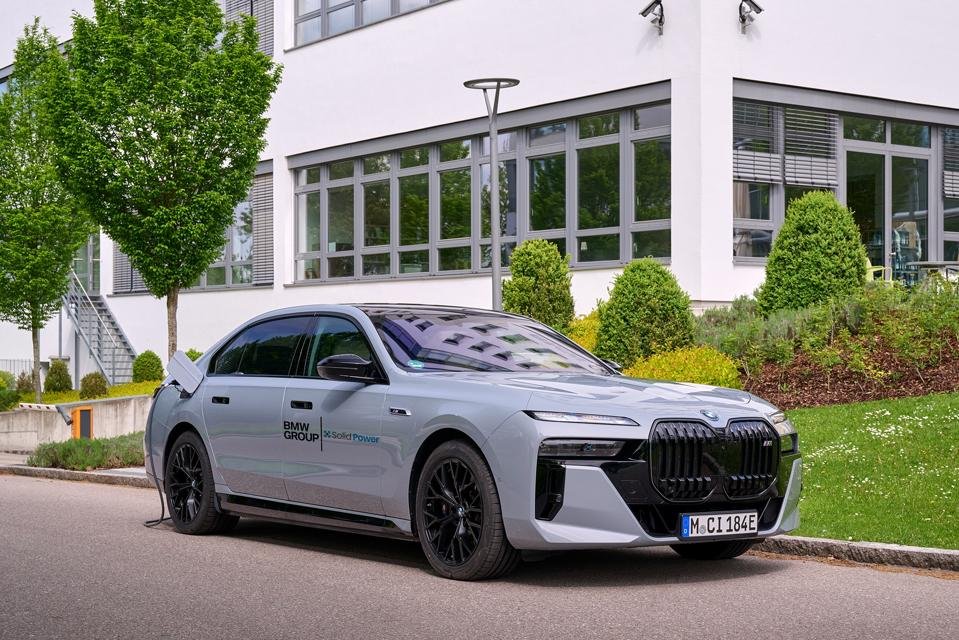
- This optimism is fueled partly by successful partnerships such as those between BMW and US-based Solid Power Inc., which have developed functional prototypes integrating all-solid-state cells into flagship vehicles like the i7 test mule now undergoing real-world testing;
- BMW stresses urgent need for coordinated action involving governments-including European Commission initiatives-and private sector players working collectively toward shared goals covering raw material sourcing strategies through advanced manufacturing infrastructure investments;
- This unified effort aims both at securing technological sovereignty over critical components essential under tightening climate regulations globally while boosting economic competitiveness amid escalating international rivalry;