Synchron’s Vision and Progress in Brain-Computer Interface Innovation
Charting Synchron’s Evolution: Key Achievements and Growth
In 2019, during the midst of a $10 million Series A funding round, Synchron introduced its first-ever human brain implant. at that pivotal moment, CEO Thomas Oxley shared an ambitious outlook:
“Tapping into the brain’s computational power will transform technology beyond our current imagination. this is just the beginning.”
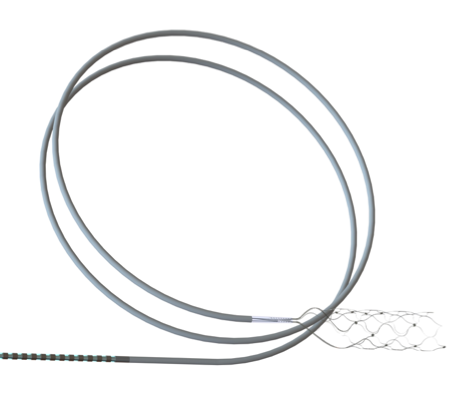
Sence then, Synchron has advanced considerably.By 2020, their Stentrode device earned FDA Breakthrough Device Designation, expediting its clinical development.The following year brought a $40 million Series B investment led by Khosla Ventures and marked a historic event when Philip became the first individual to post on social media solely through his brain-computer interface.
The company maintained momentum in 2022 by launching an early feasibility trial at the University of Pittsburgh and securing $75 million in Series C funding from notable investors including Bill Gates and Jeff Bezos.
Accelerating Innovation with Recent Capital Influx
This year saw another major milestone as Synchron closed a significant $200 million Series D round aimed at advancing critical clinical trials and expanding operations in San Diego for next-generation device development. This latest capital injection brings total funds raised to nearly $345 million, valuing the company close to one billion dollars.
The new investor lineup includes diverse entities such as Double Point Ventures-specializing in TechBio investments-the Australian National Reconstruction Fund (NRF), Qatar Investment Authority (QIA), Protocol Labs from blockchain sectors, among others. Importantly, previous key backers like ARCH Venture Partners and Khosla ventures reaffirmed their support despite challenging fundraising conditions globally.
Expanding Infrastructure: Establishing a San Diego Hub
The newly opened San Diego facility will act as a central base for developing Synchron’s upcoming brain-computer interface platform under leadership from industry veterans Andy rasdal and Mark Brister.Recruitment efforts target talent from local medtech leaders such as Dexcom and Qualcomm while plans include building vertically integrated manufacturing capabilities within Southern California-streamlining production timelines without compromising quality standards.
While New York remains strong for AI expertise due to proximity to tech giants like Apple and Google, Oxley highlights that hardware-focused medtech innovation often thrives better within ecosystems tailored for physical device development; this geographic diversification reflects strategic foresight.
Laying foundations: Supply Chain Leadership
A significant contributor to Synchron’s rapid scaling is former CTO Riki banerjee who joined early as employee number five. She established essential supply chain frameworks encompassing vendor negotiations, quality assurance protocols, and organizational culture shaping-all crucial elements supporting today’s operational success.
Pioneering Next-Generation Brain Interfaces
Around one-fifth of Series D proceeds are dedicated toward advancing an ambitious next-gen system currently kept confidential. Oxley describes it broadly as a minimally invasive transcatheter device capable of interfacing together with multiple brain regions via high channel counts enabled by recent microelectronics innovations.
“The future success of BCIs depends on three core principles,” he explains: (1) scalable access beyond traditional surgical methods; (2) extensive yet non-destructive neural coverage; (3) harnessing vast data streams to improve functionality.”
This strategy mirrors how semiconductor companies continuously evolve chip architectures rather than relying on past designs-Synchron aims to incubate what could become its own breakthrough product line within neurotechnology innovation.
The Expanding Landscape of Brain-Computer Interfaces
The implanted BCI market has experienced explosive growth recently-with global investments exceeding $1 billion so far this year alone-yet questions remain about long-term sustainability amid comparisons between AI hype cycles versus realistic neurotechnology adoption timelines.
Currently focused primarily on restoring motor control functions (“wave one”), emerging applications include speech decoding technologies gaining traction while vision-related interfaces remain nascent fields altogether. Additionally intriguing are biohybrid neural interfaces combining living tissue with electronics alongside novel ultrasound-based neuromodulation techniques broadening therapeutic options beyond implants alone.
the Emergence of NeuroAI & Data Integration Advances
An expected surge in neural data collection-from thousands toward millions of patient hours-is poised to accelerate progress not only within isolated brain areas but also through multimodal integration incorporating physiological context outside traditional neuroscience boundaries. These developments promise richer cognitive models enhancing both user experiance and clinical outcomes over time.
Cautious Perspectives on Consumer Neurotechnology Adoption
While consumer devices like Apple airpods hint at future attentional or cognitive enhancement tools leveraging subtle neurofeedback mechanisms, fully implanted whole-brain devices targeting healthy individuals remain distant goals requiring several more generations of technological refinement before becoming viable.
“I foresee implanted BCIs initially addressing age-related cognitive decline rather than delivering fantastical superhuman abilities,” Oxley reflects thoughtfully.
Navigating Competitive Dynamics Within Neuroprosthetics Markets

Synchron initially prioritized rapid market entry combined with scalability over maximizing electrode density-a beliefs reflected in recent improvements enhancing battery life and wireless interaction tailored for evolving healthcare applications across neurological domains.
This pragmatic approach faces challenges ahead given competitors deploying increasingly complex arrays boasting higher channel counts; whether first-mover advantage translates into lasting leadership remains uncertain amid fast-paced innovation typical across global neuroprosthetics markets today.
A Sustained Commitment To Innovation And Commercialization Excellence
This latest financing round underscores not only investor confidence but also Synchron’s dual focus: navigating regulatory approval pathways while heavily investing into disruptive technologies poised to redefine BCI capabilities clinically-and eventually commercially-for patients worldwide seeking restored independence through cutting-edge neural interfaces.