Transforming Fusion Power with Dynamic Magnetic Management
Fusion energy holds the key to revolutionizing the global energy landscape by providing immense quantities of clean,sustainable power. However, bringing fusion to commercial viability remains a formidable challenge, largely due to the necessity for ultra-precise assembly of massive magnets and laser systems-often demanding tolerances within fractions of a millimeter. Such exacting standards significantly inflate costs and complicate construction processes.
Innovative Magnetic Strategies in Fusion Reactor Engineering
A pioneering company is redefining magnetic confinement in fusion reactors by borrowing concepts from pixel technology combined with cutting-edge control software. This fresh approach eases the traditionally rigid manufacturing demands that have long hindered fusion device progress.
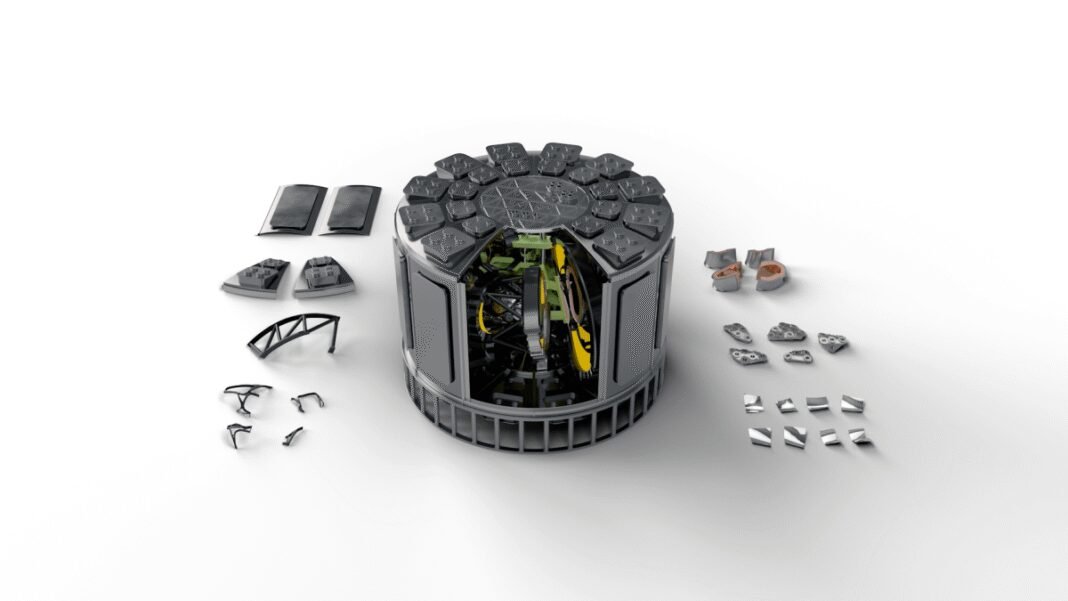
Instead of depending on uniquely shaped magnets installed with near-perfect accuracy, their system employs numerous identical superconducting magnets arranged in configurable arrays. Each magnet is individually controlled through advanced algorithms, generating a “virtual” stellarator effect that replicates complex magnetic fields necessary for plasma containment without requiring custom fabrication or flawless placement.
The Impact: Breaking Down Manufacturing Constraints
Traditional stellarators rely on intricately sculpted magnets resembling modern art pieces-components that are both costly and time-consuming to produce at scale.By contrast, utilizing many uniform small magnets organized into adaptable arrays enables rapid iteration and cost-effective prototyping.
- This startup has iterated its magnet design over 70 times within just two years-a remarkable acceleration compared to conventional projects involving car-sized parts costing millions each.
- The modular setup also empowers software-driven compensation for misalignments or material inconsistencies automatically, reducing manual recalibration efforts significantly.
Leveraging Artificial Intelligence for Real-Time Precision
The team validated their control framework using a 4×4 magnet grid equipped with embedded sensors while intentionally introducing errors such as displacements exceeding one centimeter and incorporating superconductors from diverse suppliers with varying quality levels.Impressively, physics-informed algorithms alongside reinforcement learning AI autonomously corrected these deviations instantaneously-showcasing an unprecedented level of adaptability rarely achieved in fusion experiments so far.
“We deliberately subjected our system to severe misalignments unacceptable elsewhere,” explained their lead engineer.”Each time, our controls seamlessly neutralized defects without human intervention.”
The aurora Reactor Vision: Advancing Fusion Power Generation
At the heart of this breakthrough lies Aurora-a conceptual reactor design featuring fourteen large external coils comparable in size to those used by leading tokamak projects paired with hundreds of smaller internal coils dynamically shaping plasma confinement fields. Aurora aims to deliver approximately 1.3 gigawatts thermal power converted into around 450 megawatts electrical output at production costs below $140 per megawatt-hour.
- Aurora targets an exceptional capacity factor near 90%, outperforming most natural gas plants and rivaling established nuclear facilities’ reliability despite scheduled maintenance shutdowns every two years lasting roughly three months.
- This performance positions fusion not only as an environmentally superior option but also as economically competitive against renewables like solar and wind-which currently dominate new installations yet face intermittency challenges affecting grid stability worldwide.
Eos Prototype: Paving the Way toward Commercial Deployment
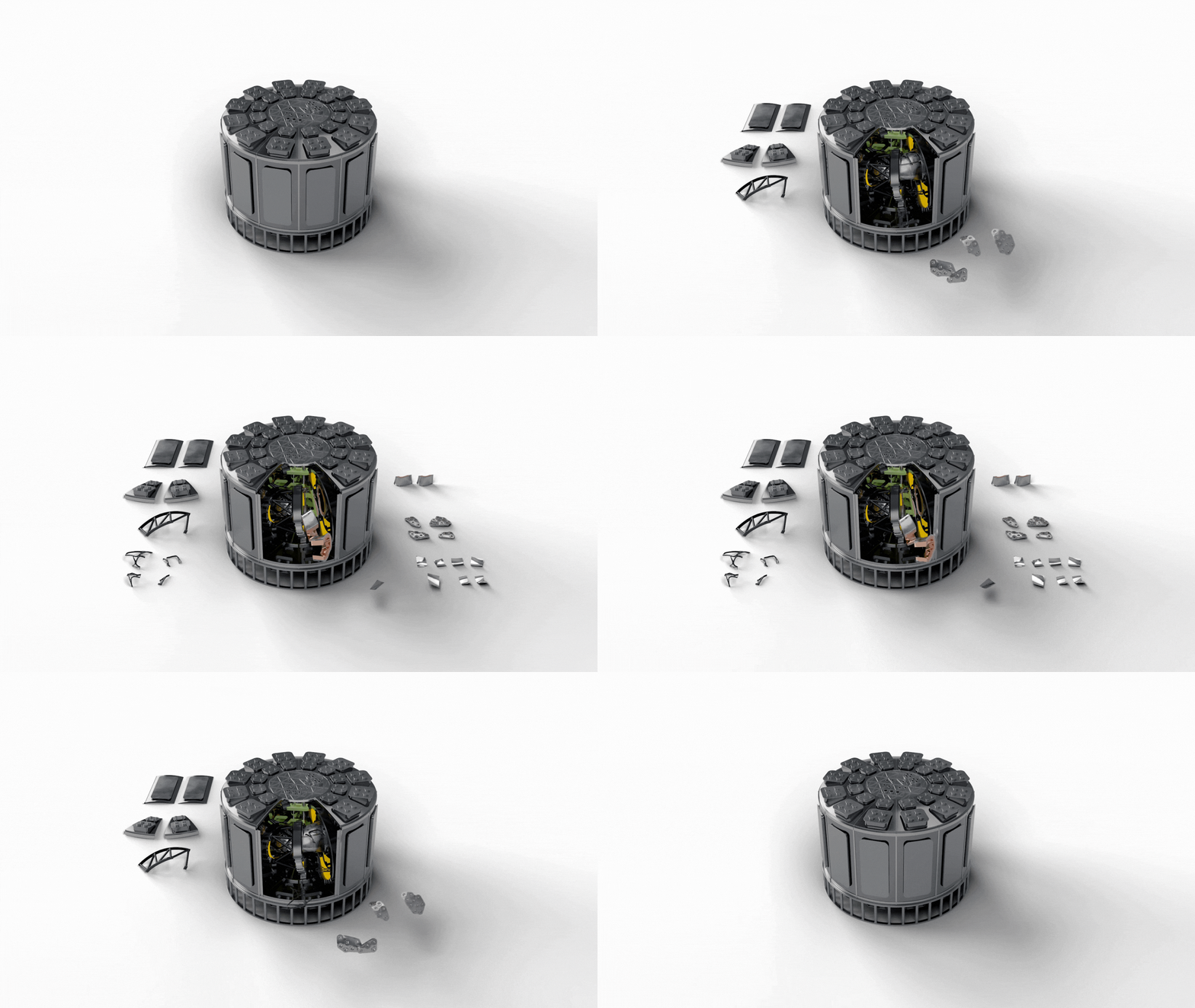
The immediate objective involves building Eos-the frist experimental device designed exclusively to validate essential scientific principles behind this modular magnetic approach before scaling up toward full-scale reactors like Aurora. Site selection announcements are anticipated soon with operational readiness targeted around 2030-2032 timeframe based on current project milestones.
A Dual-track Development Model Inspired by Industry Best Practices
this parallel progression strategy mirrors approaches adopted by other leading fusion enterprises advancing demonstration reactors while concurrently designing commercial plants slated for deployment within the next decade-accelerating timelines through overlapping research phases rather than sequential development alone.

Cultivating Collaborative Innovation Toward Practical Fusion Energy
This overview represents merely an initial step; extensive peer-reviewed studies will follow as collaborations expand across academic institutions, industry stakeholders deepen engagement, and end users prepare integration pathways-all critical components driving practical large-scale fusion energy realization globally over coming decades.