U.S. Greenlights Unprecedented $11.1 Billion arms Sale to Fortify Taiwan’s defense
In a landmark move amid rising military tensions with China, the United States has approved its largest-ever arms transaction with Taiwan, valued at $11.1 billion. This comprehensive package is designed to significantly enhance Taiwan’s defense capabilities as Beijing escalates pressure on the island.
Breakdown of the Extensive Military Aid Package
The deal encompasses a wide array of cutting-edge weaponry and support systems aimed at strengthening Taiwan’s asymmetric warfare capacity. Central to this agreement are 82 High Mobility Artillery Rocket Systems (HIMARS), 420 Army Tactical Missile Systems (ATACMS)-comparable in function to those recently supplied by the U.S. to Ukraine-and 60 self-propelled howitzers worth over $4 billion.
Additional components include unmanned aerial vehicles valued above $1 billion, advanced military software exceeding $1 billion in cost, anti-tank missile systems such as javelin and TOW totaling more than $700 million, helicopter spare parts close to $100 million in value, and refurbishment kits for Harpoon missiles estimated at around $91 million.
Taiwan’s Evolving Defense Strategy: Embracing Asymmetric Warfare
Facing intensifying threats from China, Taiwan is pivoting toward mobile and cost-efficient defense solutions that emphasize precision strikes-such as loitering munitions drones and missile interception technologies inspired by Israel’s Iron Dome system.
“Our commitment remains steadfast in advancing defense reforms that bolster societal resilience while affirming our determination to preserve peace through strength,” expressed a representative from Taiwan’s presidential office.
Taiwanese leadership recently unveiled an additional defense budget allocation of approximately $40 billion spanning 2026 through 2033, signaling an unwavering dedication to national security amid regional volatility.
The Strategic Importance of Kinmen islands Amid Heightened Tensions
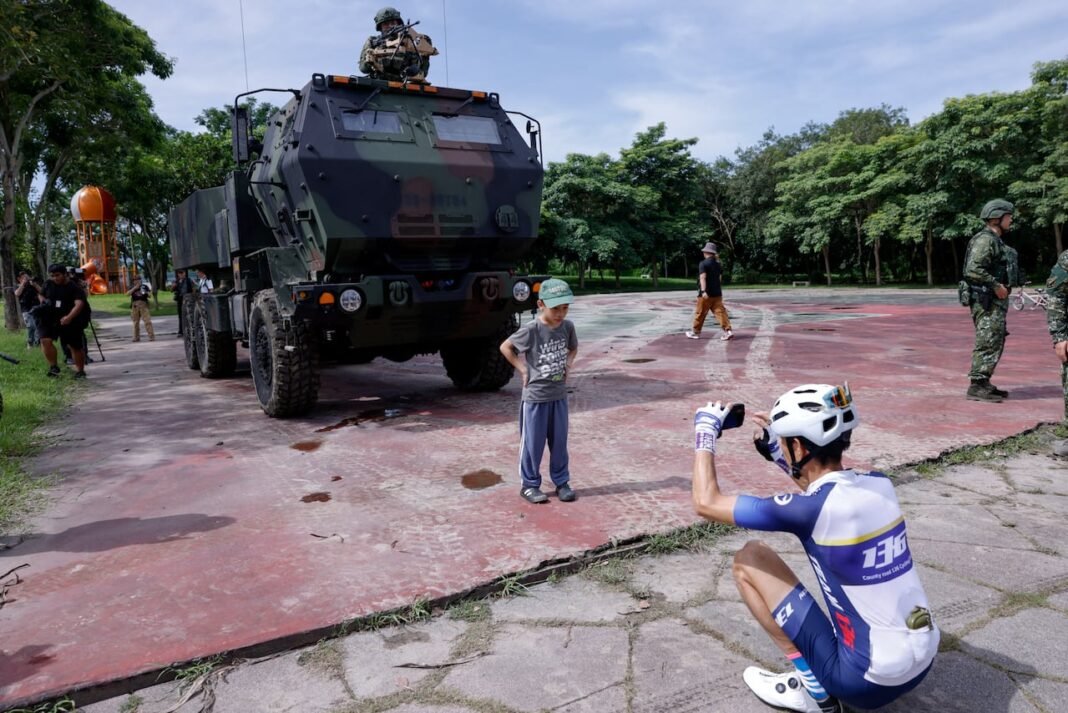
The Kinmen islands have emerged as critical frontline zones where civilians regularly engage alongside visible military assets like tanks during annual drills-demonstrating robust civil-military integration and readiness against potential incursions from mainland China.
China’s firm Rejection: Implications for Regional Peace
The Chinese government vehemently denounced the U.S.-Taiwan arms sale as a destabilizing act threatening peace across the Taiwan Strait. Beijing insists thes transactions exacerbate tensions and demands their immediate cessation.
“Arming ‘Taiwan independence’ efforts will only backfire; attempts to leverage Taiwan against China are doomed,” declared Foreign Ministry spokesperson Guo Jiakun in beijing.
The U.S.-Taiwan security Alliance: Cornerstone for Indo-Pacific Stability
This approval follows intensified diplomatic exchanges between Taipei officials and Washington representatives focused on deepening security cooperation despite complex U.S.-China relations limiting formal recognition of Taiwan.
The Pentagon highlighted that these sales align with American strategic interests by supporting Taipei’s modernization initiatives while sustaining credible deterrence essential for maintaining stability across East Asia-a region pivotal due to its geopolitical division between Northeast and Southeast Asia theaters.
Global Conflict lessons Shaping Defense Procurement Choices
The inclusion of HIMARS reflects insights gained from recent conflicts where precision artillery proved decisive-as an example, their extensive use has been instrumental in Ukraine’s resistance against Russian advances as early 2022. Analysts suggest similar capabilities could be crucial if hostile actions threaten Taiwanese territory or waters.
Taiwan Accelerates Defense Spending Amid Persistent Provocations
- taiwan has experienced escalating Chinese airspace violations throughout early 2025-prompting rapid growth of indigenous missile shield programs dubbed “T-dome.”
- This initiative draws inspiration from Israel’s Iron Dome but is specifically tailored for counteracting China’s growing ballistic missile threat targeting Taiwanese airspace.
A Broader Deterrence Framework: Maintaining Military Superiority Over Potential Adversaries
The Trump governance reaffirmed earlier this year its commitment toward expanding arms sales beyond previous records as part of a wider strategy aimed at deterring conflict over Taiwan by preserving U.S. military dominance relative to China within the Indo-Pacific region-a policy strongly supported by Taipei authorities concerned about sovereignty challenges posed by Beijing’s territorial claims over the island nation.
“This unprecedented security assistance package directly addresses both China’s increasing threat profile around Taiwan and allies’ calls for enhanced self-defense preparedness,” noted experts closely monitoring cross-strait developments.
Navigating Complex Diplomatic Terrain Surrounding Arms Sales Policy
While Washington officially recognizes Beijing under longstanding One-China policy frameworks, it simultaneously maintains unofficial yet legally mandated ties with Taipei-including commitments requiring provision of defensive means necessary for self-protection-wich continue generating friction among involved parties but remain vital pillars supporting regional balance-of-power dynamics today.