



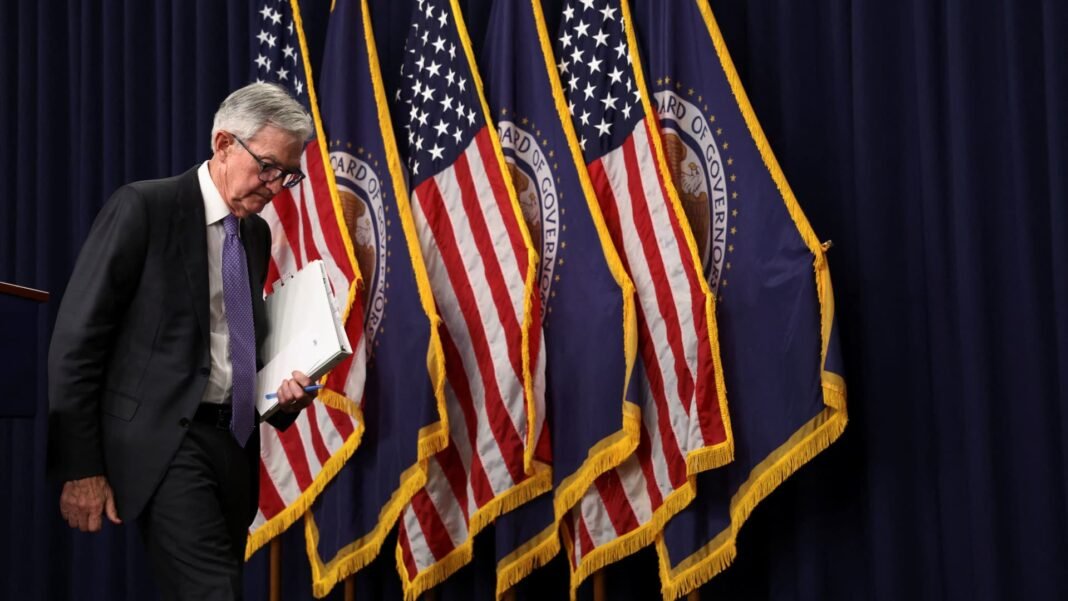
Jerome Powell’s Future at the Federal Reserve: Uncertainty and Implications
The question of whether Jerome Powell will extend his leadership at the Federal Reserve beyond his current term ending in 2026 remains a subject of intense debate. despite ongoing speculation, Powell has chosen to remain deliberately noncommittal about his plans.
Powell’s Reserved Approach to His Tenure
In recent public appearances, Powell has concentrated on fulfilling his existing duties as Fed Chair without revealing any clues about what lies ahead. This deliberate ambiguity has sparked widespread discussion among economists, policymakers, and market watchers.
Why Powell’s Decision Matters for Monetary Policy
The uncertainty surrounding Powell’s continuation is far from trivial; it holds significant consequences for the Federal Open Market Committee (FOMC) and its policy direction. Currently, three governors appointed during President Trump’s governance serve on the seven-member Board of Governors. Should Powell step down, this could tilt control toward presidential influence over monetary decisions more decisively than before.
This potential shift gains added weight considering President Trump’s historical push for lower interest rates-a strategy aimed partly at easing U.S.debt servicing costs amid a national debt that recently surpassed $33 trillion in 2024.
A Departure from Past Norms in Fed Leadership Transitions
Unlike predecessors such as Ben bernanke or Janet Yellen who exited their roles quietly before their terms concluded, Powell faces an unprecedented political complexity regarding whether he stays or leaves. Traditionally, former chairs have transitioned smoothly into retirement or other positions without controversy surrounding continued board membership.
The Personal vs Professional Crossroads Facing Jerome Powell
Sources close to the Fed suggest that Powell wrestles with balancing personal desires against professional responsibilities. After more than ten years with the institution-including eight years as chair-he reportedly looks forward to retirement activities like hiking and playing piano while cherishing time with family as a new grandfather.
Yet alongside these personal aspirations lies a deep commitment to safeguarding the Fed’s independence amid mounting political pressures threatening its autonomy-a principle rooted in landmark agreements such as the 1951 Treasury-Fed accord that established modern central banking norms.
A Historical Parallel: Marriner Eccles’ Extended Role
The only somewhat comparable precedent dates back to 1948 when former Chair Marriner Eccles remained on the Board after stepping down from leadership duties. Eccles played a pivotal role during turbulent times by reinforcing central bank independence-an example some analysts invoke when contemplating how current pressures might shape Powell’s choices.
Potential Impact of Changes in Board Composition Post-Powell
- If Jerome Powell departs by May 2026,President Trump could gain majority control over the Board of Governors-even if only briefly-enabling significant influence over key monetary policy decisions during that period.
- This majority might allow removal of regional bank presidents opposing aggressive rate cuts; however,legal ambiguities persist regarding whether such dismissals require cause or can be executed solely through board votes under provisions outlined in the Federal Reserve Act.
- An ongoing legal dispute involving Governor Lisa Cook adds further uncertainty: her pending Supreme Court case concerning her contested firing may establish critical precedents affecting job security for board members and presidential authority over removals.
The Lisa Cook Case: A Crucial Legal battle Ahead
If Governor Cook is ultimately removed following Supreme Court review expected around early 2026, this would cement Trump’s majority hold on the board-and perhaps pave way for additional removals including possibly targeting Chairman Powell if he resists governance demands aligned with presidential preferences.
Diverse Expert Opinions on Possible Outcomes
- Certain analysts warn against assuming all Trump-appointed governors will uniformly align with presidential wishes; recent unanimous votes reappointing all twelve regional bank presidents despite political tensions suggest some institutional independence remains intact within politically appointed members.
- This persistence complicates forecasts about future dynamics should membership change after Powell’s tenure ends-indicating nuanced internal balances rather than straightforward partisan control shifts are likely at play within FOMC decision-making processes.
- An alternative perspective speculates that by withholding public statements about his intentions, Powell may be strategically maintaining ambiguity-to signal willingness either to stay if nominees appear extreme or depart if they seem reasonable-but no definitive evidence supports this theory given his historically apolitical posture amid fiscal debates and criticism from former President Trump himself.
The Most Probable Scenario: A Traditional Exit but No certainties Yet
The prevailing expectation among observers is that Jerome Powell will step down upon completion of his term in May 2026 consistent with longstanding tradition-thereby avoiding politicization risks associated with remaining under contentious circumstances.
Extending tenure beyond customary limits could invite heightened scrutiny damaging both personal legacy and global confidence in central bank neutrality amid escalating geopolitical economic challenges worldwide-including inflation surges approaching double digits across many developed economies throughout early 2024.
“Continuing beyond term limits would represent an overtly political move contrary to decades-long precedent designed specifically to protect monetary policy from partisan interference.”
A Statement Through Silence?
An alternative interpretation views Powells’ silence not as indecision but rather an assertion reaffirming that tenure decisions rest solely within him-not external forces-and he intends announcing plans only once fully resolved internally rather than prematurely fueling speculation-driven narratives potentially destabilizing markets ahead of critical economic milestones anticipated throughout next year including quarterly inflation data releases projected through mid-2026.


