hesai’s Ambitious Growth Strategy in the Global Lidar Industry
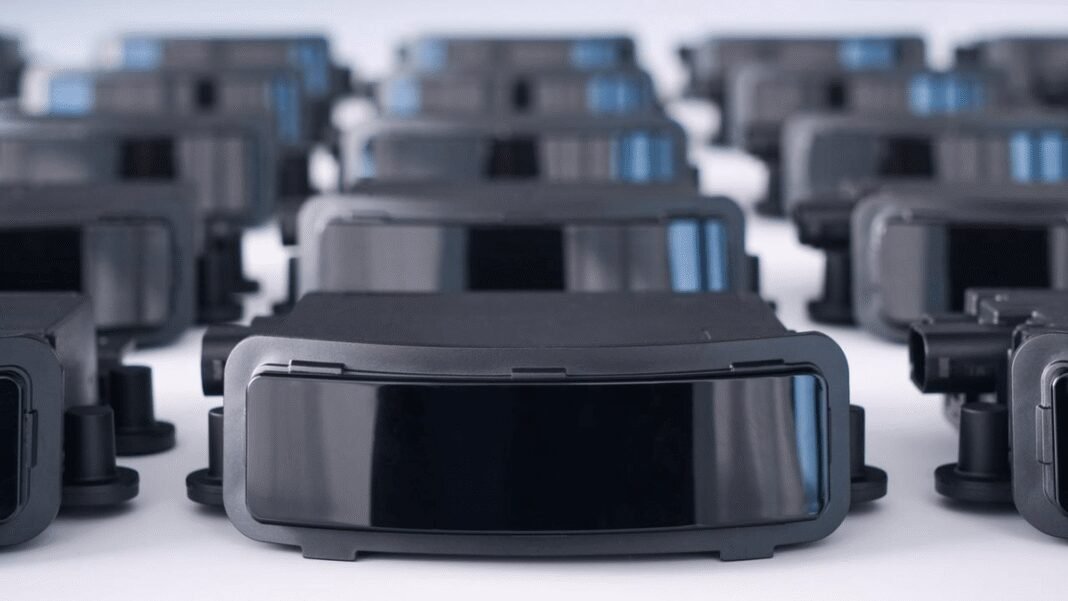
Chinese lidar producer Hesai is set to expand its yearly manufacturing output from 2 million units to an remarkable 4 million within this calendar year, aiming to reinforce its leadership position in the global laser sensor market.This bold objective follows their recent achievement of surpassing the milestone of producing over one million sensors.
Shifting Market Landscape and Competitive Pressures
This rapid expansion plan emerges amid significant upheaval among Western lidar manufacturers. Notably, Luminar, a prominent U.S.-based lidar firm, has filed for chapter 11 bankruptcy and is currently seeking buyers for its lidar division as it undergoes restructuring. Such instability contrasts sharply with Hesai’s accelerating growth trajectory.
Automotive Sector Trends Driving Demand
A substantial portion of Hesai’s growth stems from surging demand within China’s electric vehicle (EV) industry, where nearly 25% of new EVs now incorporate lidar technology.Many upcoming models are expected to be equipped with three to six sensors each, substantially increasing Hesai’s addressable market size. Presently, the company supports 24 automotive clients globally-including a leading European automaker-and holds confirmed orders exceeding four million units for its latest ATX sensor series.
conversely,Western car manufacturers have encountered challenges integrating lidar into their fleets. For example, Volvo initially planned procurement exceeding one million sensors from Luminar but drastically reduced this figure due to project delays and budget constraints-ultimately acquiring only about 10,000 units.
Expanding Horizons: Robotics and Novel Use Cases
The robotics sector offers promising opportunities despite inherent uncertainties surrounding adoption rates. Firms like Ouster-recently merged with velodyne-estimate that robotics applications could represent a $14 billion market encompassing autonomous delivery robots, military drones, and humanoid machines.
At CES Las Vegas 2026, Hesai showcased diverse implementations ranging from robotic lawnmowers to quadruped robots outfitted with their JT series sensors. The company also highlighted ongoing partnerships supplying autonomous vehicle developers such as Pony AI, Motional, WeRide, and Baidu.
Innovative Cost Reductions Fueling Competitive Advantage
A critical element behind Hesai’s rising dominance is its remarkable reduction in sensor production costs by approximately 99.5% over eight years-a progress that has intensified pricing competition against rivals like Luminar. This dramatic cost decline poses significant challenges for U.S.-based competitors striving to maintain profitability amid more affordable Chinese alternatives.
Navigating Regulatory Challenges Amid Geopolitical Complexities
Despite successfully raising hundreds of millions through public listings on Nasdaq and Hong Kong stock exchanges combined with strong global investor interest, Hesai continues facing scrutiny from U.S authorities alleging connections between the company and China’s military-industrial complex-a claim firmly denied by the firm itself.
“The growing demand across automotive and robotics sectors strengthens our resolve to double production,” stated representatives at CES Las Vegas.
This momentum highlights evolving global supply chains favoring agile manufacturers capable of rapid scaling while innovating cost-effectively.
The Future Outlook: Key Opportunities & Challenges for Lidar Providers
- Broadening Sensor Deployment: Increasing use of multiple lidars per vehicle becoming standard practice especially within China’s expanding EV segment;
- Diverse Robotics Applications: Encompassing last-mile delivery systems alongside defense-related technologies;
- Sustained Pricing Pressure: Driving continuous innovation but compressing profit margins across established players;
- Navigating Political Risks: Geopolitical tensions influencing trade policies affecting cross-border technology firms;
- Mergers & Acquisitions Activity: Ongoing consolidation reshaping competitive dynamics worldwide;
The rapidly evolving landscape indicates that companies like Hesai which combine large-scale manufacturing capabilities with technological innovation are well-positioned not only to capture substantial market share but also redefine how laser sensing integrates into future mobility ecosystems on a global scale.