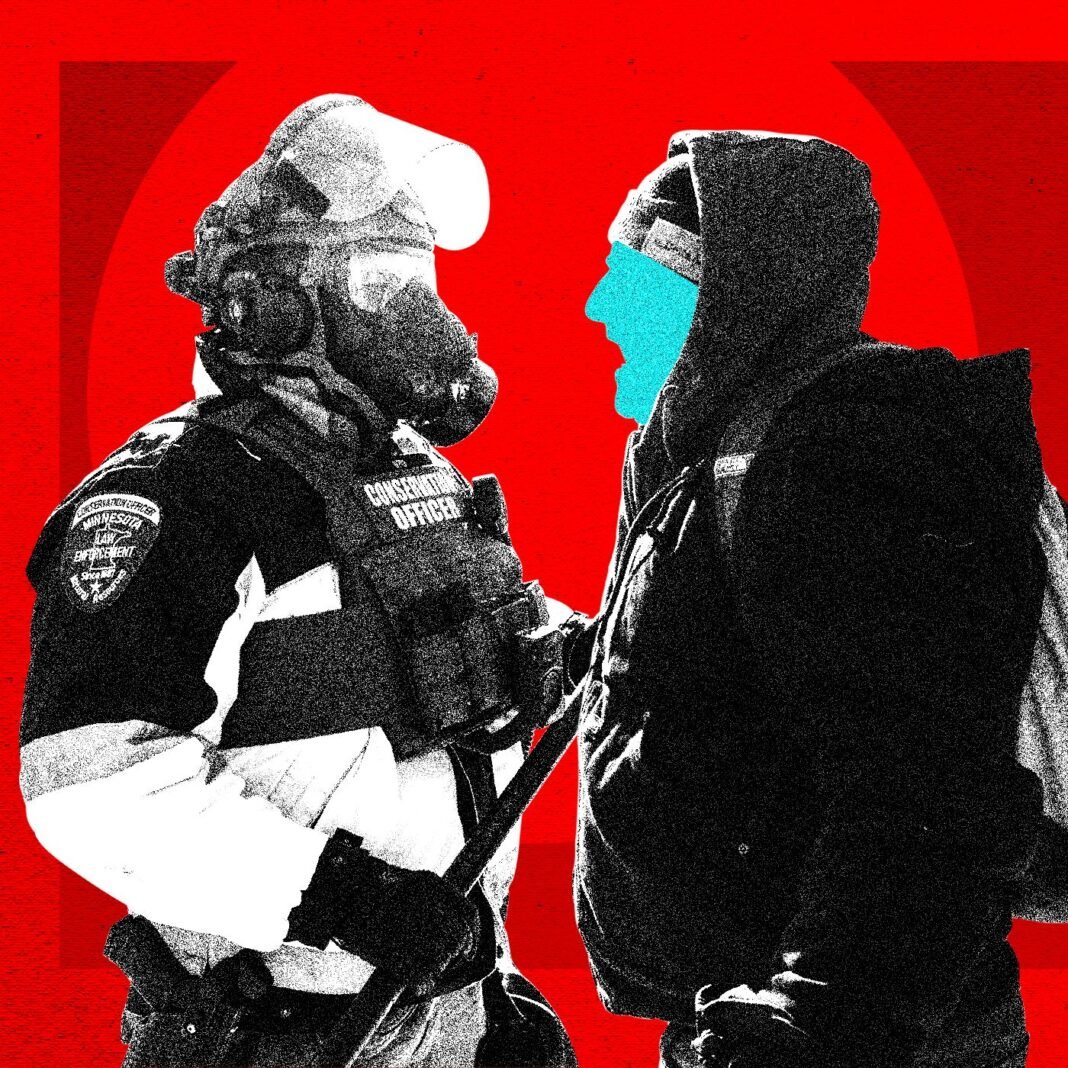
AI-Created anti-ICE Videos: Envisioning Digital Defiance in Contemporary Activism
Harnessing Artificial Intelligence for Political Storytelling
Recently, social media channels have witnessed a surge of AI-generated videos illustrating imaginative encounters between civilians and Immigration and Customs enforcement (ICE) agents. These digital creations often depict peaceful yet assertive resistance, such as a librarian wielding a megaphone to prevent ICE officers from entering or neighborhood groups creatively obstructing federal agents’ movements. Unlike real-world confrontations that sometimes result in violence, these AI-crafted narratives conclude without harm, offering hopeful alternatives centered on accountability and justice.
Reframing Justice through Virtual Imagery
these AI videos function as contemporary allegories challenging dominant political discourses endorsing stringent immigration enforcement. As a notable example, one widely shared clip features an ICE agent being humorously blocked by cyclists during a city parade-an imaginative scenario that amassed over 15 million views within its first week online. Another video shows street artists playfully encircling officers with colorful chalk drawings. By blending satire with resistance, these works create virtual arenas where marginalized voices envision empowerment amid ongoing federal crackdowns.
The Emergence of Digital Protest in the Age of AI
The rise of anti-ICE content generated by artificial intelligence coincides with escalating tensions following several controversial ICE-related incidents this year. Nationwide protests erupted after fatal encounters involving immigration enforcement personnel sparked public outrage in cities like Chicago and Los Angeles under increased federal scrutiny. Within this climate, these videos serve dual roles-as emotional outlets for collective grief and as symbolic acts of defiance against systemic oppression.
The Complex Influence on Public Trust and Perception
While many viewers find solace in these creative expressions, experts caution that the growing sophistication of AI-fabricated footage complicates society’s ability to discern authentic video evidence from manipulated content. This blurring threatens to erode confidence not only in fictional portrayals but also in genuine recordings crucial for exposing abuses-such as verified bodycam footage documenting unlawful actions by officials during protests.
“The proliferation of synthetic media risks casting doubt on even legitimate visual proof,” explains media analyst Drisana Patel from the center for Digital Ethics.
The Danger of Perpetuating Negative Stereotypes
An additional concern is how repeated fictional depictions might unintentionally reinforce harmful stereotypes portraying communities of color as inherently confrontational or disruptive toward law enforcement agencies.When such dramatized scenes dominate online conversations without clear disclaimers or context, they can be weaponized by political opponents who frame activists as threats to public safety or national security.
Diverse Creators Fueling the Movement’s Momentum
A prominent TikTok creator known simply as “Jade Rivera” has produced over 800 anti-ICE themed clips since early this year-many showcasing symbolic acts like community members forming human chains around detention centers or peacefully redirecting officers during rallies involving faith leaders. While some contributors approach their work akin to speculative fiction inspired by real events, others appear driven by viral appeal or monetization linked to emotionally charged storytelling.
This variety mirrors broader industry trends: recent data reveals that approximately 78% of digital marketers now incorporate AI tools into personalized campaigns while nearly 60% of newly published articles worldwide are at least partially generated through artificial intelligence-a proportion projected to climb sharply throughout 2024.
Cultural Resonance Beyond Online Popularity
cultural commentator Amira Solano interprets these anti-ICE productions not merely as entertainment but profound articulations emerging from collective aspirations for justice: “Marginalized groups craft what mainstream platforms often deny them.”
“These visuals diagnose societal fractures rather than obscure them-they expose how deeply communities long for liberation when existing systems fail.”
Misinformation Risks Amid Intensified Surveillance Measures
The Department of Homeland Security recognizes video documentation’s vital role in revealing misconduct during immigration operations; however, activists capturing such moments frequently face intimidation tactics aimed at silencing eyewitnesses on site.
This tension became apparent when recently released footage showed activist Carlos mendoza confronting ICE agents shortly before his detainment-but many dismissed it online as fabricated due to widespread circulation of similar-looking synthetic clips created using advanced generative algorithms.
Consequences Arising From Blurred Boundaries Between Reality and Fabrication
This confusion carries significant ramifications beyond misinformation alone-it may embolden misguided actions based on distorted perceptions fueled more by fictional portrayals than factual accounts:
- Erosion of trust toward authentic protest documentation weakens demands for accountability;
- Misinformed responses grounded in falsehoods risk intensifying conflicts;
- Laws branding dissenters “domestic terrorists” gain momentum amid fears stoked by misleading imagery;
- Stereotypes about racialized groups’ behavior become further entrenched through repeated exposure to dramatized clashes with authorities.
Navigating Political Dialog Amidst Advancing AI Technologies
The expansion of anti-ICE artificial intelligence content exemplifies how cutting-edge technologies transform activism methods while together raising ethical questions regarding truthfulness and portrayal within digital spaces dedicated to democratic participation. As advocacy efforts increasingly depend on online platforms globally-including campaigns championing immigrant rights-the dynamic interplay between human creativity and machine-generated media will remain pivotal yet contested terrain moving forward.