Amazon’s Warehouse Robotics: Breakthroughs, Challenges, and Future Prospects
Transforming Fulfillment with Advanced Robotics
Amazon has established one of the world’s most extensive robotic networks, deploying over 1.5 million robots across it’s fulfillment centers by early 2026. this massive automation effort has significantly reshaped warehouse operations,yet not all robotic ventures have achieved their intended success. For instance, the Blue Jay robot project was discontinued shortly after its launch.
The Journey of Blue Jay: Ambition Meets Reality
Blue Jay was designed as a versatile multi-armed robot aimed at optimizing package sorting and handling within Amazon’s same-day delivery hubs.Developed in just about a year-a notably rapid pace compared to earlier robotics projects-this innovation leveraged cutting-edge artificial intelligence to accelerate deployment.
Despite initial promise during trials at a South carolina facility, Amazon clarified that Blue Jay served primarily as an experimental prototype rather than a production-ready solution. After thorough internal assessments, the company decided to halt the project and redirect its core technologies toward other robotic applications within their ecosystem.
Leveraging Learnings for Broader Automation Goals
The technological advancements from Blue Jay are now fueling improvements in other automation systems focused on enhancing worker safety and operational efficiency. Team members who worked on Blue Jay have transitioned to new initiatives that utilize similar AI-driven manipulation techniques for diverse warehouse tasks.
Diversification Through Vulcan: A New robotic Contender
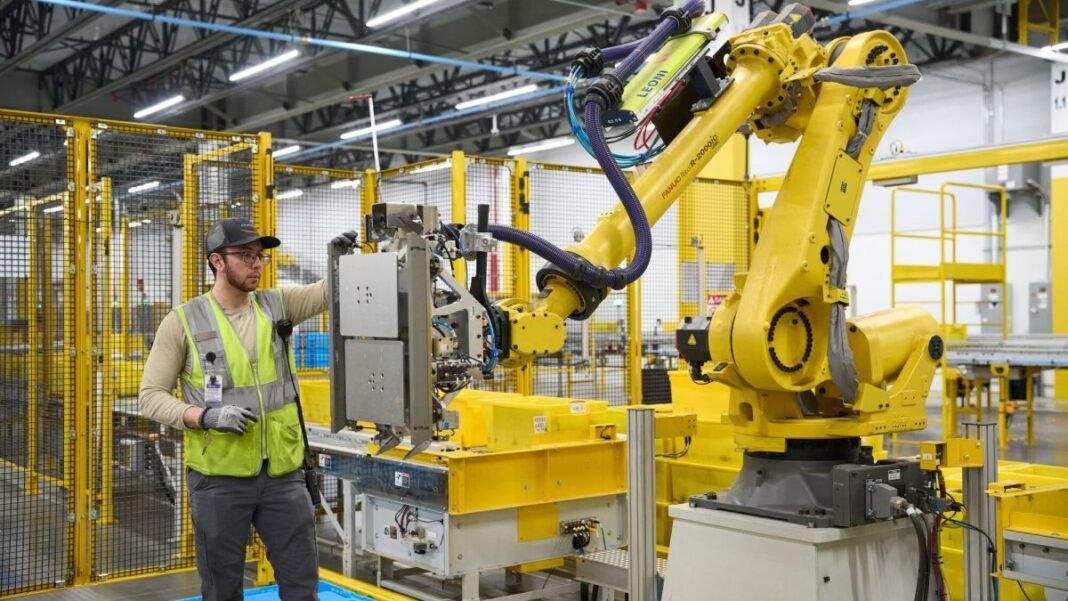
Apart from Blue Jay, Amazon introduced Vulcan last year-an innovative two-armed robot engineered for intricate inventory management inside storage units. One arm rearranges stock while the other employs cameras combined with suction tools for precise item handling.
What sets Vulcan apart is its advanced tactile sensing capability; it can “feel” objects through sensors trained on vast datasets collected during real-world warehouse operations. This sensory feedback enables Vulcan to manage fragile or irregularly shaped items more adeptly than conventional robots lacking such sensitivity.
The Roots of Innovation: Kiva Systems Acquisition
The cornerstone of Amazon’s robotics revolution traces back over ten years ago when it acquired Kiva Systems in 2012. Kiva’s automated guided vehicles transformed warehouse logistics by bringing shelves directly to human pickers rather of requiring workers to traverse aisles manually.
This strategic acquisition accelerated growth dramatically; by mid-2025, Amazon had deployed more than one million robots globally-a testament to ongoing investments aimed at scaling fulfillment capabilities while lowering operational expenses.
Current Impact on Warehouse Efficiency and Safety
- Dramatic Efficiency Gains: Robots now perform approximately 70% of item movement tasks in many facilities,significantly speeding up order processing compared with pre-automation workflows.
- Improved Worker Well-being: Automation reduces repetitive strain injuries by assuming heavy lifting and hazardous material transport duties previously handled manually by employees.
- Sustainability Advancements: Clever routing algorithms optimize energy use during robot navigation throughout warehouses-contributing meaningfully toward corporate sustainability targets amid growing environmental concerns worldwide.
Pioneering Tomorrow: Continuous Innovation Amid Evolving Demands
“Our commitment remains steadfast in blending human expertise with state-of-the-art robotics,” an internal statement highlights regarding ongoing efforts beyond prototypes like Blue Jay or Vulcan.
This iterative approach is vital as customer expectations evolve alongside rapid technological progress across global supply chains today.
The integration of generative AI models accelerates design cycles for next-generation robotic systems tailored specifically for complex logistical challenges faced daily worldwide-ensuring future deployments will be smarter, safer, and more adaptable than ever before in meeting dynamic market needs.