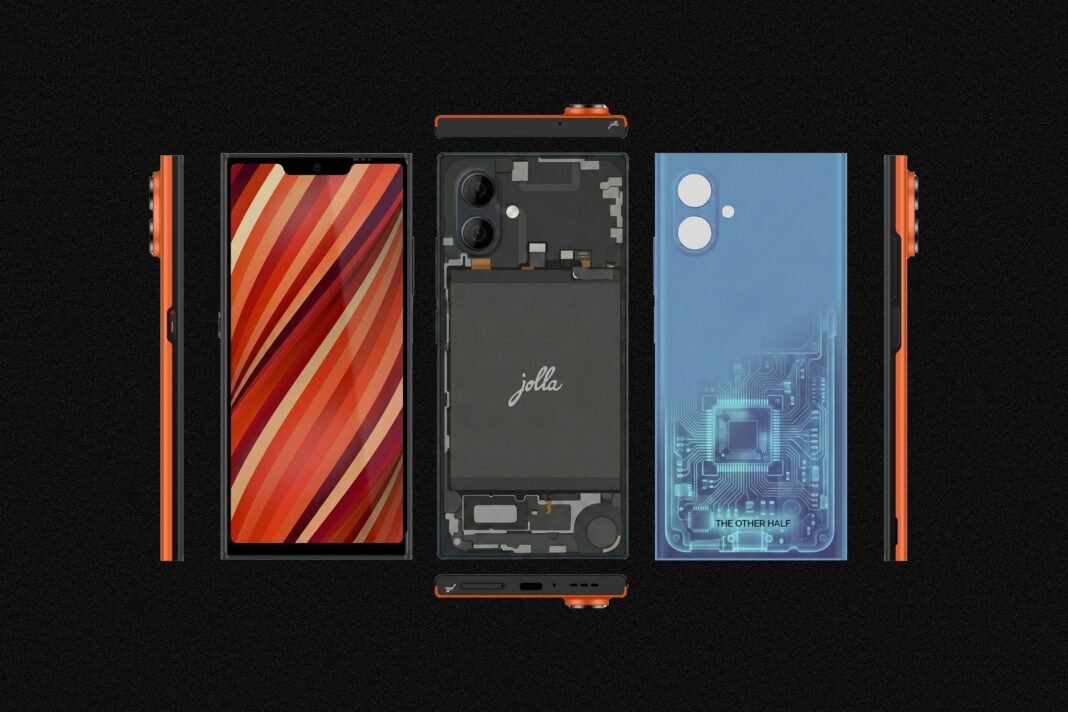
Jolla Phone: Europe’s Bold Challenge to the Mobile OS Giants
Operating quietly yet persistently for over a decade, Jolla has developed its Linux-based Sailfish OS as a viable alternative to the overwhelming dominance of Google’s Android and Apple’s iOS. The finnish company is now relaunching its flagship smartphone with renewed vigor, aiming to capture attention in an era where privacy and digital sovereignty are becoming paramount concerns.
A Fresh Start for Jolla in the Privacy Era
More than thirteen years after debuting their original device-which impressively received software updates until 2020-Jolla has introduced a new model under the same name. This latest release positions itself as “the European phone,” tapping into growing distrust of US tech giants amid geopolitical tensions and increasing calls across Europe for control over digital infrastructure.
Priced at €649, the handset embraces scandinavian design principles with clean lines and minimalism. Since its announcement in late 2025, it has garnered over 10,000 preorders, with deliveries expected by mid-2026. At Mobile world Congress 2026 in Barcelona, Jolla revealed additional technical specifications that balance innovation with practical user needs.
The Road from Setbacks to Revival
Jolla’s history includes meaningful hurdles: after difficulties launching their tablet in 2015 and facing financial instability,they shifted focus toward licensing Sailfish OS primarily to automotive companies and government agencies-including Russia-until geopolitical developments necessitated ending those partnerships. Subsequently, key assets were acquired by former management under a new entity named Jollyboys.
the company re-entered smartphone production in 2024 through collaboration with a turkish partner on the community-driven Jolla C2 phone. This experience laid essential groundwork for assembling their newest device domestically in salo-a Finnish city once renowned as Nokia’s manufacturing hub more than ten years ago.
Global Components Meet Local Assembly
The hardware inside reflects an international supply chain: Taiwan supplies the MediaTek Dimensity 7100 5G chipset; Sony provides high-resolution camera sensors including a primary 50-megapixel lens; South Korea’s SK Hynix delivers RAM modules available in either 8GB or 12GB configurations. While some parts originate from China-as transparently acknowledged-the critical processes of software compilation and installation take place within Finland itself to ensure product integrity and security.
Sailfish OS: A Truly Independent Linux-Based System
Diverging from many alternatives such as GrapheneOS or /e/OS-which build upon Android Open Source Project code requiring extensive removal of Google services-Sailfish OS is built directly on Linux without any inherent Google dependencies. This architecture offers users greater autonomy over personal data while still supporting Android apps through compatibility layers that occasionally face limitations but continue improving.
To ease adoption among users unfamiliar with non-Google ecosystems, Sailfish includes optional installation of MicroG-an open-source implementation providing essential Google service functionality without official Play Store access-and does not require creating any account within Sailfish itself during setup.
The Growing Push for digital Sovereignty Across europe
Jolla’s efforts align closely with broader European initiatives aimed at reducing dependence on American technology providers amid rising privacy concerns and political friction worldwide. Comparable projects include France’s Murena offering /e/OS as an alternative mobile system; Canada’s grapheneos partnering recently with Motorola; plus Switzerland’s Punkt collaborating on secure smartphones running ApostrophyOS-all emphasizing user control over data security rather than reliance on Big Tech ecosystems.
Main Hardware Features & Distinctive Attributes
- Processor: MediaTek Dimensity 7100 (mid-tier chipset optimized for efficiency)
- Memory & Storage: configurations include either8GB or12GB RAM pairedwith256GB internal storage plus microSD card expansion slot
- Cameras:Main sensor boasts50 megapixels complemented by13-megapixel ultrawide lensand32-megapixel front-facing camera
- Battery Capacity:A robust5500mAh battery supports extended daily use despite compact dimensions
- Display Size & Quality:A vibrant6.36-inch1080P AMOLED screen delivers sharp visuals suitablefor multimedia consumption
- NFC/Dual SIM Support:User versatility enhanced via dual-SIM tray allowing simultaneous useof two networks
- lack of Latest Wireless Standards:The device supports Wi-Fi6and Bluetooth5.4 but does not yet incorporate Wi-Fi7or newer bluetooth versions foundin flagship models
“The Other Half”: reviving Modular Smartphone Innovation
An innovative throwback feature returning from earlier iterations is “The Other Half”-interchangeable rear covers equippedwith pogo pins enabling modular accessories suchas secondary displays or physical keyboards attachable directly ontothe back panel.
This concept encourages community-driven innovation through programs inviting enthusiasts worldwideto co-design functional covers using accessible technologies like3D printing.
This modularity also allows user-replaceable batteries-a rarity among modern smartphones favoring sealed designs-which substantially enhances longevityandsustainability comparedto mainstream devices often discarded due solely tobattery degradation issues today.
Navigating Market Realities & Future Outlooks
Niche privacy-focused phones often command premium prices relative tospecific hardware due largelyto limited economiesof scale.Examples include minimalist devices like Light Phone III priced around$699 despite modest features.Jollaspec-to-price ratio appears more balanced but remains targetedtoward discerning consumers prioritizing sovereigntyover raw performance metrics alone.
“While most users deeply embedded within Android or iOS ecosystems may hesitate switching immediately,” leadership at Jollyboys notes,“this product marks foundational progress pavingthe wayfor future innovations drivenby emerging AI-powered form factors.”
This vision hints at upcoming integrations suchas Mind²-a privacy-centric AI assistant currently under advancement designedto operate locallyon PCswithout cloud dependency,enabling natural language queries across personal emailsand calendars securely.The new phone will launch initially without built-in AI capabilities,but plans existfor optional activation later this year enhancing productivity while maintaining strict confidentiality standards demandedbyprivacy advocates globally.
Towards Broader Adoption?
the device currently targets markets primarilywithin Europe including EU countries,the UK,Norway,and Switzerland.This focus stemsfrom regulatory environments supportiveofdigital sovereignty initiatives though importation into US territories remains theoretically possible albeitwith uncertain carrier compatibility.Jollyboys considers dedicated US launches contingent upon demand growth.
Sailfish OS experience: What Lies Ahead?
Despite longstanding commitmenttosustainedsoftware support spanning morethanadecade,Jollas successwill depend heavilyon refining usabilityand app compatibilityincreasingly competitive landscapeswhere deGoogledAndroid alternatives have become easierfor average consumers todipintoto.With evolving consumer expectationsaroundprivacy,functionality,and affordability,the coming months will reveal whether this distinctly European approach resonates beyond early adopters seeking refugefrom Big Tech dominance.