



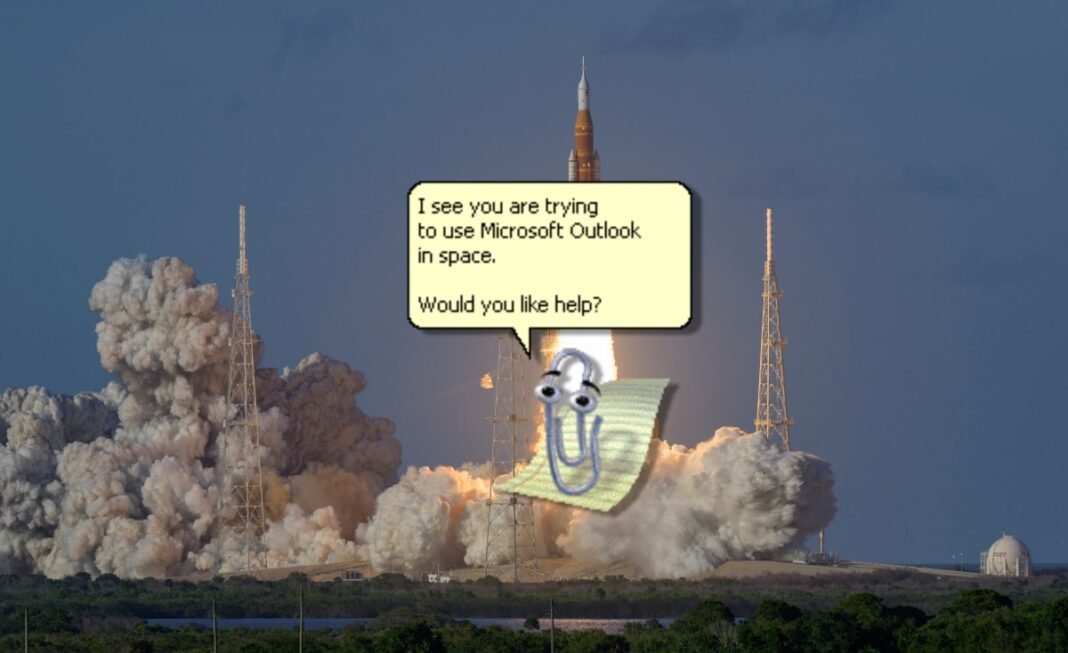
Unexpected Obstacles Challenge Artemis II Beyond Spaceflight
Orbiting wiht Software Snags: Microsoft Outlook Issues Aboard Orion
Before the Orion spacecraft even left Earth, NASAS Artemis II mission-the first crewed lunar voyage in over 50 years-was already grappling with a series of technical setbacks.These ranged from persistent leaks of hydrogen and helium to heat shield complications and critical safety system malfunctions. However, once the crew reached orbit, they encountered an entirely different challenge: difficulties operating Microsoft Outlook on their onboard devices.
On the mission’s opening day of a planned 10-day journey, commander Reid Wiseman faced trouble accessing outlook on his personal computing device (PCD), a Microsoft surface Pro used during flight operations. Initially struggling with issues related to Optimus software, he soon discovered that two separate instances of Outlook were running simultaneously but neither was responsive.
“I also see that I have two Microsoft Outlooks, and neither one of those are working.If you want to remote in and check Optimus and those two outlooks, that would be awesome,” Wiseman communicated live to Mission Control.
The ground support team quickly took control remotely to troubleshoot his device. They resolved the Optimus software glitch and managed to launch one instance of Outlook; though, it remained offline due to expected connectivity limitations while in space.
The Role of Email Communication During Lunar Missions
This scenario prompts curiosity about what astronauts actually use email for when millions of miles away from Earth. Despite being so far removed from terrestrial life-a situation where many might simply activate an out-of-office reply-email remains essential for coordinating scientific experiments, sending status reports back home, and staying connected with loved ones during long missions.
Beyond digital Glitches: Everyday Challenges in Space
The hurdles faced by Artemis II extended beyond software troubles. Shortly after liftoff, the crew encountered a malfunction within their onboard toilet system when its ventilation fan became stuck-a serious concern given how waste management operates under microgravity conditions.
“The toilet fan is reported to be jammed,” stated NASA officials monitoring telemetry data.
“Ground control promptly provided detailed instructions enabling astronauts to access and clear the fan mechanism so normal function could resume.”
This contingency was vital because failure could have resulted in unsanitary conditions inside the confined spacecraft environment-an issue familiar from previous missions where floating debris posed health hazards. Fortunately for Artemis II’s team-and future lunar explorers-the problem was swiftly fixed without jeopardizing mission goals or crew comfort.
Tackling Modern Complexities During Lunar Exploration
The ability of aerospace engineers both on Earth and aboard orion to resolve intricate life-support malfunctions alongside everyday office software problems highlights remarkable adaptability amid unprecedented challenges thousands of miles above our planet. Successfully managing these diverse issues is crucial for safely navigating around the Moon while maintaining operational efficiency using advanced technology onboard spacecraft today.
A New Chapter Calls for Innovative approaches
- The Artemis program marks humanity’s revitalized dedication toward sustainable lunar exploration following decades-long pauses;
- The integration of commercial technologies like Microsoft Surface devices introduces novel variables demanding creative support solutions;
- crew dependence on digital tools reflects how space missions increasingly resemble terrestrial workplaces despite extreme environments;
- Troubleshooting unexpected glitches remains essential for safeguarding astronaut health during prolonged journeys beyond low-Earth orbit;
- This fusion between cutting-edge engineering challenges and routine problem-solving exemplifies modern spaceflight complexity unlike any prior era.
Navigating Forward: Balancing Innovation with Resilience
The experiences aboard Artemis II demonstrate how even state-of-the-art missions must anticipate seemingly mundane yet impactful obstacles-from software bugs disrupting email access to mechanical failures affecting hygiene systems-all while pushing human exploration farther than ever before. As NASA continues refining procedures based on real-time insights gathered throughout this flight-which generates over 15 terabytes daily through sophisticated instruments-the future lies in harmonizing technological advancement with robust contingency planning against unforeseen setbacks.


