app Launches Defy Expectations Amidst the AI Boom
despite early predictions that artificial intelligence would reduce the importance of mobile applications, the volume of new app launches is reaching unprecedented heights worldwide.
Record-Breaking Growth in App Releases During 2026
Data from early 2026 indicates a staggering 60% surge in global app launches across both Google Play and Apple’s App Store compared to the previous year. The iOS platform alone experienced an even more pronounced increase, with new apps rising by approximately 80%. By April, combined releases on these platforms had more then doubled year-over-year, while iOS-specific launches neared a 90% growth rate.
The Evolving Role of AI in Mobile Development
This unexpected expansion challenges earlier forecasts that AI-driven chatbots and virtual assistants would make conventional apps obsolete. Industry experts who once anticipated a decline in smartphone applications are now revising their views as emerging technologies reshape user interaction. For example, devices like mixed reality headsets and voice-activated ambient computing systems are gaining popularity but have yet to supplant smartphones as primary digital tools.
Furthermore, partnerships between leading AI developers and design innovators-such as collaborations focused on creating specialized AI hardware-demonstrate how artificial intelligence is becoming deeply embedded within future tech ecosystems rather than replacing existing platforms outright.
AI Empowering a New Generation of App Creators
A key driver behind this surge is the widespread availability of intuitive AI-powered development tools. Platforms such as CodeSandbox and GitHub Copilot enable individuals without formal programming backgrounds to build functional mobile apps quickly. This democratization has sparked what many describe as a creative renaissance across global app marketplaces.
Diverse categories Fueling Expansion
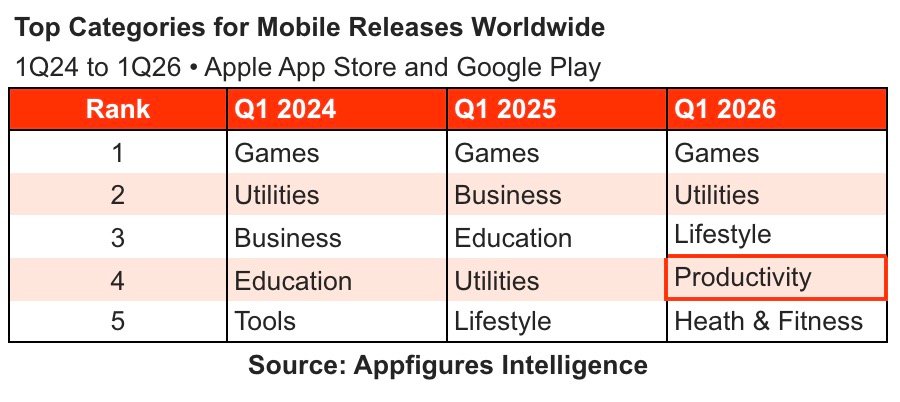
- Casual Games: Remaining the most prolific category for new releases worldwide due to ongoing demand for entertainment on-the-go.
- Utility Apps: Experiencing rapid growth to become the second most launched category by addressing everyday user needs efficiently.
- Lifestyle Applications: Rising from lower ranks into third place this year by catering to personalized experiences such as home automation and social connectivity.
- Productivity Software: Newly breaking into top five categories amid increasing demand for tools that enhance work-from-anywhere efficiency.
- Mental Health & Wellness Apps: Sustaining strong momentum driven by heightened global focus on personal well-being post-pandemic.
Navigating Challenges Amid Rapid Market Expansion
The influx of thousands of new applications presents meaningful hurdles for platform managers like Apple. Recently, Apple removed Freecash-a popular rewards-based app-from its store after policy violations surfaced despite its high ranking over several months. Additionally, fraudulent cryptocurrency wallets disguised as legitimate apps caused users losses exceeding $9 million before being detected and taken down.
“The sheer volume of submissions pushes even advanced review systems to their limits.”
This situation underscores persistent concerns about maintaining quality control during explosive growth fueled partly by easier development through AI assistance. While Apple continues stringent screening processes-blocking hundreds of thousands of deceptive or spammy submissions annually-the overwhelming quantity strains defenses against scams or malicious software infiltrating users’ devices globally.
The Need for Strengthened Oversight Frameworks
Certain industry voices recommend forming dedicated task forces focused exclusively on identifying rapidly spreading fraudulent or scammy applications-a so-called “fraud detection unit.” As creators increasingly utilize AI-driven coding aids producing vast numbers of offerings daily, enhanced oversight mechanisms become essential to preserve consumer trust across digital storefronts worldwide.
The Road Ahead: Harmonizing Mobile Apps with Artificial Intelligence Innovation
The current trajectory suggests artificial intelligence will not replace customary mobile applications but rather serve as both an accelerator and enabler-broadening creative horizons while speeding innovation cycles within established ecosystems like Apple’s App Store.