Escalating Tensions and Governance Struggles in Gaza
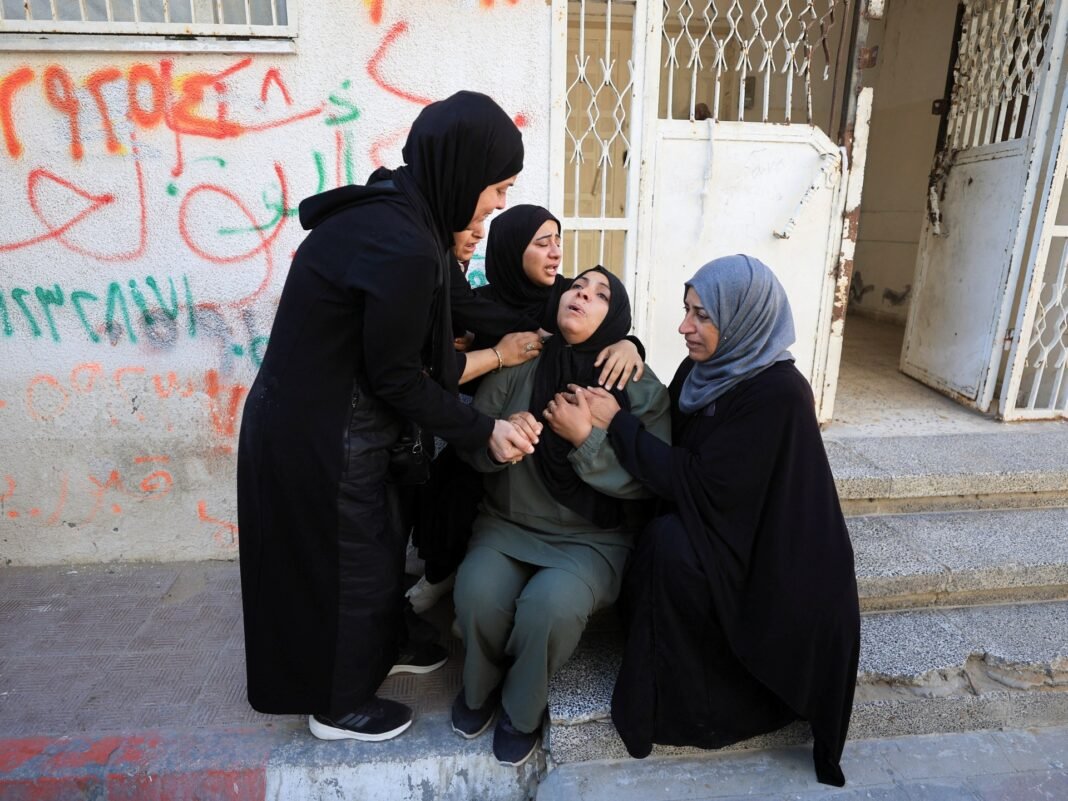
In recent days, Israeli military actions within teh Gaza Strip have intensified sharply, resulting in the deaths of at least four Palestinians, including a 40-year-old woman from Khan younis.This escalation unfolds amid repeated violations of the ceasefire agreement established last October.
Health officials report that over 25 Palestinians have died just this past week alone, pushing total fatalities since the ceasefire’s inception beyond 800. The Gaza Strip continues to bear deep wounds from more than two years of relentless conflict that has claimed an estimated 72,500 Palestinian lives.
Widening Military Presence and Its Effects on Civilians
The Israeli Defense Forces (IDF) have recently intensified operations targeting Palestinian police forces. Six officers were reportedly killed under accusations-yet to be publicly substantiated-of planning imminent attacks.Experts interpret these strikes as deliberate attempts to destabilize governance structures and hinder progress toward peace under US-led negotiations.
Political analyst Layla Mansour explains that Israel’s approach seems aimed at dismantling law enforcement capabilities to create disorder within gaza: “The strategy appears designed to make daily life intolerable for residents, encouraging displacement aligned with broader strategic goals.”
The IDF has expanded its operational control eastward by roughly 37 kilometers (23 miles), now overseeing nearly 60% of Gaza’s territory. This territorial expansion fragments Palestinian communities and severely restricts civilian movement across the region.
Despite clauses in the ceasefire requiring phased troop withdrawals after initial stages, Israel has maintained its military presence as talks advance into subsequent phases.
Diminished Administrative Authority Amid Conflict
This surge in violence coincides with a significant weakening of the National Committee for the Management of Gaza (NCAG), a technocratic body established through US initiatives aimed at reconstruction and governance reform. Originally intended as a stabilizing force fostering development, NCAG’s effectiveness has been largely undermined by Israeli-imposed restrictions limiting its operational capacity on the ground.
Governance expert Omar Khalil highlights how security realities are inseparable from administrative functions: “Effective service delivery is unachievable without addressing occupation dynamics and security controls.” He stresses that meaningful progress hinges on israel withdrawing from occupied zones-a condition yet unmet.
Maya Hassan notes that while initial international pressure compelled Prime Minister Netanyahu to accept ceasefire terms, current Israeli policies appear focused on obstructing NCAG’s role to prevent any resurgence of political or civil institutions in Gaza. This perpetuates an indefinite military occupation rather than enabling genuine autonomy or growth.
The Controversy Surrounding Disarmament Under US Influence
A panel known as the “Board of Peace,” chaired by former President trump and including prominent pro-Israel American figures such as Jared Kushner and Marco Rubio, wields considerable influence over decisions shaping Gaza’s future governance framework. Proponents argue Israel’s temporary suspension of certain ceasefire provisions stems from Hamas’ refusal to disarm voluntarily.
“Hamas will be disarmed either peacefully or through force,” declared Republican strategist Daniel Mercer; “If Hamas resists voluntary disarmament efforts, Israel will respond accordingly.”
On thier part, Hamas maintains it will not surrender arms until all Israeli forces fully withdraw from Palestinian territories-a stance reflecting profound mistrust toward existing arrangements.
Aid Limitations Hampering Reconstruction Progress
- The original ceasefire agreement stipulated daily entry for up to 600 aid trucks into Gaza; however recent figures reveal only between 150-190 trucks are allowed each day-less than one-third of expected volume.
- Cruicial supplies necessary for debris removal and medical facility repairs remain entirely blocked at border crossings despite urgent humanitarian needs rising over 40% compared with previous years according to UN assessments this year alone.
Narratives Concealing Ongoing Hostilities
Khalil argues that Israel uses Washington’s peace framework as a façade while continuing military operations justified by vague demands such as “disarmament.” He describes this rationale as unrealistic given persistent violations:
“Israel hides behind US legitimacy but sacrifices everything else needed for ending conflict indefinitely.”
A Fragmented Sovereignty Without Real Authority
Critics liken current administrative models imposed upon Palestinians to corporate-style management systems stripping local leaders of political power-reducing them essentially into service providers lacking true independence amid ongoing occupation pressures.
The absence so far of international stabilization forces originally envisioned during negotiations-and continuous incursions-renders prospects for an autonomous governing body capable of delivering substantive change increasingly unlikely within an environment dominated by armed militias operating alongside occupying troops unchecked.
“We find ourselves trapped in a cycle,” sums up analyst Omar Khalil regarding hopes for peace or self-governance amid escalating violence and stalled diplomacy.