U.S.-China Relations and Taiwan: Managing a Fragile Equilibrium
Calls for Calm Between China and Taiwan After High-Level Talks
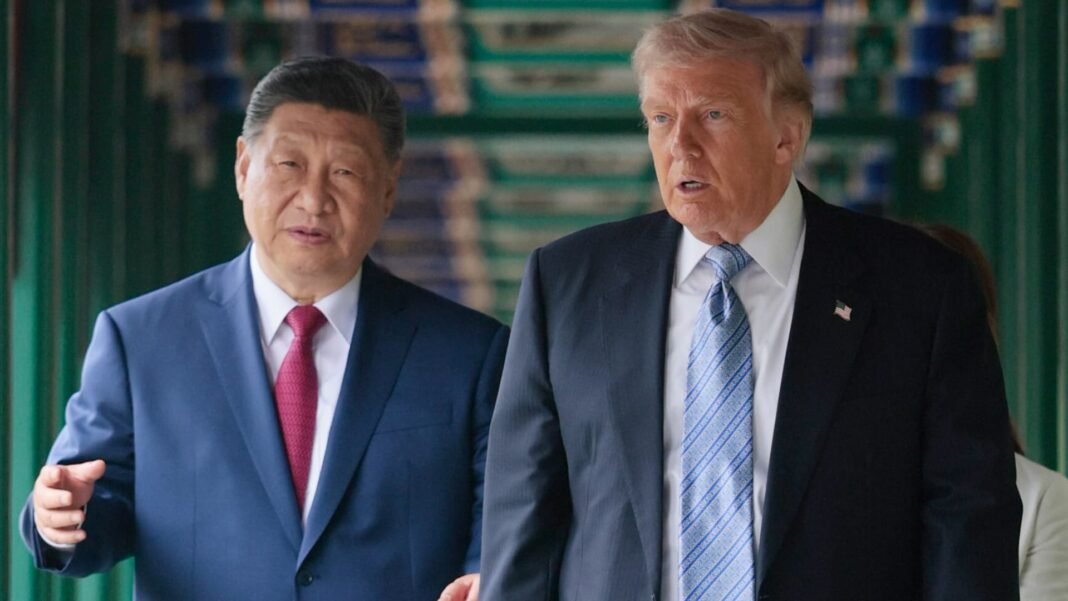
Following his meeting with Chinese President Xi Jinping in Beijing, former President Donald Trump urged both China and Taiwan to reduce tensions. He stressed the necessity of mutual restraint to avoid escalating conflicts in this strategically vital region.
during a Fox news interview, Trump reiterated that the United States’ longstanding stance on Taiwan remains unchanged despite his recent discussions with Xi. He also advised taiwanese citizens to adopt a neutral outlook regarding his visit.
The Nuances of U.S. Defense Obligations Toward Taiwan
Trump voiced hesitation about automatically defending Taiwan if it faced an attack from China, linking such military involvement to taipei’s ambitions for independence. “I’m not seeking war thousands of miles away,” he remarked, highlighting his preference for diplomatic solutions over armed conflict.
On the subject of arms sales to Taiwan, Trump was deliberately vague: “I may approve it; I may not.” His cautious approach reflected concerns about encouraging moves toward formal independence under the assumption of guaranteed U.S. military support.
The Role of Strategic Ambiguity in U.S. Policy
When pressed during his return flight from Beijing on whether America would defend Taiwan against Chinese aggression, Trump declined a definitive answer: “I don’t talk about that.” This deliberate ambiguity aligns with Washington’s long-established policy designed to deter conflict by keeping its exact response uncertain.
The Wider Geopolitical Landscape: Global Conflicts Affecting Indo-Pacific Security
The ongoing turmoil involving Iran has raised alarms among defense experts regarding America’s capacity to deter potential Chinese aggression toward Taiwan effectively. The redeployment of key U.S. naval forces from the Indo-Pacific theater toward Middle Eastern operations has arguably diminished deterrence strength near East Asia’s critical flashpoints.
“Prolonged global engagements strain America’s defense production capabilities, possibly creating vulnerabilities adversaries could exploit,” analysts warn amid shifting security priorities.
Taiwan’s Strategic Meaning Amid Changing Military Deployments
- The withdrawal or reassignment of major naval assets reduces immediate American presence around hotspots like the Taiwan Strait;
- Dwindling munitions reserves after extended overseas campaigns could hamper rapid response if tensions escalate suddenly;
- This evolving scenario underscores why diplomatic efforts aimed at de-escalation are increasingly urgent among international policymakers.
Xinhua’s Cautionary Message and Xi Jinping’s Firm Position on Taiwanese Sovereignty
at their summit’s start, President xi issued a stern warning emphasizing how mishandling issues related to taiwanese independence could severely damage Sino-American relations. He described “the Taiwan question” as central within bilateral ties and cautioned against any actions risking major confrontations between their nations.
A Possible Shift Toward Clearer U.S. policy Language?
Observers anticipated Beijing might push washington into explicitly opposing taiwanese independence rather than merely refraining from supporting it-a subtle yet meaningful shift signaling stronger alignment with China’s claims over Taipei.
Such changes in wording would clarify America’s position while sending firm signals concerning its security commitments across Asia-Pacific regions vulnerable to separatist movements or external interference.
The Calculated Patience Behind China’s Military Posture Regarding Taiwan
Taiwan specialists identify several reasons why China appears reluctant to launch direct military action despite assertive rhetoric:
- Economic Implications: A full-scale invasion risks triggering severe sanctions disrupting global supply chains where China is deeply integrated-accounting for nearly 30% of global manufacturing output as reported in early 2024 data;
- Miliary Readiness Concerns: Despite significant modernization efforts within China’s People’s Liberation Army (PLA), recent internal personnel changes have reportedly impacted combat readiness negatively-raising doubts about operational effectiveness during complex amphibious assaults or urban warfare scenarios near Taipei;
“The high stakes involved-including threats against CCP legitimacy if operations fail-make aggressive moves less probable at present,” analysts note based on recent PLA personnel developments.”
A Ancient Parallel: lessons From Cold War Brinkmanship
This situation mirrors Cold War-era standoffs when superpowers balanced nuclear threats without igniting open conflict-a reminder that careful diplomacy often prevails amid intense geopolitical rivalries involving contested territories like Cuba then or Taiwan today.
Just as Kennedy and Khrushchev avoided war through secret negotiations despite public posturing, current leaders face similar pressures requiring delicate navigation between deterrence and dialog strategies now intensified by advanced technologies such as AI-driven surveillance systems deployed along disputed borders since 2023.
Navigating Forward: Stability Depends on Mutual Restraint and Transparent Dialogue
- Both Beijing and Taipei must focus on minimizing provocations while engaging constructively through established diplomatic channels;
- Washington continues balancing support for democratic partners without provoking unnecessary escalation;
- Global actors closely monitor these dynamics amid broader challenges including climate-induced resource competition affecting regional stability;
This fragile balance demands constant vigilance combined with pragmatic policies aimed at safeguarding peace across one of today’s most sensitive international flashpoints-the future status of Taiwan .