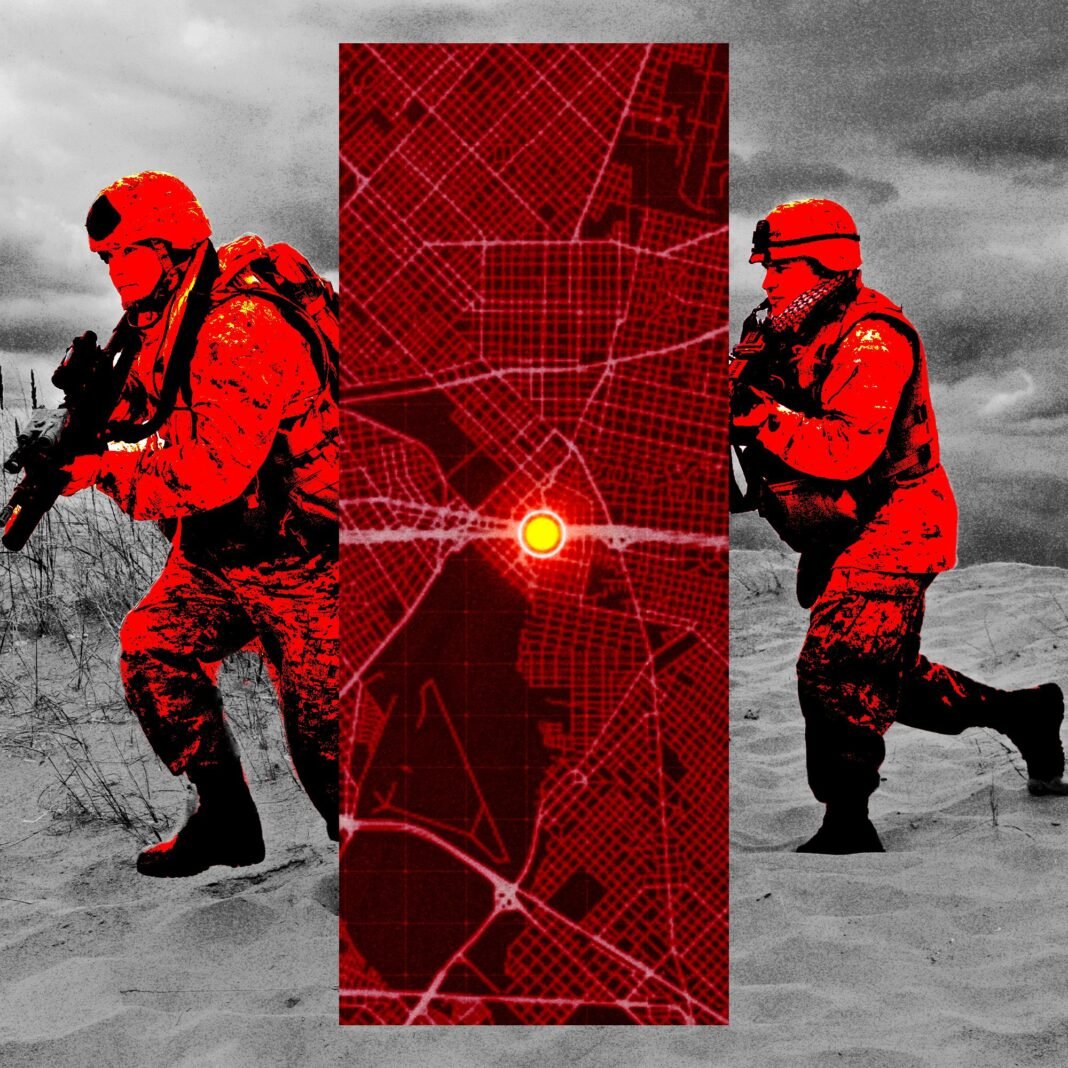
How Commercial Location Data Endangers US military Personnel
The Escalating Danger of Location Data Misuse
For more than a decade, warnings have circulated within the Pentagon-from contractors, intelligence experts, and government agencies-about the ease with which commercial location data can be purchased by virtually anyone with a credit card. This data reveals where American troops reside, operate, and even store critical assets such as nuclear weapons. These early alerts have now evolved into tangible threats on active military fronts.
Recently declassified documents confirm that US Central Command has officially recognized multiple instances where adversaries exploited commercially available location information to monitor or target deployed American forces overseas. This admission marks the first formal acknowledgment that the rapidly expanding data-broker industry is being weaponized against US military personnel in conflict zones like the Middle East.
A History of overlooked Alerts and Legislative Inaction
despite numerous alarms raised before Congress-mirroring concerns voiced by defense officials-the legislative response remains insufficient. Efforts to enact extensive privacy reforms aimed at restricting the sale and misuse of location data have repeatedly stalled in Washington.Current regulations only limit resale of information shared with military contractors but leave vast portions of commercial tracking untouched.
An illustrative case from 2016 exposed this vulnerability starkly: At Fort Bragg’s Joint Special Operations command facility in North Carolina (not California), a government technologist demonstrated to senior officers how commercially sourced phone location records could trace elite units’ movements from their home bases through Turkey into covert sites in northern Syria. Importantly, this sensitive information was openly accessible not only to US agencies but also foreign intelligence services and advertisers alike.
The Department of Defense’s Contradictory Role in Its own Exposure
While fully aware of these risks, certain branches within the Department of Defense actively purchased commercial phone location datasets-including those involving Americans-without obtaining warrants.In 2021, the Defense Intelligence Agency disclosed its use of such datasets for intelligence gathering under legal interpretations that no warrant was required. earlier investigations revealed popular consumer apps as sources for harvested geolocation data sold back to military entities.
Academic Studies Reveal Data Broker Marketplaces Targeting Military Families
A 2023 study conducted jointly by west Point researchers and Duke University experts simulated how foreign adversaries might acquire sensitive personal details about service members via public data brokers. Their research uncovered thousands of listings advertising detailed datasets labeled “Military Families Mailing List” or “Hard Core Military Families.” For as little as 12 cents per record, they obtained names, addresses, health conditions, financial details-and even geofenced records linked directly to key installations like Fort Bragg and Quantico.
The Digital Advertising Ecosystem’s Role in National Security Vulnerabilities
The following year revealed that major advertising platforms facilitated access to similarly sensitive segments targeting government employees involved in national security or working for defense contractors specializing in missile technology and cryptography systems protecting classified communications.
“When registering for access there were no verification questions-I could have been anyone,” explained an investigator posing as an analytics firm representative during one such probe.
Tangible Impacts: Monitoring Troops on Foreign soil
An earlier inquiry showed how publicly available geolocation samples exposed daily movements of thousands of American military personnel stationed across Germany-including near nuclear storage facilities at Büchel Air Base-and tracked activities at training grounds like Grafenwöhr where suspected saboteurs had previously been caught scouting locations.
The Pentagon responded by emphasizing individual operational security training but stopped short of implementing systemic safeguards-a strategy proven inadequate by Army-commissioned research highlighting widespread exposure through common web trackers embedded on unclassified networks used domestically by soldiers.
Reducing Digital Vulnerabilities Within Military Networks
A May 2025 report from West Point’s Army Cyber Institute found over 20% of frequently visited websites on Army networks contained third-party trackers capable of monitoring user behavior across domains-with straightforward fixes requiring minimal resources readily identified. Among recommendations was removing Google Chrome from official devices due to its refusal at that time to block cross-site tracking cookies; lawmakers are now echoing calls for similar measures nationwide within defense infrastructure.
Bipartisan Congressional Calls Demand Pentagon Action
A coalition crossing party lines recently sent a detailed letter urging top DoD officials-including Chief Information Officer Kirsten Davies-to implement long-overdue cybersecurity measures: disabling advertising IDs on military phones; replacing Chrome browsers with privacy-focused alternatives; automatically enrolling service members into opt-out programs offered by state-level data brokers; and more robust enforcement of existing laws designed specifically for protecting personnel vulnerable to cyber exploitation as 2017.
This letter highlighted troubling delays-for example Centcom only enabled toggling off location sharing features on government smartphones roughly ten years after initial warnings became public-exposing systemic inertia despite repeated evidence presented over time.
The Rising Concern Over Personal Device Use Among Soldiers
This month saw directives encouraging soldiers to conduct official business using personal mobile phones-the very devices broadcasting persistent advertising identifiers feeding into commercial broker databases known for aggregating sensitive locational metadata without meaningful safeguards beyond isolated app boundaries maintained internally by the Army itself.
Autonomous researchers warn these internal protections do little against external aggregation efforts routinely employed throughout global digital marketing ecosystems today.
The Larger Privacy struggle Behind Military Security Challenges
Civil liberties advocates emphasize ongoing political obstacles blocking effective regulation aimed at curbing surveillance capitalism’s encroachment into national security realms.
Legislation passed two years ago intended partly to prohibit federal subsidies fueling this industry failed largely due to opposition from lawmakers prioritizing surveillance capabilities over privacy-even after recent elections shifted congressional compositions somewhat favorably toward reformers’ goals.
“Surveillance is not inherently synonymous with security,” says privacy campaigners pointing out mounting evidence linking essential rights protection directly with safeguarding individuals’ physical safety amid evolving technological threats.
final Thoughts: The Imperative for Comprehensive Reform Amid Growing Threats
The intersection between commercial location-data markets and national defense presents unprecedented challenges demanding swift action beyond piecemeal fixes focused solely on individual responsibility or narrow legislative loopholes.
As adversaries increasingly exploit open-source digital footprints left behind unwittingly through everyday smartphone usage worldwide, protecting service members requires comprehensive policies addressing both technological vulnerabilities inside military networks and broader regulatory frameworks governing private-sector data commerce .