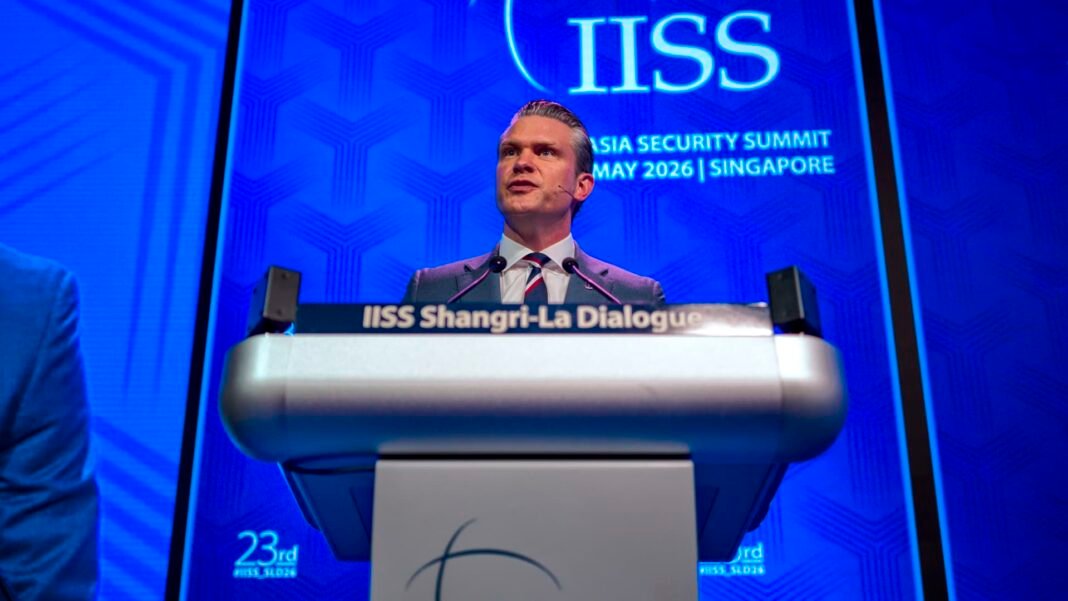
U.S. Approach to Ensuring Stability in the Asia-Pacific Region
The United States is committed to maintaining a balanced power structure throughout the Asia-Pacific, focusing on empowering its allies while sending a clear signal to China against destabilizing actions. This strategy was articulated by U.S. Secretary of War Pete Hegseth during a prominent security conference in Singapore.
Building Stronger partnerships Through Shared Defense Roles
Hegseth emphasized that aligning national interests forms the cornerstone of robust alliances.He described America’s approach as resolute yet measured, aiming to bolster partnerships without provoking needless conflict.
Nations including Australia, Malaysia, Indonesia, singapore, adn the Philippines were praised for stepping up their defense commitments and distributing security responsibilities more fairly. Additionally,Vietnam and India were acknowledged for enhancing their military readiness amid escalating regional tensions.
A Firm Stance Toward China’s Regional Ambitions
While recognizing that U.S.-China relations are currently among their most stable in recent years, Hegseth delivered a pointed warning to Beijing. The United States advocates for a sustainable balance of power where no single country-including China-can dominate or jeopardize the safety and prosperity of America or its partners.
This position arises amid growing apprehension over China’s swift military buildup and increased operations across the Indo-Pacific corridor. Hegseth underscored that although peace remains paramount, America will maintain an enduring presence in Pacific affairs and insists on adherence to established international norms.
Diverse Perspectives Within American Leadership
The forum also revealed contrasting viewpoints within U.S. political ranks regarding this strategic direction. Senator Tammy Duckworth voiced skepticism about current policies, arguing that recent defense priorities have shifted away from Indo-Pacific concerns compared to previous administrations’ focus.
She criticized what she perceived as attempts to minimize high-level engagement with critical regional issues under earlier leaderships’ approaches toward China’s rise.
Candid Observations on European Contributions
Hegseth expressed frustration over Europe’s limited role in supporting global security efforts tied to Asia-Pacific stability. He called on European countries to increase their contributions without resorting to moral posturing or political grandstanding.
The secretary highlighted how American forces have disproportionately borne regional defense responsibilities while some allies allowed their military capabilities to erode-a trend he insisted must be reversed moving forward.
Setting Standards for Defense spending among Allies
The United States expects partner nations to dedicate roughly 3.5% of their GDP toward defense expenditures-a benchmark Washington considers vital for effective collective security initiatives going forward.
- Nations meeting this target receive prioritized benefits such as expedited arms acquisition;
- enhanced industrial collaboration;
- broad intelligence-sharing networks;
- and other cooperative advantages designed to boost joint operational readiness.
Toward Greater Accountability Within Alliances
“Partners unwilling or unable to meet these standards will face concrete adjustments in our engagement,” warned Hegseth-signaling a shift from unconditional support toward performance-based cooperation.
This policy trajectory continues reforms initiated during former President Trump’s tenure which challenged conventional alliance dynamics established after World War II.
Some global leaders remain wary about potential unpredictability concerning America’s commitment levels under this evolving framework.
such as: past remarks indicated reluctance by Washington officials regarding defending NATO members deemed insufficiently contributive financially or militarily.
an Alliance Model Centered on Collective Strength
“Putting America first does not mean acting alone,” stressed Hegseth when outlining alliance principles focused on sovereign strength contributed by each member rather than unilateral dominance.
This beliefs highlights ongoing efforts aimed at forging resilient coalitions capable of addressing shifting geopolitical challenges together rather of relying solely on American might.