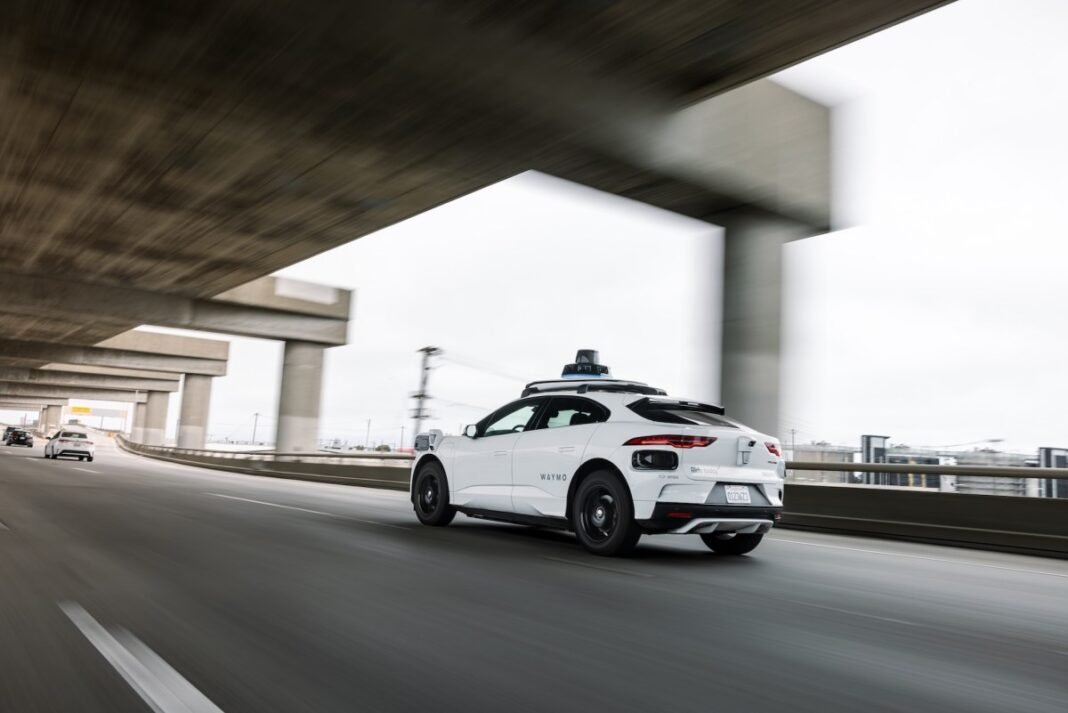
waymo’s Breakthrough in Simulating Human Driving with an Advanced Reference driver Model
Transforming Autonomous Vehicle Safety Evaluation
Waymo, a pioneer in self-driving technology under Alphabet, has unveiled a sophisticated computational model designed to more accurately compare its autonomous driving software against human drivers. this innovative method enhances the analysis of driver behavior during complex traffic scenarios, especially in crash situations.
Shifting from Physical Crash Tests to Behavioral Simulation
Traditionally, vehicle safety assessments relied heavily on physical crash tests and virtual dummies that measured structural durability and hardware performance. Waymo’s new approach redefines this by establishing a behavioral benchmark that realistically emulates how a cautious and skilled human driver would respond during traffic conflicts. This evolution from mechanical testing toward behavioral modeling marks a significant advancement in evaluating autonomous vehicles.
The Mechanics Behind the Reference Driver Model
The Reference Driver model is grounded in an active inference framework-a theory proposing that drivers continuously predict potential future events and adjust their actions proactively to maintain safety and predictability on the road. Unlike earlier models focused mainly on reactive maneuvers at the last moment, this system simulates anticipatory behaviors leading up to possible collisions.
Mimicking Subtle Human Driving Reactions
This enhanced simulation captures nuanced internal states such as “surprise” or unexpected developments during driving conflicts, allowing it to replicate complex human decision-making processes with unprecedented authenticity. Such capabilities enable rapid large-scale simulations across thousands of diverse scenarios with high precision.
Learning from Real-World Incidents: Improving predictive Models
The necessity for refining these models became clear after incidents like the collision involving a Waymo robotaxi near an elementary school in Santa Monica, California. Traveling at 6 miles per hour after slowing down from 17 mph, the robotaxi struck a child who suffered minor injuries. Earlier estimations suggested an attentive human driver might have hit at around 14 mph-highlighting gaps between machine predictions and actual outcomes.
Navigating Increased Scrutiny Amid Expansion
As Waymo broadens its service areas amid growing regulatory oversight and public attention-especially following over 1 million autonomous miles driven annually-the need for precise representations of human driving behavior becomes critical for objectively assessing robotaxi performance during crashes or near-misses.
Diverse Applications Beyond Collision Avoidance Testing
The Reference Driver extends beyond just analyzing crashes; it can simulate various road user behaviors including yielding patterns, gap acceptance, and pedestrian interactions. This versatility makes it ideal for extensive testing environments where thousands of intricate traffic interactions must be evaluated efficiently without sacrificing realism.
“This model accelerates identifying areas for betterment by virtually reconstructing complex real-world crashes,” experts involved emphasize.
A Collaborative Path Forward Thru Open Research Access
Pushing innovation further requires collective effort; thus, Waymo has released the research code behind this advanced simulation under an academic non-commercial license. Researchers worldwide can now leverage it for scientific examination, educational purposes, or experimental projects-promoting transparency and accelerating progress within autonomous vehicle safety research communities.
Pioneering New Standards in Autonomous Vehicle benchmarking
- Improved Predictive Capabilities: the Reference Driver anticipates pre-crash behaviors rather than merely reacting instantaneously to hazards.
- Larger Scale Scenario Testing: Efficiently processes vast datasets covering thousands of unique traffic situations annually across multiple cities worldwide.
- Diverse Behavioral Modeling: Adaptable beyond collision avoidance toward thorough simulations involving various road users such as cyclists and pedestrians.
- Catalyst for Industry Collaboration: Open-source availability fosters shared advancements among academia and industry stakeholders alike.
Toward Safer Roads Enabled by Smarter Simulation Technologies
This cutting-edge approach represents a crucial milestone toward safer integration of autonomous vehicles into everyday traffic systems globally. By closely mirroring how humans anticipate potential hazards-not just react-the Reference Driver establishes new benchmarks for assessing self-driving systems’ readiness against unpredictable real-world challenges encountered daily on roads today.