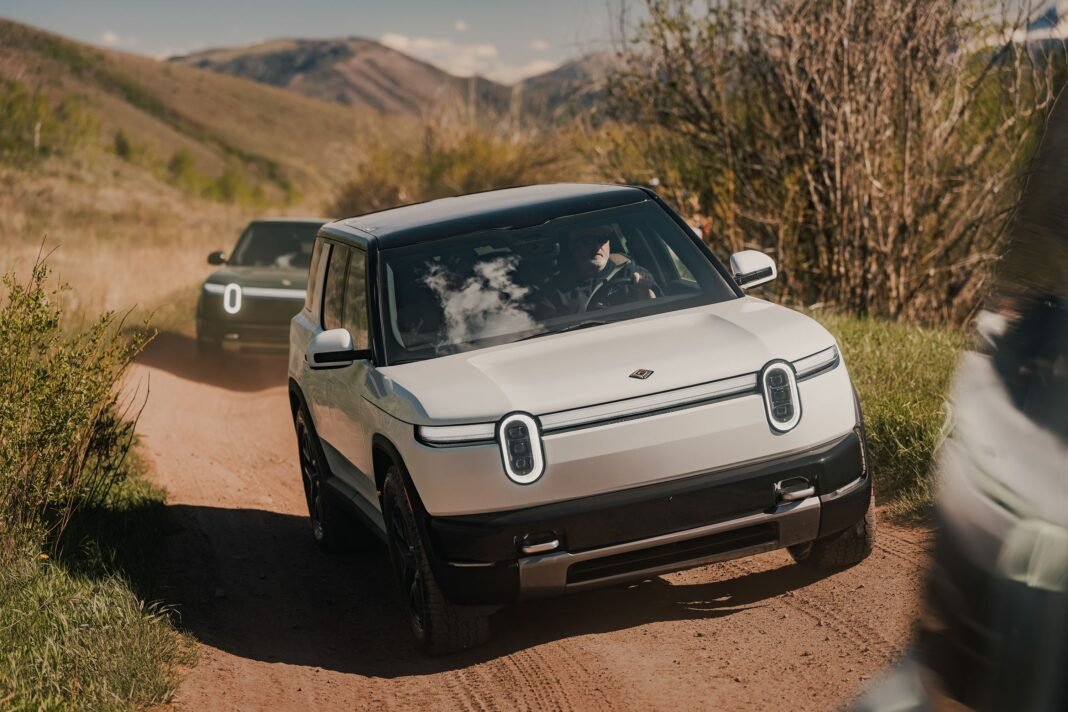
Rivian’s Evolution: From visionary origins to Emerging Industry Challenges
After completing his phd at MIT with a focus on internal combustion engines, RJ Scaringe set out to transform the transportation landscape by eliminating traditional engine technology. In 2009,he quietly launched Rivian,which remained under the radar for nearly a decade before surprising the automotive world with two innovative electric vehicles debuting at the 2018 Los Angeles Auto Show.
Financial Realities Behind Rivian’s Ambitious Drive
Despite its groundbreaking vision, Rivian has encountered significant financial obstacles.In 2025 alone, losses reached $3.6 billion, contributing to an overall expenditure nearing $25 billion over eight years-surpassing most other pure electric vehicle manufacturers in that timeframe. The company’s initial public offering in 2021 was among the largest globally that year and one of the biggest ever in U.S. history, briefly valuing Rivian above $100 billion.However, its stock price has since dropped dramatically from nearly $130 per share to around $16 today.
Since introducing its R1 model in 2021, Rivian has sold approximately 175,000 vehicles-a modest achievement compared to Tesla’s staggering eight million units sold during a similar period.
Collaborations Fueling Future Prospects
The company’s outlook improved notably in early 2024 when Volkswagen group committed up to $5.8 billion toward a joint venture focused on co-developing software and electrical architecture platforms with Rivian. Additionally, Uber pledged an investment of up to $1.25 billion aimed at deploying as many as 50,000 fully autonomous robotaxis powered by Rivian technology.
The spotlight now turns toward the upcoming R2 SUV; its commercial success and ability to achieve high-volume sales are critical for sustaining rivian’s ambitious expansion plans.
The Critical Role of R2: scaling Production and Market Impact
Rivian has heavily invested in vertical integration-developing proprietary software stacks; manufacturing motors, gearboxes, and power electronics; designing custom silicon chips; operating dedicated retail locations; and establishing nationwide service centers alongside parts distribution networks-all structured around scaling production for models like R2.
If R2 fails to capture sufficient market demand or falls short of expectations as a mass-market vehicle capable of producing hundreds of thousands annually (with current factory capacity exceeding 150,000 units per year), this extensive infrastructure could become financially unsustainable given their engineering workforce surpasses six thousand employees.
Expanding Manufacturing Footprint Amid Growing Demand
The Normal plant in Illinois currently supports production capacity near 155,000 vehicles annually while construction progresses on a new Georgia facility designed initially for up to 300,000 units per year across two phases-significantly larger than originally planned due to strong market interest surrounding upcoming products including future variants like an anticipated R3 model targeting European markets.
navigating Autonomous Driving: Progress Through Innovation
Rivian develops its entire autonomy system internally-a valuable asset excluded from Volkswagen’s partnership but possibly lucrative if licensed independently from vehicle sales revenue streams.
The first-generation autonomous system launched with early R1 models relied heavily on Mobileye technology combined with proprietary cameras but was soon deemed insufficient as industry understanding advanced rapidly alongside breakthroughs such as large language models (llms) enabling complex perception algorithms that better mimic human cognition.
A Timeline of Autonomy Development
- Generation One: Introduced late-2021 using Mobileye-based hardware offering limited capabilities;
- Generation Two: Released late-2024 featuring data-driven learning through accumulated miles enhancing highway lane keeping;
- Gen 2.5: Interim upgrade debuting alongside R2 providing improved performance over Gen 1 but not full Level 3 autonomy;
- Soon-to-arrive Gen 3: Incorporates custom silicon chips performing over 800 trillion operations per second each,dual-chip configuration doubling processing power compared with Nvidia-based predecessors plus enhanced sensors including lidar aiming toward supervised point-to-point driving approaching Level 4 autonomy standards-expected post-R2 launch phase.
User Adoption Patterns Reflect Gradual Acceptance
This phased rollout resembles consumer tech adoption trends seen elsewhere-for instance smartphones where buyers except current versions knowing newer iterations will follow-and highlights how autonomous driving remains secondary purchase criteria today despite rapid technological progress expected within coming years.
Currently only about one-quarter of EV buyers prioritize self-driving features when selecting their vehicles.
User Experience innovations: Merging Tradition With Technology
A distinctive design decision involves maintaining physical controls amid growing voice command integration favored by some internal teams at Rivian.
While voice interaction holds promise long-term it cannot yet replace tactile feedback entirely given millions of daily user decisions inside modern cars-from climate adjustments to infotainment navigation menus.
To elegantly balance these needs,“halo Wheels”, haptic-enabled rotary controls embedded into steering wheels provide customizable feedback sensations allowing software-defined clicks without mechanical wear-offering both familiarity and adaptability via over-the-air updates.
This hybrid approach draws inspiration from recent luxury EV interiors emphasizing multi-touch interfaces complemented by select physical buttons enhancing usability under diverse conditions such as off-road environments or inclement weather where touchscreens may be less practical or safe during driving tasks.
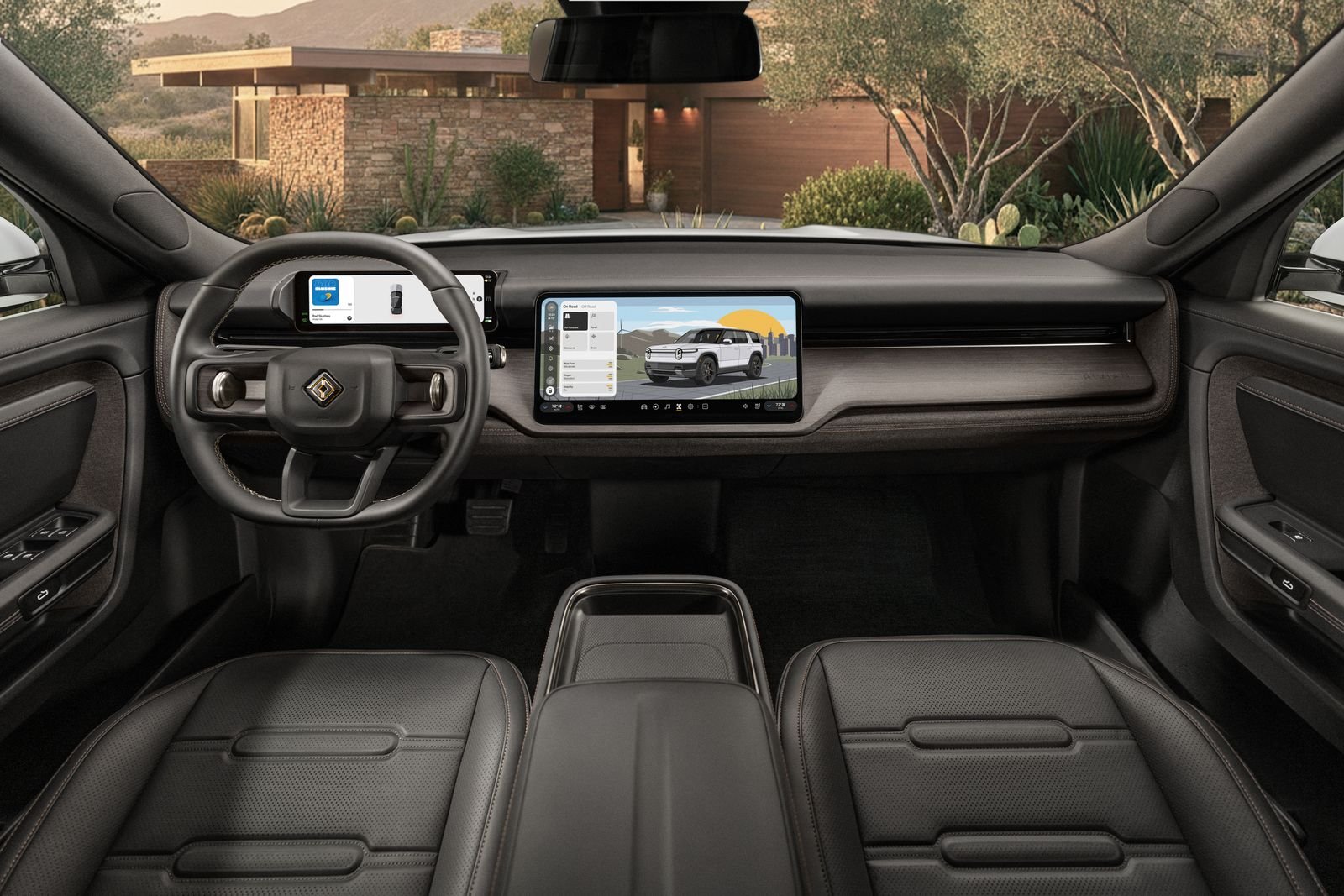
The innovative haptic Halo Wheels offer tactile control options addressing driver preferences amid evolving digital interfaces inside EV cabins.
(Courtesy of Rivian)
Satisfaction Versus reliability: Managing Customer Expectations
An interesting paradox exists where customer satisfaction ratings remain high despite relatively low reliability scores based primarily on earlier generation models produced between 2021-23.
Unlike established automakers whose reliability metrics reflect mature product lines refined over decades (such as Toyota), these figures represent typical early-stage challenges faced by startups scaling complex hardware-software systems concurrently.
Rivian expects significant improvements moving forward especially through lessons learned incorporated into newer platforms like R2 explicitly designed around quality enhancements informed by extensive field data collected since inception.
Tackling Global Competition: The Rise Of Chinese Automakers And Strategic Responses
The rapid emergence of Chinese manufacturers such as NIO entering automotive markets swiftly-with NIO launching multiple new models within three years-is reshaping competitive dynamics worldwide particularly across Europe where cost-sensitive segments dominate demand profiles.
Rivian leverages partnerships like Volkswagen Group’s joint venture-which includes brands Porsche and Audi-to ensure Western-developed technologies compete robustly against Chinese offerings such as BYD or XPeng even within budget-conscious categories exemplified by Volkswagen ID series cars priced near €20K (~$22K USD).
< h3 >Addressing Cost Pressures While Preserving Premium Features Including Autonomy pricing
- A major challenge remains bridging cost gaps versus Chinese rivals who often bundle advanced driver assistance systems free-of-charge whereas companies like rivan currently charge approximately $2500 extra for similar autonomous functionalities;
< h4 >Looking Forward : Production Milestones And Model Expansion Strategies
< p > Excitement builds around forthcoming products including anticipated “R3” SUV variant , yet focus remains firmly fixed upon steadily ramping production volumes starting end-of-decade timelines . Construction continues apace at Georgia facility targeting initial annual output capacity reaching three hundred thousand units , positioning rivan competitively across North American & European markets alike .
< p >< strong >Summary : Balancing Innovation With Market Realities
< p > RJ Scaringe ‘s vision propelled rivan onto center stage amidst electrification ‘s transformative wave yet underscores inherent risks tied closely with pioneering vertically integrated approaches demanding scale & commercial success simultaneously . Strategic alliances coupled with incremental technological advancements offer pathways forward though ultimate outcomes hinge critically upon r&d execution & consumer acceptance especially surrounding pivotal launches such as rivan ‘s r² suv poised now under intense scrutiny worldwide .