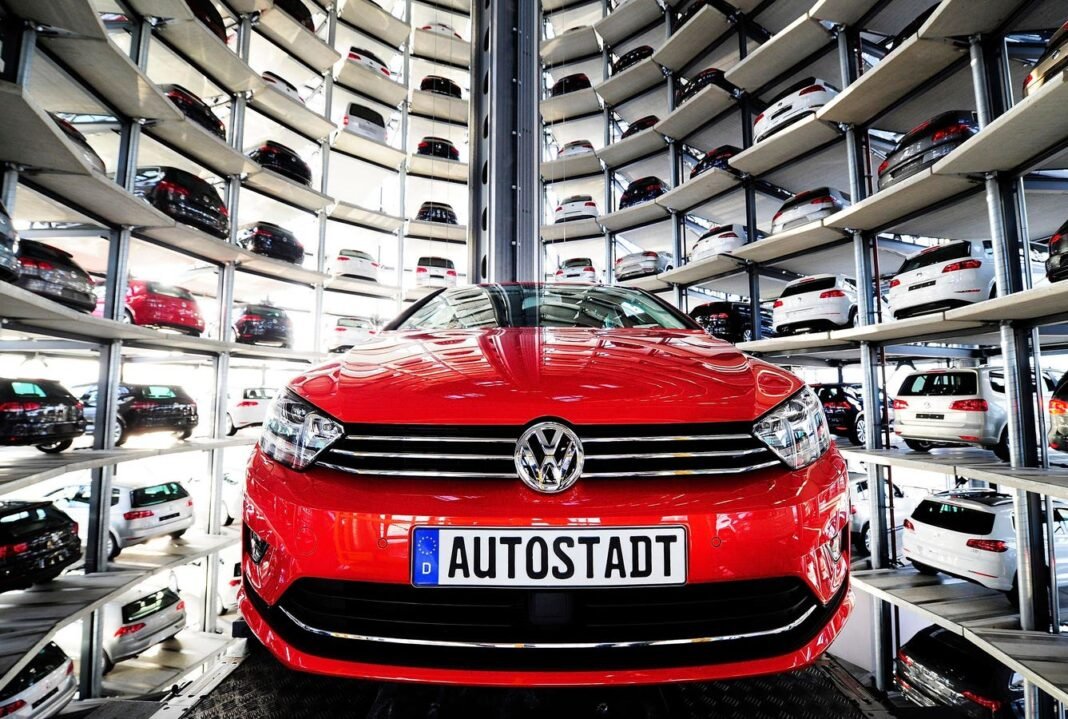
Transformations and Challenges in Europe’s Automotive Industry
The European automotive market is undergoing a profound conversion as the continent accelerates its shift toward electric vehicles (EVs), aiming for a near-complete phase-out of internal combustion engines by 2035. This ambitious environmental agenda, designed to curb climate change, has exposed significant vulnerabilities within Europe’s car manufacturing sector, especially among Germany’s leading automakers.
Volkswagen’s Current Crisis Reflects Broader Industry Struggles
Once emblematic of German industrial prowess, Volkswagen now faces mounting difficulties that could compel it to double its planned job cuts to 100,000 employees and shutter four factories across Germany.This troubling scenario follows profit warnings from other major players such as BMW and Mercedes-Benz. There are even discussions about perhaps spinning off volkswagen’s core brand to better manage financial pressures.
The company’s conventional growth driver-china-is losing its luster due to intensifying competition and shrinking profit margins. Meanwhile, the European market remains sluggish; sales are still nearly four million units below pre-pandemic figures. Compounding thes challenges are U.S.-imposed tariffs that complicate export dynamics for German manufacturers.
Chinese Automakers Gain Ground with Competitive Pricing
Chinese carmakers have rapidly enhanced their technological capabilities while maintaining cost advantages.Offering vehicles with comparable or superior features at roughly 30% lower prices than European models has enabled them to capture close to 10% of the European market-a share projected by industry analysts to rise above 16% by 2030.
this growing presence presents a formidable challenge for European manufacturers who must navigate stagnant domestic demand alongside stringent EU regulations banning carbon dioxide emissions from new sedans and SUVs starting in 2035.

the Debate Over Tariff Protections Intensifies Amid Job Losses
The wave of layoffs and financial setbacks among German automakers has reignited calls within the EU for stronger tariff protections against imports-particularly plug-in hybrid electric vehicles (PHEVs) from China-by extending existing EV tariffs that can reach up to 45.3%. However, such protectionist measures risk triggering retaliatory tariffs on European exports in China and may escalate into broader trade disputes.
“Volkswagen’s restructuring plan signals both an urgent call for support and an effort at damage control,” industry experts observe. “While necessary, these actions alone won’t solve deeper systemic challenges but underscore the critical need for strategic innovation.”
caution is advised as imposing high tariff barriers might inadvertently raise costs across industries without addressing essential competitive weaknesses.
Advocating Innovation Over Protectionism
Many thought leaders argue that instead of resorting to protectionist policies like steep tariffs or regulatory bans, Europe should prioritize fostering innovation through open competition-including collaboration with global leaders like China who dominate many emerging technologies today.
< p >This viewpoint stresses learning from international competitors while steadfastly pursuing ambitious environmental targets mandated by EU legislation-a delicate balance policymakers strive hard not to compromise despite economic headwinds.< / p >< h2 >Policy Influence Versus Consumer Freedom< / h2 >< p >Some free-market proponents warn that political mandates favoring specific technologies distort energy markets and disadvantage domestic producers facing higher operational costs compared with countries like China benefiting from cheaper energy supplies and economies of scale.< / p >< blockquote >“Expanding carbon border adjustment mechanisms risks embedding higher expenses throughout supply chains,” cautions Andy Mayer from Britain’s Institute of Economic Affairs. “This could further erode industrial competitiveness while increasing consumer prices.”< p >Mayer advocates setting clear environmental goals but leaving vehicle choice primarily up to consumers-with manufacturers competing based on innovation rather than regulatory favoritism or subsidies.< / p >< h2 >Balancing Environmental Ambitions With industrial Realities< / h2 >< p >Environmental organizations remain firm against any weakening of CO2-emission standards despite concerns voiced by automotive executives about Europe’s industrial competitiveness under strict regulations misaligned with current market realities or affordability constraints.Mercedes CEO Ola Källenius along with leaders at Stellantis caution about potential losses if policies fail alignment with economic conditions.Brussels-based advocacy groups attribute Volkswagen’s troubles more so to outdated corporate strategies delaying affordable mass-market EV rollouts rather than flaws in Europe’s green transition framework.< / p >< h3 >Chinese Manufacturers’ Strategic Expansion Across Europe< / h3 >< p >Facing intense domestic competition squeezing profits thinly,the Chinese auto sector is actively investing throughout Europe via joint venturesand new plants aimed not only at capturing local demand but also mitigating geopolitical risks tiedto overreliance on exports.< / p >< ul >“Isolating our markets will only slow progress,” notes Professor Ferdinand dudenhoeffer from germany’s Center for Automotive Research. “Partnerships rather than confrontations offer more promising outcomes.”
A Complex Road ahead: Navigating Change Successfully
Europe stands at a pivotal juncture where climate ambitions intersect sharplywith economic imperatives.The automotive sector vividly illustrates this tension-struggling under evolving regulations,fierce foreign competition,and shifting consumer preferences.
Even though protectionist instincts arise amid job lossesand factory closures,the sustainable path forward likely lies beyond tariff walls through embracing innovation-driven competition combinedwith pragmatic policymaking balancing ecological goals alongside industrial sustainability.