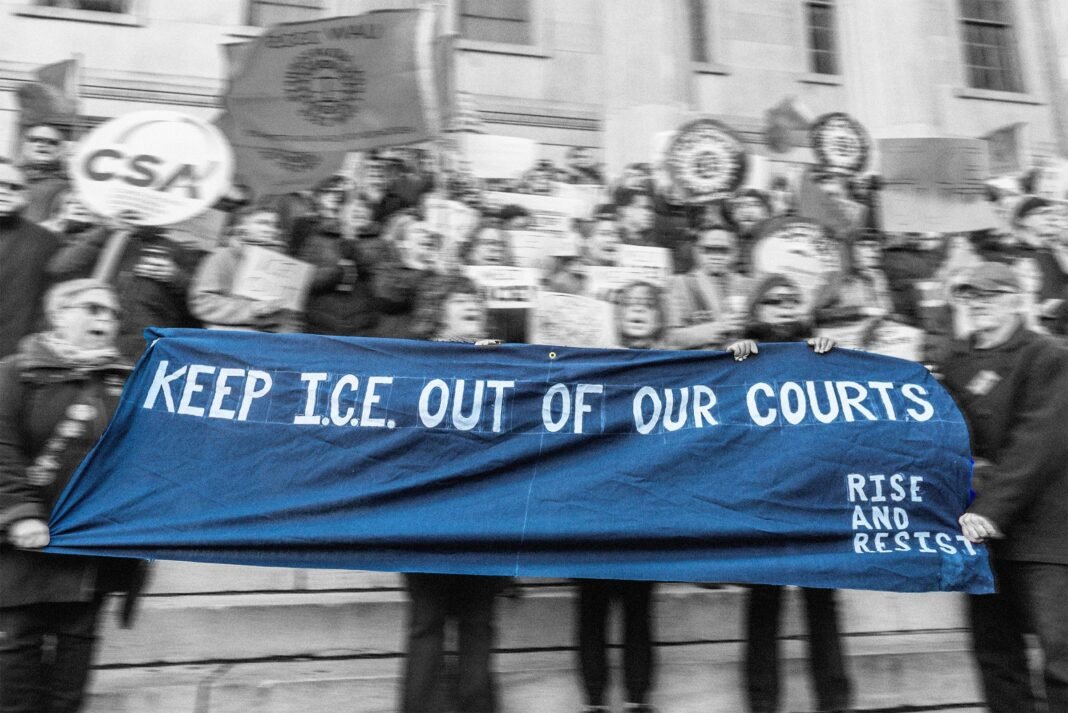
ICE Removes Limits on Courthouse Arrests, Sparking Enforcement Debates
The Immigration and Customs Enforcement (ICE) agency has discreetly withdrawn previous directives that instructed agents to honor state and local regulations when making civil immigration arrests at courthouses. This subtle policy adjustment could lead to more aggressive enforcement actions and heightened legal disputes.
Broadened Powers for ICE Officers Around Judicial Venues
Recent updates published on ICE’s official platform indicate the agency’s plan to empower frontline officers wiht increased latitude during arrests conducted in or near court buildings.This shift mirrors assertive tactics from the Trump administration aimed at expanding migrant detentions nationwide. The change, which was not publicly announced beforehand, marks a clear move away from earlier limitations intended to prevent federal overreach.
Notable Arrests Intensify Community Concerns
In recent weeks,ICE has carried out several high-profile detentions of immigrants attending routine court hearings as part of what former President Trump labeled the largest deportation initiative in U.S. history. These operations have ignited protests and clashes in cities such as Minneapolis and San Diego, raising worries about potential encroachments on local authority and blurring lines between civil immigration enforcement and criminal law enforcement.
Shift in Policy: From Respecting Local Laws to Unrestricted Enforcement
An interim directive issued by former acting director Caleb Vitello in January required agents to confirm that courthouse arrests complied with relevant state or municipal laws before proceeding.However, a later memorandum dated May 27 under current acting director Todd Lyons eliminated this prerequisite entirely-effectively permitting officers to act without consulting legal advisors about jurisdictional boundaries near courthouses.
“Previously, ICE had an obligation to seek legal guidance before conducting courthouse arrests that might conflict with nonfederal statutes,” notes anthony Enriquez of RFK Human Rights. “Now these complex judgments fall solely on individual agents who often lack expertise regarding local regulations.”
Emma Winger from the American Immigration Council describes this revision as a calculated attempt to expand ICE’s operational scope irrespective of state-level safeguards.
The Real-World Effects of Non-Binding Federal Instructions
While federal policy guidelines do not possess formal legal force like statutes or regulations, they effectively shape how ICE personnel carry out their daily duties-making such instructions highly influential despite their technical status.
biden Administration Reverses Earlier Restrictions Amid Rising Deportation Targets
The Biden administration initially limited civil immigration enforcement near courts starting in 2021 after recognizing that such arrests discouraged individuals from fully engaging with judicial processes or cooperating with law enforcement agencies. Under those policies, civil actions were generally barred unless connected directly to national security concerns or criminal investigations involving evidence preservation.
This prior stance partially responded to Trump-era strategies promoting courthouse-based apprehensions-a method criticized for eroding community trust much like how removing fire alarms can leave residents vulnerable despite safety protocols elsewhere.