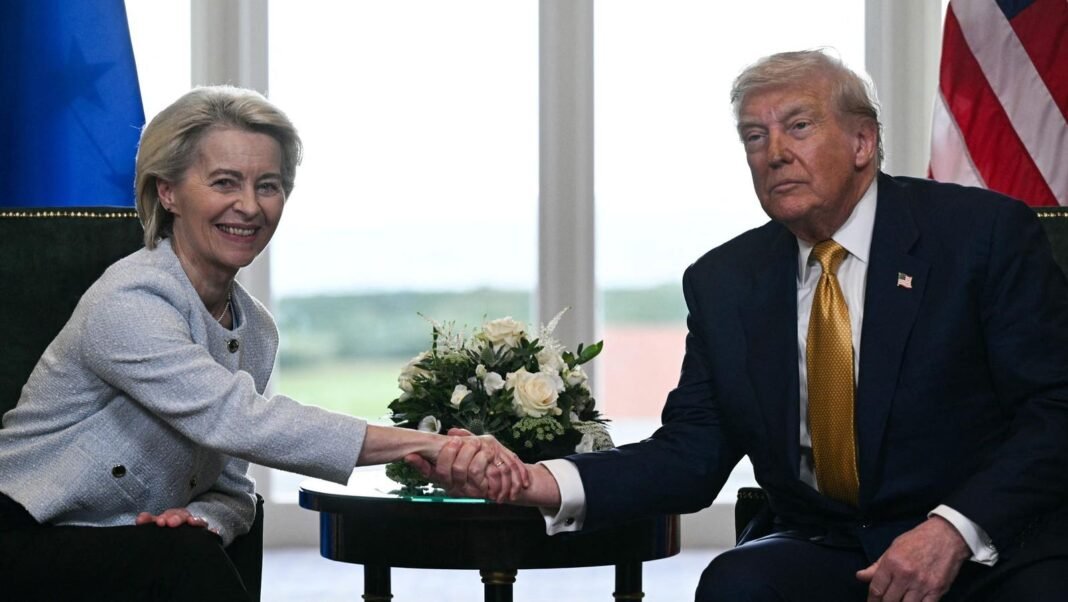
Historic US-EU trade Pact Sets 15% Tariffs on European Imports
The United States and the European Union have reached a groundbreaking trade agreement establishing a standardized tariff rate of 15% on most European products entering the U.S. market. this milestone was announced just days before the previously set August 1 deadline, triggering positive momentum in both American futures markets and major European stock indices.
Key Provisions of the New Trade Framework
Leaders from both sides confirmed that while tariffs will generally apply across a broad range of goods, certain sectors will see exceptions or customized rates still under negotiation. The EU has pledged considerable investments in U.S. energy infrastructure and defense procurement, amounting to roughly $750 billion dedicated to energy purchases alongside an overall $600 billion investment commitment.
The accord also eliminates tariffs on select strategic American exports entering Europe, including aircraft components, specialized chemicals, semiconductor manufacturing equipment, agricultural commodities, natural resources, and essential raw materials.Both parties plan to gradually expand this list as trust builds.
Understanding the Tariff Context
This uniform 15% tariff mirrors recent arrangements between the U.S. and other key trading partners such as South Korea-known for its electronics exports-where similar baseline rates were agreed upon last quarter to stabilize trade relations moving forward.
Previously threatened with punitive tariffs reaching up to 30%, this new deal defuses immediate fears of escalating economic conflict between two leading global economies.
Market Reactions Reflect Optimism
The declaration sparked favorable responses across financial markets: S&P Futures rose by approximately 0.3%, touching near 6,450 points during early trading; Nasdaq Futures climbed about 0.5%, approaching 23,540 points; Dow futures increased around 0.2%, settling close to 45,170 points.
European benchmarks also gained traction-the STOXX Europe 50 index jumped nearly one percent (0.95%), France’s CAC40 advanced by roughly two-thirds of a percent (0.68%), while Germany’s DAX edged up about one-third of a percent (0.35%). These gains underscore investor confidence in reduced transatlantic trade barriers fostering economic growth.
A Shared Vision for Transatlantic Economic Stability
“This agreement establishes much-needed predictability vital for businesses operating across continents,” emphasized Ursula von der Leyen when highlighting that Europe represents an open market with over 450 million consumers. She stressed how balanced commercial ties drive prosperity and job creation throughout both regions.
Diverse Political Perspectives Within Europe
- Cautious French Officials: Some French leaders expressed unease over perceived concessions made under pressure from Washington-describing it as “a setback” where democratic partnerships risk becoming imbalanced rather than mutually respectful alliances.
- German Right-Wing Criticism: alice Weidel condemned the pact as harmful for European manufacturers and consumers alike due to imposed tariffs coupled with obligatory purchases from U.S.-based defense suppliers.
- The Greens’ environmental Concerns: Michael Bloss warned that importing $750 billion worth of fossil fuels could undermine Europe’s climate goals by increasing reliance on fracking-derived energy instead of enduring alternatives suitable for long-term transition plans.
The Magnitude of US-EU Trade Imbalance Highlighted
The united States recorded a notable trade deficit exceeding $235 billion in goods traded with Europe last year alone. Addressing these disparities remains central within broader strategies aimed at fostering fairer exchanges while preserving strong commercial relationships between these economic powerhouses worldwide.
Sectors Outside Current Agreement Scope
Certain industries remain excluded from this deal: pharmaceutical imports are explicitly omitted according to official clarifications; steel and aluminum continue facing elevated tariffs introduced earlier this year at levels reaching 50%. Additionally, upcoming policies targeting semiconductor production are anticipated but were not included within Sunday’s negotiations framework.
Tensions Over Interpretation Persist after Announcement
Differing views emerged regarding whether pharmaceuticals fall under zero-tariff provisions-with some officials asserting inclusion while others maintained exclusion-highlighting ongoing complexities inherent in multilateral negotiations involving diverse economic interests spanning continents.
Evolving Opportunities Under This Agreement
- Agricultural Sector Growth:: Enhanced access is expected for American farmers eager to export fresh produce into European markets without prohibitive duties;
- Burgeoning Automotive Presence:: The pact aims at easing entry barriers allowing greater penetration by U.S.-based car manufacturers into competitive EU automotive sectors;
- Diversification Advantages:: Consumers throughout Europe may benefit from wider product selections resulting from expanded transatlantic commerce;
- “We anticipate mutual expansion benefiting enterprises on both sides,” remarked President Trump during discussions emphasizing collaboration alongside Ursula von der Leyen.”
Navigating Future Challenges Amid Global Economic Shifts
This landmark agreement emerges amid shifting geopolitical landscapes including supply chain realignments following pandemic recovery efforts plus growing global emphasis on sustainability-driven industrial policies-factors likely influencing future amendments or expansions within US-EU commercial frameworks.
Success hinges largely upon transparent enforcement mechanisms ensuring fair competition without compromising environmental protections or labor standards valued by all stakeholders involved.
“Sustained balanced engagement ensures prosperity is shared equitably rather than contested fiercely,” analysts observe when evaluating implications beyond headline figures alone.”