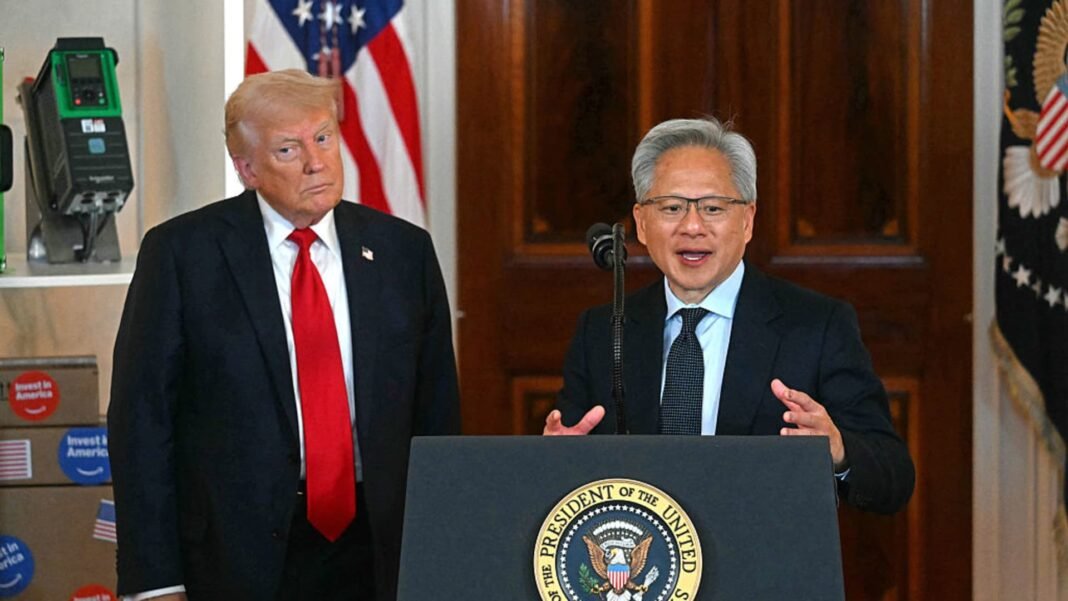
Intensifying Debate Over U.S. AI Chip Exports to China
Senate Democrats Question Export Licenses Granted to Nvidia and AMD
Six Senate Democrats have formally requested a reconsideration of the recent decision permitting leading tech companies Nvidia and Advanced Micro Devices (AMD) to export advanced AI semiconductor chips to china. Under this arrangement, these firms are required to remit 15% of their revenue from such sales back to the U.S.government in exchange for export authorization.
The bipartisan appeal, endorsed by Senators Chuck schumer, Mark Warner, Jack Reed, Jeanne Shaheen, Christopher Coons, and Elizabeth Warren, raises notable alarms about potential threats to national security stemming from this policy.
National security Concerns surrounding AI Chip Exports
The senators stress that preserving America’s military edge and technological leadership hinges on exclusive control over breakthrough innovations. They warn that exchanging this advantage for a fraction of sales revenue risks empowering a strategic rival-China-with access to cutting-edge AI technologies.
“Our national security depends on American innovators leading the world with superior technology,” the letter asserts. “Sacrificing our competitive advantage in critical sectors for what amounts to a commission on AI chip exports is deeply alarming.”
Potential Military Implications of High-End Chips
The spotlight is particularly on Nvidia’s H20 chip and AMD’s MI308 processor-both regarded as highly advanced components capable of driving next-generation artificial intelligence systems. Critics argue that exporting these chips could enhance China’s military capabilities; though, Nvidia contests these claims.
A company representative stated: “The H20 chip does not contribute to any military applications but would have supported maintaining America’s global leadership in AI innovation. The export restrictions have cost taxpayers billions without delivering improved security.”
Demand for Greater Openness and Policy Reversal
The senators have called upon the administration for comprehensive disclosure regarding this deal and also any comparable agreements involving other corporations by August 22nd. They advocate an immediate rollback of what they describe as a hazardous policy jeopardizing U.S technological supremacy.
White House Rebuts Security Objections as Politically Driven
The administration dismissed these concerns as politically motivated critiques lacking substantive basis. A spokesperson criticized Democratic lawmakers for raising alarms now after allegedly overlooking previous administrations’ policies that permitted unrestricted exports of advanced technologies.
China’s Response: limiting Domestic Use Despite Import Approvals
- Tightened Regulatory Measures: Chinese authorities reportedly instructed major enterprises including ByteDance, Alibaba, and Tencent to suspend orders pending further scrutiny amid ongoing national security assessments.
- Market Consequences: Industry analysts observe active enforcement curbing new acquisitions within key sectors dependent on imported semiconductors.
- An Ambiguous Outlook: This cautious approach suggests beijing is weighing it’s appetite for sophisticated technology against concerns over foreign influence or espionage risks linked with imported chips.
A Broader Geopolitical Context Around Semiconductor Trade Restrictions
This episode highlights wider tensions between sustaining open trade essential for innovation while protecting critical technologies vital for defense amid intensifying global competition in artificial intelligence-a market forecasted by experts to surpass $500 billion worldwide by 2027.
The Strategic Importance of Semiconductor Technology Leadership
The semiconductor sector remains pivotal both economically and strategically; dominance over next-generation processors affects everything from consumer electronics performance and autonomous vehicle safety systems to cybersecurity defenses globally.
As nations compete fiercely toward supremacy in AI hardware advancements exemplified by Nvidia’s latest models or AMD’s state-of-the-art processors, decisions about access carry weighty consequences far beyond commercial interests alone.