West Virginia National Guard Deployed too Washington, D.C. Amid Federal Police Oversight
Mission Scope and Deployment Overview
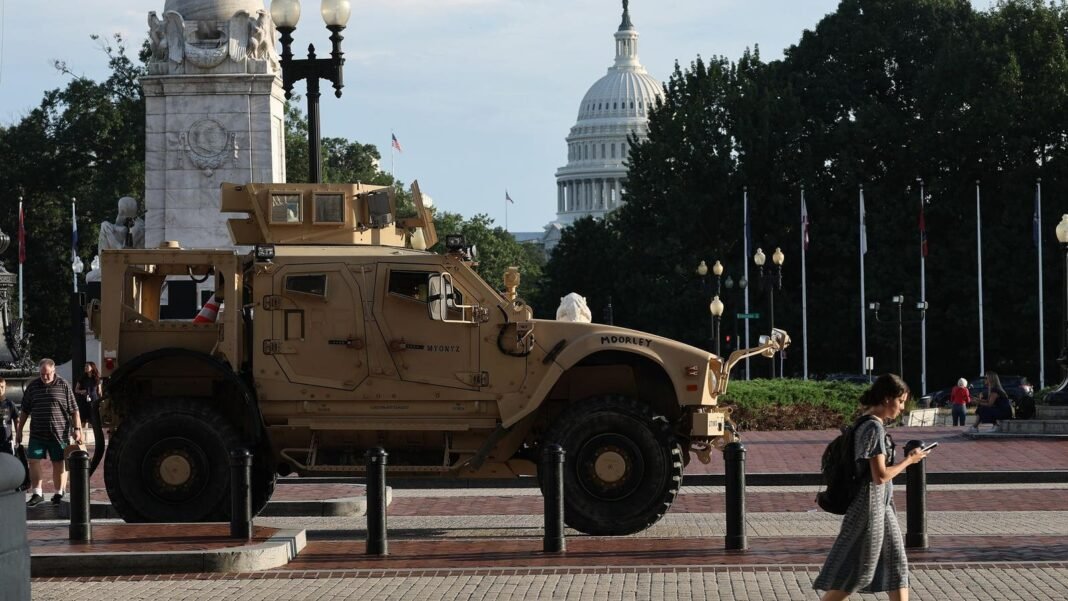
Following a directive from the Trump administration,West Virginia Governor Patrick Morrisey approved the mobilization of 300 to 400 National Guard troops to Washington,D.C. These highly skilled service members are assigned to bolster public safety initiatives and assist in maintaining order within the capital city. Funded by federal resources, their deployment aims to supplement local agencies with advanced equipment and operational expertise.
The Guardsmen primarily provide logistical support and tactical assistance but do not possess arrest authority or direct law enforcement powers. Their presence symbolizes intergovernmental cooperation focused on stabilizing critical areas while promoting cleanliness and security.
Backdrop of Federal Intervention in Local Policing
The federal government activated roughly 800 National Guard personnel across various states for deployment in Washington, D.C., including those from West Virginia. This action followed President Trump’s assertions that violent crime was escalating sharply in the city-a claim contradicted by official crime statistics.
Data from the Department of Justice reveal a nationwide decline of nearly 35% in violent crimes between early 2023 and mid-2024.Similarly, reports from the Metropolitan Police Department (MPD) show a year-over-year reduction close to 26% in violent offenses within D.C., indicating an overall trend toward safer urban environments despite political narratives suggesting otherwise.
Federal Takeover of Metropolitan Police Authority
The trump administration invoked provisions under the Home Rule Act of 1973 to temporarily place MPD operations under federal control. U.S.Attorney General Pam Bondi appointed DEA chief Terry Cole as an emergency commissioner tasked with overseeing MPD activities while suspending certain department policies viewed as problematic by federal officials.
This remarkable intervention disrupted traditional local governance over policing decisions, sparking notable debate about jurisdictional boundaries between municipal authorities and federal oversight bodies.
D.C.’s Legal Opposition to Federal Actions
D.C.’s Attorney General Brian Schwalb condemned this takeover as an illegal encroachment on district sovereignty. He initiated legal proceedings against the federal government arguing that these measures exceed statutory limits governing temporary federal involvement in local law enforcement affairs.
“This declaration represents a misuse of limited authority granted under existing laws,” Schwalb asserted during court hearings challenging the takeover’s legality.
Negotiations Between City leadership and Federal officials
A dialog between Attorney General Bondi and Mayor Muriel bowser led to agreements aimed at fostering improved cooperation despite ongoing disputes over policing jurisdiction within Washington,D.C.
prospects for Continued Federal Oversight
The White House Press Secretary announced plans for a comprehensive evaluation after thirty days concerning whether extended federal supervision over metropolitan police functions is warranted. Any prolongation beyond this timeframe would require Congressional consent according to established protocols regulating such interventions into municipal law enforcement agencies.
The Growing Role of National Guard Deployments Across U.S. Cities
- This mobilization exemplifies an increasing pattern where states deploy military forces during episodes perceived as civil unrest or heightened security risks across major metropolitan areas;
- A recent example includes state guard activations amid widespread demonstrations following social justice movements or natural disasters where coordination supports strained local responders;
- The ongoing challenge remains balancing effective public order maintenance with safeguarding civil liberties when integrating military assets into domestic security roles;
Navigating Security Priorities While Respecting Local Governance
This scenario underscores complex tensions arising when national administrations intervene directly within city-level policing frameworks-especially when empirical evidence points toward declining crime rates concurrent with increased militarized presence on urban streetscapes.