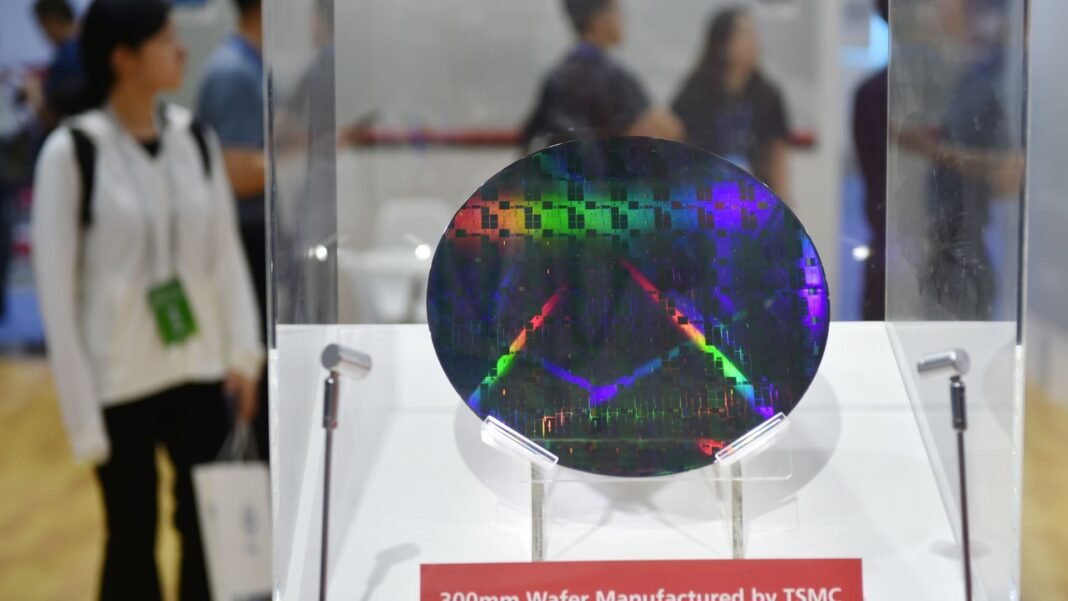
U.S. Strengthens Export restrictions on Semiconductor Production in China
Termination of Export Privileges for Leading Chip Manufacturers
The U.S.government has rescinded a crucial export waiver that previously enabled Taiwan Semiconductor Manufacturing Co. (TSMC) to send vital semiconductor fabrication equipment and technology to its Nanjing facility in China. This action forms part of WashingtonS broader strategy to slow down China’s advancements in semiconductor manufacturing capabilities.
the removal of the validated end user (VEU) status, which expedited export approvals, took effect on december 31. TSMC acknowledged this advancement while reaffirming its dedication to sustaining uninterrupted production at the Nanjing plant despite these new limitations.
Consequences for South Korean Chipmakers and Policy Adjustments
Along wiht TSMC,south korea’s memory chip leaders SK Hynix and Samsung,both operating factories within China,have also been stripped of thier VEU privileges as per recent U.S.regulatory announcements. The Department of commerce’s Bureau of Industry and Security described this move as closing a “Biden-era loophole” that had granted foreign semiconductor firms certain export advantages for their Chinese operations.
This updated framework allows these companies to maintain current manufacturing activities but prohibits any expansion or technological upgrades inside China without securing explicit U.S.export licenses first.
The Strategic Intent Behind Enhanced export Controls
“Eliminating loopholes that place American companies at a disadvantage remains a top priority,” emphasized Jeffrey Kessler, Under Secretary of Commerce for Industry and Security.This policy shift aligns with ongoing efforts initiated under previous administrations aimed at bolstering U.S. competitiveness by restricting technology transfers that could empower rival nations’ chip industries.
Industry analyst Brady Wang from Counterpoint Research highlights how these measures demonstrate Washington’s growing grip over exports related to semiconductor production technologies destined for china, reinforcing American leverage over global supply chains in this critical sector.
Diversification strategies Amid Restrictive Measures
TSMC operates two major fabrication plants on mainland China-one in Shanghai and another more advanced site located in Nanjing-that depend heavily on equipment from leading U.S.-based suppliers such as Applied Materials and KLA Corporation. Despite losing VEU status affecting shipments bound for these facilities, experts estimate minimal financial disruption since the Nanjing factory contributes less than 3% toward TSMC’s total global revenue as of 2024 data.
A Nuanced Approach: AI Chips Versus Memory Technology Controls
This recent tightening contrasts with earlier relaxations where some restrictions on exporting American artificial intelligence chips were eased under prior policies allowing firms like Nvidia and AMD limited sales into Chinese markets. These exceptions aimed at preserving U.S leadership in AI innovation globally while carefully managing geopolitical risks associated with technology transfer.
The distinction underscores a complex strategy: while exports involving advanced AI chips experience partial liberalization, controls remain stringent regarding memory chips and core manufacturing technologies essential for expanding China’s domestic semiconductor capacity or upgrading existing fabs technologically.
Curbing China’s Drive Toward Technological Independence
“The primary objective appears focused on limiting foreign companies’ ability to broaden their supply chain footprint within strategic sectors like semiconductors inside China,” says Ray Wang from Futurum Group specializing in emerging tech supply chains.
Pushing Domestic Semiconductor Growth within the United States
- This tightening coincides with intensified initiatives-originating during the Trump administration and sustained today-to encourage reshoring parts of the semiconductor ecosystem back onto American soil through tariffs threats alongside investment incentives;
- Todate 2024 has witnessed meaningful commitments by TSMC, SK Hynix, and Samsung toward expanding advanced manufacturing capacities across various states;
- A notable example includes TSMC’s ongoing construction projects near Phoenix, Arizona focusing exclusively on cutting-edge process nodes unavailable outside Asia;
Securities market Responses Reflect Investor sentiment Variability
The proclamation triggered immediate market reactions: shares belonging to SK Hynix and Samsung declined following news about losing VEU status; however,TMSC stock remained comparatively stable despite similar regulatory setbacks impacting its Chinese operations-likely due to investor confidence rooted in diversified global footprints rather than dependence solely upon Chinese output capacity.
The Road Ahead: Global Semiconductor Trade Regulations Amid Geopolitical Rivalry
This evolving regulatory environment highlights how geopolitics increasingly shapes high-tech industry dynamics worldwide-especially concerning semiconductors considered vital both economically & strategically amid escalating US-China competition over technological dominance throughout this decade.