Advancements in 3D Bioprinting for Effective Skin regeneration
Overcoming the Complexities of Full-Thickness Skin Repair
Severe burns and traumatic skin injuries present important challenges that traditional treatments often cannot fully address.Commonly, large wounds are treated by transplanting a thin epidermal layer harvested from the patient’s own body.While this method provides surface coverage, it frequently leads to extensive scarring and fails to restore the skin’s complete functionality. Achieving true regeneration necessitates rebuilding the dermis-the deeper layer abundant with blood vessels and nerve endings-without which the skin cannot perform essential physiological functions.
Engineering Vascularized Skin: A New frontier
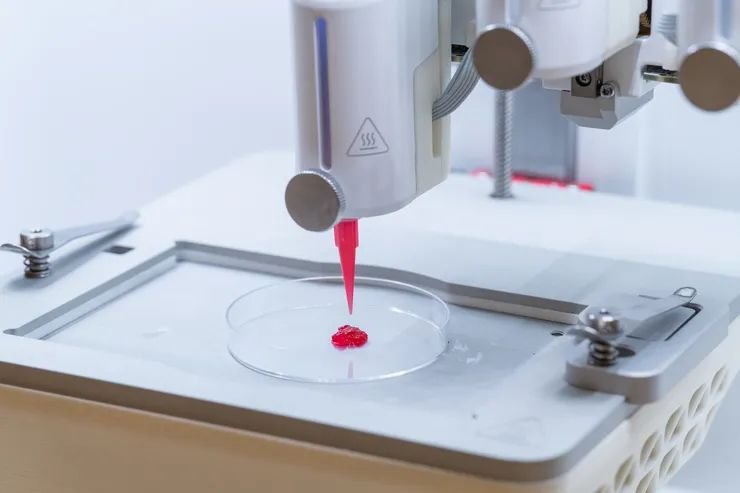
A research group in Sweden has pioneered innovative 3D bioprinting techniques aimed at fabricating thick, living skin tissues embedded with functional vascular networks crucial for tissue survival. Their approach involves two complementary strategies: one densely incorporates cells within a bio-ink matrix,while the other creates complex vascular channels inside artificial tissue using hydrogel filaments designed to mimic natural blood vessels.
developing μInk: A Bio-ink Enriched with Dermal Cells on Gelatin Microcarriers
The team engineered a novel bio-ink called “μInk,” which integrates fibroblasts-cells responsible for producing collagen and elastin-cultured on microscopic gelatin beads suspended within a hyaluronic acid gel base. This formulation enables precise layering through 3D printing, resulting in thick tissues densely populated with viable cells.
In experimental grafts implanted into mice, these printed constructs exhibited active cellular proliferation alongside secretion of collagen fibers that reconstructed dermal architecture. Crucially, new capillaries formed within these grafts, demonstrating their ability to support long-term integration by facilitating nutrient and oxygen delivery deep inside the tissue.
The Essential Function of Blood vessels in Tissue Viability
No matter how advanced engineered tissues become at mimicking cellular complexity, their survival depends fundamentally on adequate oxygenation and nutrient supply via blood vessels.Without an internal vascular system, cells located far from surfaces suffer hypoxia and die-a critical limitation that has hindered progress toward creating fully functional artificial organs or multilayered skin substitutes.
REFRESH Methodology: Constructing Adaptable Vascular Channels Using Hydrogel Filaments
The REFRESH (Rerouting of Free-Floating Suspended Hydrogel Filaments) technique was developed as an innovative solution to build customizable vascular networks within engineered tissues. This process prints hydrogel threads composed predominantly of water (approximately 98%) but endowed with remarkable mechanical resilience-they can be knotted or braided without deformation due to their shape-memory characteristics.

Sculpting Temporary Channels That Simulate Blood Flow Pathways
A distinctive advantage of these hydrogel filaments is their enzymatic removability after embedding into tissue constructs; once dissolved cleanly without residue, they leave behind hollow microchannels resembling natural vasculature pathways. When combined with μink-based dense cell matrices during printing,this approach establishes perfusable networks capable of delivering oxygen uniformly throughout thick layers of artificial skin.
Towards Automated Fabrication of Intricate Vascular Networks
The researchers successfully demonstrated complex three-dimensional vascular structures by tying or braiding hydrogel filaments into elaborate knots before embedding them into scaffolds containing living cells.Future efforts will focus on automating such intricate fabrication processes using robotics or advanced software algorithms to efficiently produce extensive capillary-like systems across larger organ-scale constructs-a vital milestone for clinical applications such as burn treatment or reconstructive surgery involving significant tissue loss.
challenges Ahead Before clinical Implementation
Despite encouraging laboratory results showing promising integration and function in animal models, several obstacles remain before these technologies can be widely adopted clinically. Key issues include controlling immune responses like inflammation post-transplantation as well as preventing infections during wound healing phases-both factors critically affecting graft success rates under real-world medical conditions.
“Replicating every component naturally found within human dermis is extraordinarily complex; thus our strategy focuses on providing foundational elements that stimulate patients’ own regenerative mechanisms,” noted insights from leading researchers involved in this work.
(Paraphrased expert perspective)
The Future Landscape of Regenerative Medicine for Severe Skin Injuries
This groundbreaking synergy between high-density cellular bio-inks combined with flexible fabrication methods for vascular channels marks a significant leap forward in regenerative medicine technologies targeting severe burn care worldwide-which impacts over 11 million individuals annually according to recent global health statistics-and other trauma-related conditions requiring durable yet functional skin replacements capable not only structurally but also physiologically restoring damaged areas effectively.