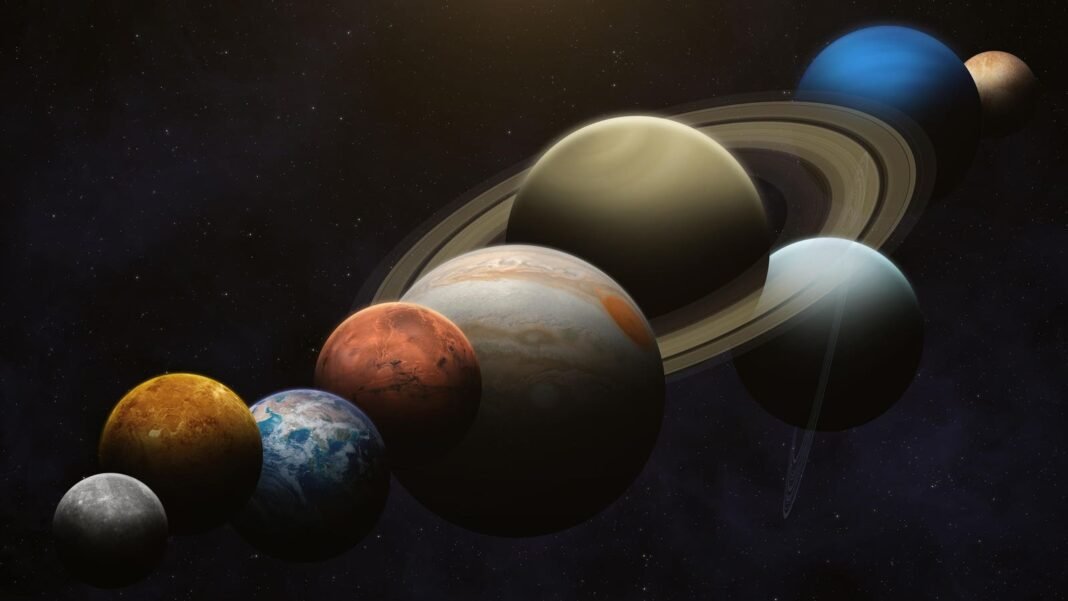
Witness the Extraordinary Five-Planet Conjunction This September
this weekend presents a stunning astronomical spectacle as five planets align in the early morning sky. Venus, Jupiter, and Saturn shine vividly and can be seen with the naked eye, while Uranus and Neptune require binoculars or telescopes due to their dimmer appearance. Although this planetary arrangement is slowly fading, it remains visible until october introduces new celestial wonders.
Best times and Directions for Observing the planetary Lineup
To experience this rare planetary gathering, direct your gaze toward the eastern horizon about an hour before sunrise. Venus stands out as the brightest object low in that direction, followed by Jupiter positioned slightly southeast. Meanwhile, Saturn appears closer to the western horizon during these hours.
Among these planets,Venus shines most brilliantly throughout this event; Jupiter follows in brightness with Saturn trailing behind. Mercury briefly joined this cosmic ensemble last month for a six-planet display but has since slipped back into solar glare.
The recent oppositions of Saturn on September 21 and Neptune on September 23 have improved their visibility substantially-both rise at sunset in the east and set at sunrise in the west. Notably,Neptune hovers just above saturn during these times.
This extraordinary alignment won’t reoccur until October 2028 when five planets will again be visible together before dawn.
The Andromeda galaxy: A Spectacular Night Sky Feature This Month
Late September offers an excellent chance to spot the Andromeda Galaxy (M31), which rises from the northeast shortly after sunset. Under dark skies free from urban light pollution-such as those found deep within national parks-it appears as a faint smudge wider than a full moon when viewed without optical aid. For many observers worldwide,binoculars reveal its hazy oval shape more distinctly.
Sitting approximately 2.5 million light-years away from Earth, Andromeda holds distinction as one of the most distant objects visible without telescopes-a remarkable reminder of our vast cosmic neighborhood’s scale.
October’s Celestial Highlights: Harvest Moon & Meteor showers Accompanied by Comet Appearances
As October arrives, new constellations take center stage while familiar ones like Orion and Taurus shift earlier into evening skies after playing host to much of September’s planetary activity.
- The Harvest Moon: On October 6th and 7th nights will be illuminated by this warm-toned full moon that beautifully lights up autumn landscapes across many regions worldwide.
- Meteor Shower Activity: The Draconid meteor shower peaks around October 8th offering viewers potential “shooting stars” early in evening hours-perfect for casual stargazers hoping to catch brief streaks darting across dark skies.
- A promising Comet Encounter: comet Lemmon (C/2025 A6) makes its closest approach to Earth on October 21st but may become visible starting mid-October through binoculars or possibly even unaided eyes under ideal conditions from northern latitudes. Additionally, anticipation builds around Comet SWAN R2 potentially becoming observable later that month too.
Cultural Reflections: Celestial Events Mirroring Seasonal traditions
This sequence of night sky phenomena parallels seasonal festivals celebrated globally-each event unique yet interconnected within nature’s grand cycle. Much like harvest festivals honor earthly abundance following growth periods, these celestial occurrences symbolize cosmic rhythms unfolding above us year after year with predictable regularity yet endless wonder for those who observe them below.
“Observing multiple planets aligned concurrently is comparable to witnessing rare migratory birds passing overhead-a fleeting moment demanding attention but rewarding patience.”