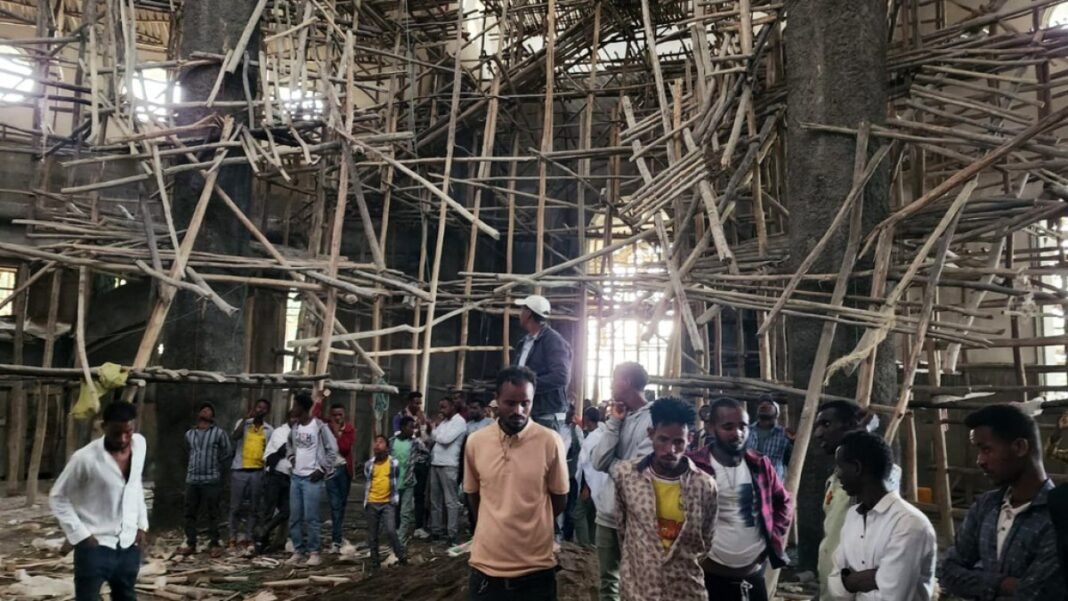
Fatal scaffold Failure at Ethiopian Church During Religious Festival
Tragedy struck the Menjar Shenkora Arerti Mariam Church in Ethiopia amid celebrations for the annual Virgin Mary festival, resulting in a significant loss of life and numerous injuries.
Chronology and Circumstances of the Collapse
On wednesday morning around 7:45 a.m. local time, a temporary wooden scaffold erected at the church site in arerti town-approximately 70 kilometers east of Addis Ababa within the Amhara region-suddenly gave way. This structural collapse caused at least 36 deaths and left scores injured.
Impact on Victims and Emergency Response
The total number of those hurt remains unclear, with estimates suggesting that up to 200 people suffered injuries ranging from minor bruises to life-threatening wounds. Emergency responders quickly transported critically injured individuals to medical facilities in Addis Ababa for specialized treatment.
Authorities have indicated that rescue teams may still be searching for survivors trapped beneath rubble, though detailed updates on ongoing operations have not been released publicly.
The Aftermath: Community Grief Coupled with Safety Concerns
Teshale Tilahun, a local government representative, conveyed profound grief over what he described as “a devastating blow to our community.” Images shared by eyewitnesses show chaotic scenes featuring collapsed timber scaffolding intertwined with crowds gathered near the accident site.
The photographs also expose how fragile and hastily assembled these temporary structures were before their failure outside the church grounds.
Ethiopia’s Construction Safety Landscape: Persistent Challenges
Ethiopia, home to over 130 million people as one of Africa’s most populous nations, continues grappling with enforcing robust construction safety protocols. Structural collapses during building projects remain distressingly common across various parts of the country due to insufficient regulatory oversight and subpar workmanship standards.
This calamity underscores systemic vulnerabilities linked to lax supervision and poor construction practices prevalent throughout Ethiopia’s infrastructure development efforts today.