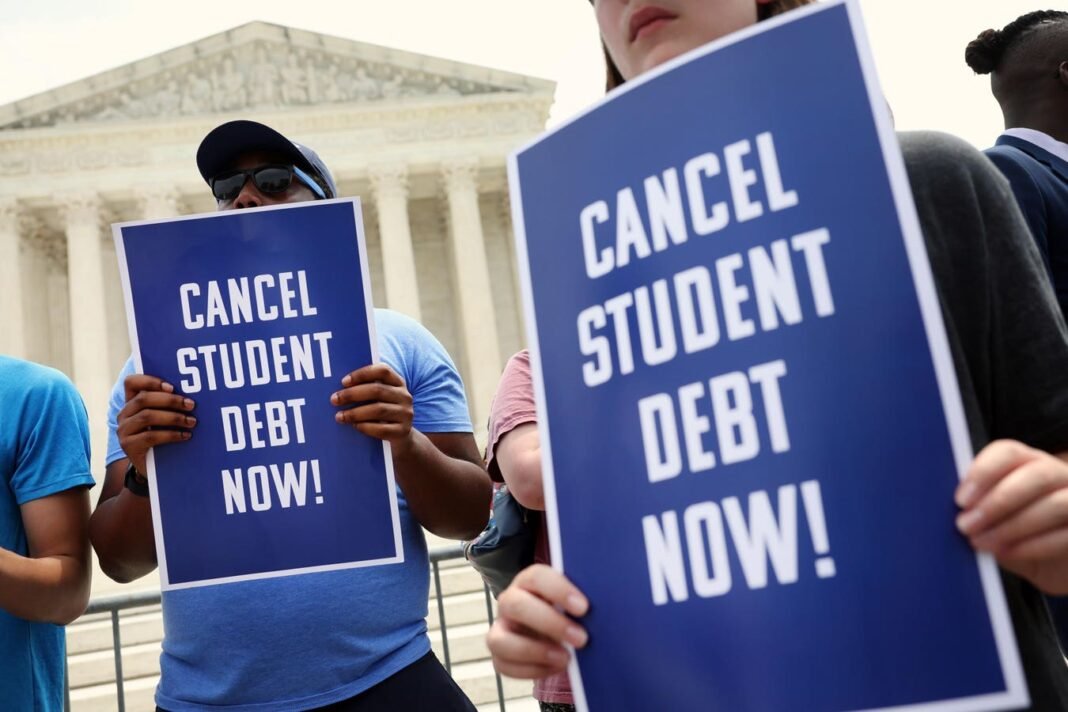
Major Advancement in Student Loan Forgiveness: Department of Education Resumes Application Processing Following Legal Resolution
Millions of federal student loan borrowers are now seeing renewed hope as the U.S. Department of Education has recommenced processing applications for student loan forgiveness programs that had been stalled amid ongoing litigation.This progress also introduces safeguards to prevent borrowers from facing unexpected tax liabilities on forgiven debt, a critical concern given that the current federal tax exemption on discharged loans is set to expire at the end of 2025.
Overcoming Legal Challenges adn Safeguarding Borrowers from Tax Burdens
A recent settlement between the Department of Education and a prominent teachers’ union resolves a lawsuit contesting delays and denials in forgiveness applications under various income-driven repayment (IDR) plans. The union contended that administrative obstacles unlawfully hindered eligible public service employees and other borrowers from obtaining debt relief authorized by Congress.
This agreement importantly addresses potential tax consequences by ensuring that eligibility dates-not just discharge dates-are recognized for tax purposes, thereby protecting many borrowers from receiving large, unforeseen tax bills. Under the American Rescue Plan Act, forgiven student loans have been exempt from federal taxation through 2025; however, this protection will not automatically continue beyond December 31 without further legislative action.
Broadened Eligibility Across multiple Income-Driven Repayment Programs
The Department will now process forgiveness requests not onyl under Income-Based Repayment (IBR) but also for those enrolled in Income-Contingent Repayment (ICR) and Pay As You Earn (PAYE) plans. Previously, confusion stemming from court decisions related to the newer SAVE plan caused officials to pause or restrict forgiveness under ICR and PAYE despite their legal validity until their planned phase-out in July 2028.
This policy shift means thousands more qualifying borrowers can expect their applications reviewed without needing to switch repayment plans prematurely-a relief welcomed by advocates who emphasize how such disruptions have added unnecessary stress among essential workers like paramedics, teachers, and social workers nationwide.
Continued Support Through Public Service Loan Forgiveness Buyback Program
The settlement also commits the department to resume processing requests tied to PSLF Buybacks-a program allowing certain payments made during previously non-qualifying periods such as deferment or forbearance to count toward eventual loan cancellation-despite longstanding backlogs affecting tens of thousands seeking relief via this option.
Tax Protections Provide Vital Financial Stability
A key provision within this agreement protects borrowers whose loans become eligible for cancellation before year-end but whose discharges may be delayed into 2026 or later due solely to administrative slowdowns. In these cases, no IRS Form 1099-C-which typically reports canceled debt as taxable income-will be issued if IRS criteria are satisfied.
This protection extends even if a borrower initially qualified under SAVE but switches before December 31, 2025 into IBR, ICR or PAYE plans where forgiveness remains accessible amid ongoing litigation blocking SAVE discharges nationwide.
Moreover, any payments exceeding what was necessary for qualification will be reimbursed once final discharge occurs-offering additional financial reassurance during an otherwise uncertain timeline.
Court supervision Ensures Ongoing Transparency and Accountability
The resolution does not fully end litigation; instead it establishes continued judicial oversight requiring monthly progress reports detailing how effectively student loan cancellations are being processed across all impacted repayment options. These updates aim at maintaining transparency with plaintiffs involved in enforcement actions as well as public stakeholders monitoring government performance on debt relief efforts affecting over 40 million Americans holding federal student loans today.
“We demand full accountability,” stated an advocate representing borrower interests following declaration details indicating close monitoring over six months ahead.”
A New Era Dawns for borrowers Awaiting Debt Cancellation
This landmark agreement represents a pivotal moment after years marked by uncertainty caused by policy shifts combined with complex court battles involving multiple states challenging aspects of federal repayment reforms introduced as early last decade’s overhaul initiatives. student loan forgiveness , widely regarded as crucial support especially amid post-pandemic economic challenges disproportionately impacting younger generations burdened with education costs surpassing $1.8 trillion nationally, now advances toward broader implementation aligned with congressional intent while shielding recipients against unintended financial harm through taxation issues previously insufficiently addressed at scale.