Federal Budget Approval faces Uncertainty Amid Political Deadlock
Insufficient Support Threatens Budget Passage in Parliament
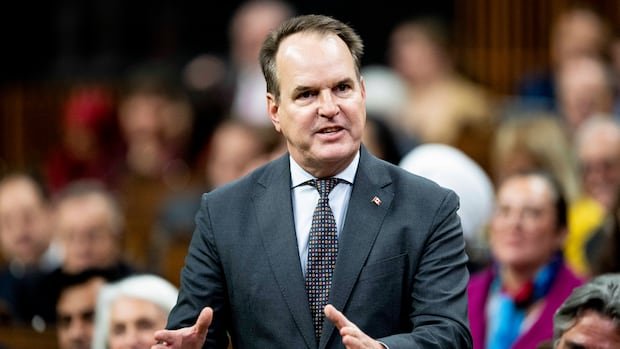
The Liberal government currently lacks the necesary backing within the House of Commons to ensure the approval of the upcoming federal budget. The Liberal House leader has cautioned opposition parties to consider whether they are ready for another election if a consensus cannot be reached on this critical financial plan.
While acknowledging that Canada operates under a minority government, officials emphasize that the Liberals hold a clear mandate to drive economic growth. Nonetheless, it remains evident that “at this moment, we do not have enough votes” to secure budget passage.
Divergent Opposition Demands Complicate Budget Negotiations
The scheduled budget vote functions as a confidence motion; failure to pass it could precipitate an early election. Opposition parties have outlined distinct and sometimes conflicting conditions ahead of negotiations with Prime Minister Mark Carney.
- Conservative Party: Led by Pierre Poilievre, demands focus on an “affordable budget” featuring significant tax cuts and capping deficits below $42 billion. Additionally, they seek removal of Canada’s industrial carbon tax.
- Bloc Québécois: Yves-François Blanchet calls for increased federal health transfers to provinces, expanded infrastructure investments including accelerated housing projects, and enhanced Old Age Security benefits targeting seniors aged 65-75.
- NDP: Don Davies maintains a cautious approach without firm commitments but remains open to constructive dialog following full disclosure of budget details.
Tensions Mount Over Practicality of Opposition Proposals
Liberal leaders criticize Conservative proposals as fiscally unrealistic due to their potential impact on revenues-“subtracting hundreds of billions,” which threatens fiscal balance. Similarly, Bloc Québécois’ claims about insufficient consultation are viewed as disproportionate given their relatively small parliamentary presence (22 seats out of 338).
Liberals Aim for Strategic Investments while Enforcing Fiscal Restraint
The government intends substantial investments designed to diversify supply chains beyond heavy dependence on U.S. markets by strengthening trade corridors both eastward and westward across Canada. Concurrently, leadership stresses that challenging spending reductions within governmental operations will be essential in reallocating resources toward these priorities.
“Improving our supply chains is vital so we can expand markets beyond just the United States and export our products and expertise both eastward and westward,” stated MacKinnon.
“We will invest heavily in these areas while making tough decisions about where spending must be cut.”
Acknowledging Economic headwinds ahead
The Prime Minister has prepared Canadians for challenging choices amid rising U.S. tariffs affecting Canadian exports such as steel and agriculture products. Speaking at an Ottawa university event recently, he emphasized that transforming Canada’s economy requires “gradual sacrifices” rather than immediate solutions.
An Early Election Remains a Distinct possibility
If opposition factions find their differences with Liberals irreconcilable regarding this budget’s content or direction, Canadians may face an unexpected general election sooner than anticipated. While reluctant about this prospect, Liberal leadership acknowledges it ultimately depends on whether opposition members support or oppose the confidence vote tied to the budget’s approval.
NDP’s Stance Pending Full Budget Disclosure
NDP interim leader Don Davies confirmed his party will reserve judgment until after reviewing complete budget details-rejecting speculation about pre-budget deals or concessions exchanged with Liberals prior to voting decisions.
The Complexities Within Minority Government Dynamics in Canada’s Parliament
This situation highlights inherent challenges faced by minority governments where no single party holds majority control (currently 170 seats out of 338). The governing party must navigate ideological divides carefully while balancing public expectations against fiscal realities amid global economic uncertainties intensified by geopolitical tensions such as ongoing trade disputes involving China and Europe alongside escalating U.S.-Canada tariff conflicts impacting key sectors like steel manufacturing and agriculture production.
- A comparable example can be found in Germany’s coalition governments where multiple smaller parties influence policy directions despite no single party holding absolute majority-a testament to how compromise shapes governance worldwide today.*
Navigating Political Complexity Toward Economic Stability
The path forward for Canada’s Liberal government involves intricate political negotiation amidst competing demands from opposition groups seeking leverage over national priorities through control over budgeting processes. with inflation rates hovering near 4% nationally alongside mounting international pressures-including fluctuating commodity prices-the stakes remain high as all sides weigh risks associated with either cooperation or triggering premature elections during volatile times.
This evolving scenario underscores how parliamentary democracy necessitates continuous dialogue among elected representatives striving both to honor electoral mandates and safeguard national interests amid shifting political landscapes globally today.