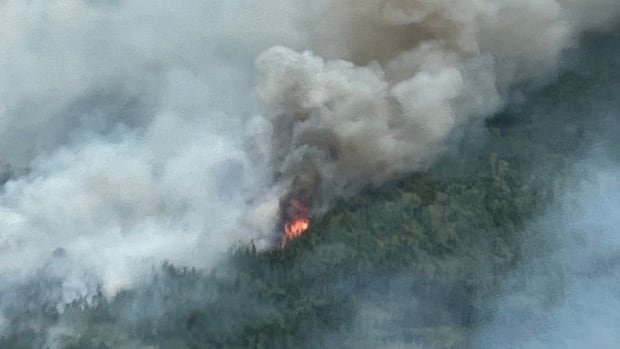
Rapid Wildfire Triggers evacuation in Badger Amid Signs of Weather Relief
The town of Badger faced an urgent evacuation order as a fast-moving wildfire advanced toward its borders, compelling residents to leave their homes on Wednesday. despite the disruption, many hold onto hope that upcoming weather changes will assist firefighting teams in controlling the blaze.
Evacuation Measures and Community Reactions
Officials directed all inhabitants to relocate to Grand Falls-Windsor,located roughly 30 kilometres away,as flames approached the town’s perimeter. Law enforcement has restricted entry into Badger to maintain public safety and streamline emergency response operations.
Among those displaced is Colleen Patey, who described the ordeal as emotionally draining but found comfort in hearing aerial firefighting aircraft overhead and witnessing early morning rainfall. “The sound of those planes gave me reassurance,” she said. “Waking up to rain felt like a much-needed relief.”
Patey also recalled her experience during a similar wildfire event in 1999 when she had been forced to evacuate with little warning. The thick smoke trailing behind her vehicle this time stirred vivid memories from that earlier crisis.
Wildfire Progress and Firefighting Strategies
The fire began after a lightning strike on Tuesday and rapidly grew into one of Newfoundland’s most critically important wildfires this year. Initially rated at Rank 5-the highest severity level-it has since been downgraded to Rank 3 following successful containment efforts that reduced its intensity.
Forestry officials report that while the fire remains approximately 600 metres from residential zones, it has not breached natural barriers such as rivers protecting central areas of badger. Sprinkler systems were activated overnight within the town as precautionary measures against potential flare-ups.
A dedicated crew of 35 firefighters is actively battling the flames with support from aerial units including water bombers targeting vulnerable edges and helicopters conducting bucket drops. Additional personnel reinforcements have been requested due to forecasted weather conditions expected later this week.
Elevated Fire Danger Across Central Newfoundland
The provincial fire hazard map currently highlights an extremely high-risk zone covering central Newfoundland regions around Badger because of dry vegetation combined with recent heatwaves reaching record highs above 30°C (86°F) during June-an unusual temperature spike for an area typically known for cooler summers.
Meteorological Forecast Offers Hope for Containment
Meteorologists report recent precipitation totaling about 3 millimetres alongside rising humidity levels anticipated through Friday-conditions known to slow wildfire spread by moistening fuels such as dry brush and leaf litter.
Sustained winds are expected at moderate speeds between 25-30 km/h coming from the southwest; although still present, these gusts are less severe than previous days when stronger winds intensified fire behavior across multiple fronts concurrently.
Ongoing Community assistance and Shelter Operations
- The Red Cross has registered over 575 evacuees at local shelters including Joe Byrne Memorial Stadium in Grand Falls-Windsor, providing displaced families with accommodations and essential services during what may be several days or longer depending on containment progress.
Dennis Butt, Mayor of Badger, expressed cautious optimism: “While we remain alert given how critical conditions still are near our town limits, we deeply appreciate all support flowing into our community-from emergency responders working tirelessly onsite to neighbors offering shelter.” He encouraged any remaining evacuees who have not yet registered for assistance to do so promptly through designated channels managed by local relief organizations.