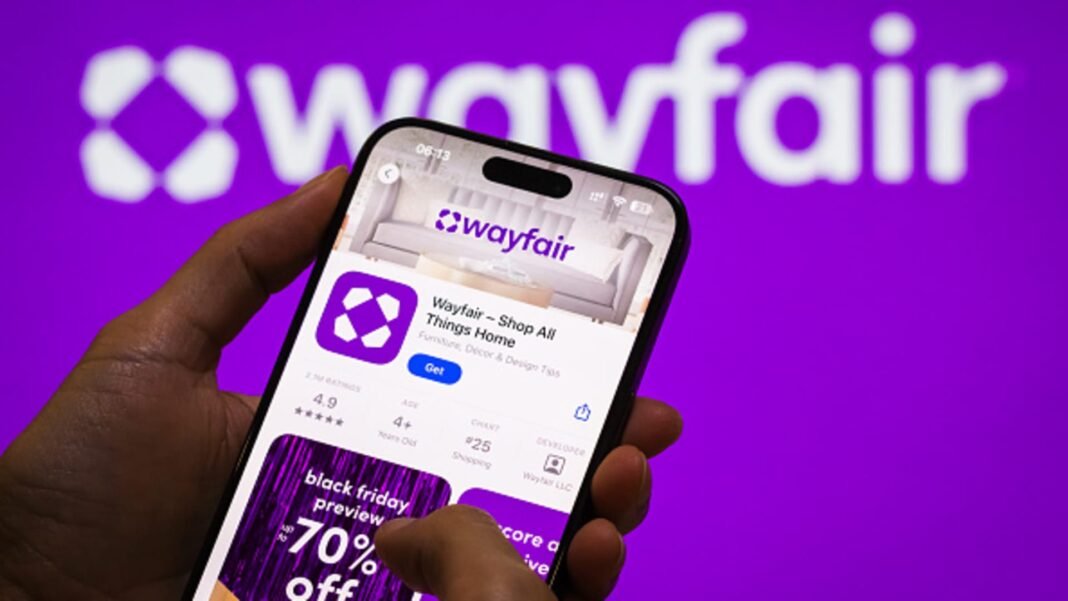
Wayfair Exceeds Q3 Expectations Despite Economic Challenges
Remarkable Revenue Surge Amidst Market Uncertainties
Wayfair, a prominent online home goods retailer, reported an 8.1% year-over-year increase in net revenue for the third quarter, surpassing Wall Street’s projections and demonstrating strong business momentum despite persistent economic headwinds.
The company generated $3.12 billion in revenue during this period, outstripping analyst estimates of $3.02 billion. Adjusted earnings per share also significantly exceeded forecasts, reaching 70 cents compared to the anticipated 43 cents.
Key Financial Metrics and Market Response
- Earnings per share: adjusted 70 cents versus expected 43 cents
- Total revenue: $3.12 billion compared to forecasted $3.02 billion
This unexpected financial strength triggered a notable surge in Wayfair’s stock price, which climbed over 20% during early trading following the earnings announcement.
Diving Deeper into Profitability and Losses
the company posted a net loss of $99 million (76 cents per share) for Q3, widening from last year’s loss of $74 million (60 cents per share). Despite this increased bottom-line deficit, operational efficiencies have improved margins and profitability indicators across key segments.
Diverse Revenue Channels Propel Growth Trajectory
Sales within the U.S. market rose by approximately 8.6%, totaling nearly $2.7 billion, while international operations contributed around $389 million-an increase close to 5%. Factoring out its strategic withdrawal from Germany-which helped reduce costs-the overall net revenue expanded roughly 9% year-over-year.
Tackling Inflationary Pressures and Trade Tariffs
the home furnishings industry continues grappling with inflation-driven cost increases alongside subdued housing market activity amid global interest rates climbing above historic averages near seven percent. Additionally, tariffs on imported furniture have complicated supply chains; however, current duty levels remain below earlier proposed hikes under previous trade policies.
Strategic Focus on Enduring Expansion Initiatives
CFO Kate Gulliver attributed Wayfair’s robust performance primarily to internal strategic efforts rather than external macroeconomic factors such as tariffs or fluctuating interest rates.
- “Core recipe”: refining pricing models while enhancing product availability and delivery speed;
- Loyalty program upgrades designed to boost repeat customer purchases;
- User experience improvements that elevate website engagement;
- An expansion into brick-and-mortar retail spaces responding to renewed consumer interest post-pandemic.
The Revival of Physical Retail: New Store Launches Underway
Last year marked Wayfair’s debut large-format store outside Chicago as part of a pilot initiative reflecting broader retail trends emphasizing omnichannel strategies amid evolving consumer preferences after COVID-19 disruptions.
This success has paved the way for another flagship location planned soon in Yonkers, New York-signaling continued investment in immersive retail environments that complement Wayfair’s digital platform seamlessly.
A Resilient Dual Business model Navigating Volatility
CFO Gulliver highlighted how operating both as an online marketplace backend provider alongside direct retail enables versatility when confronting tariff fluctuations or supply chain challenges-a dual approach fostering resilience amid widespread e-commerce uncertainties worldwide.
Sustained Recovery Following Pandemic Disruptions
The pandemic initially disrupted demand patterns across home furnishing categories; however recent quarters reveal revitalized sales momentum with delivered orders increasing by about five percent compared with last year’s results according to CEO Niraj Shah’s commentary accompanying earnings disclosures.
“Our adjusted EBITDA margin reached nearly seven percent outside pandemic conditions-an unprecedented high,” shah remarked-“reflecting disciplined cost control combined with strong contribution margins fueling steady profitability gains.”
User Engagement Trends Reflect Shifting Consumer Behavior
Total active customers numbered approximately 21 million at quarter-end-a slight decline near two percent from prior periods-which aligns with broader shifts observed across digital retailers adjusting user engagement metrics amidst evolving shopping habits following peak COVID-19 demand phases globally.
A Growth Strategy Self-reliant of Housing Market Fluctuations
Niraj Shah emphasized that Wayfair’s expansion is driven mainly by company-specific initiatives rather than reliance on housing market rebounds or short-term tariff avoidance buying spikes seen briefly earlier this spring within large appliance sectors.
He described their performance improvements as structural gains resulting from consistent execution against core operational priorities supported strongly by technology teams enhancing customer experiences daily across all channels.