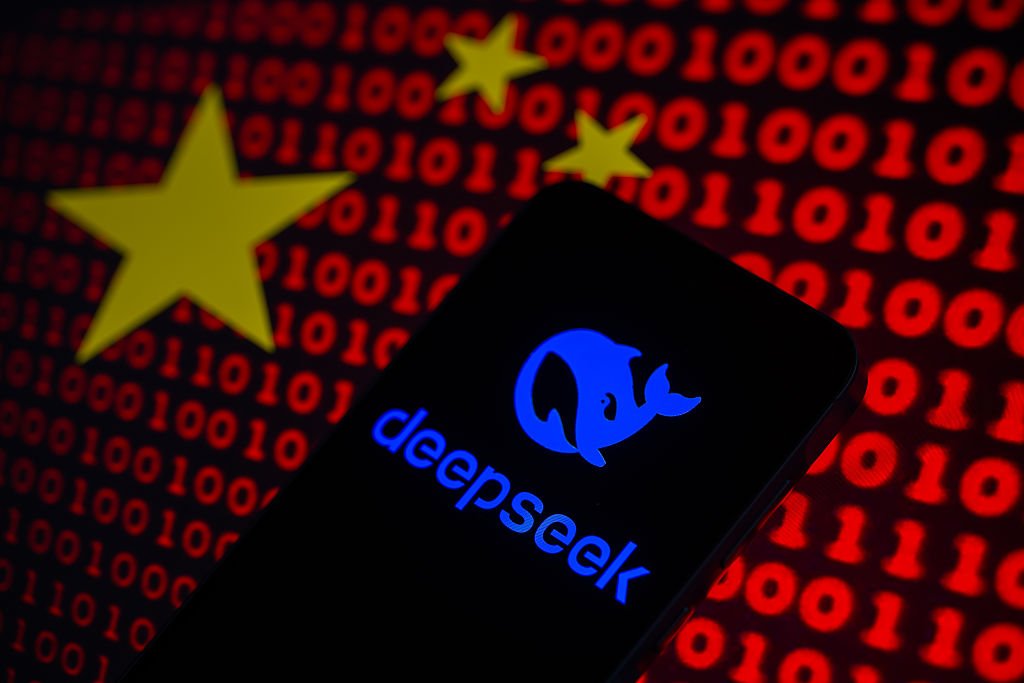
Claims of AI Model Misuse by Chinese Companies Leveraging Claude AI
Anthropic has voiced significant allegations against three Chinese AI firms accused of fabricating over 24,000 accounts to interact with its Claude AI system. This strategy allegedly aimed to appropriate Anthropic’s technology to boost their own artificial intelligence capabilities.
Unpacking the Allegations and Targeted Features
The companies implicated-DeepSeek, Moonshot AI, and MiniMax-are reported to have engaged in upwards of 16 million interactions with Claude via these counterfeit profiles. their approach centered on a technique called “distillation,” which extracts key strengths from Claude such as sophisticated reasoning,integration with external tools,and advanced programming skills.
Distillation typically involves training smaller or derivative models using outputs from a larger model.While this method is often employed internally within research labs for efficiency improvements,it can be misused by competitors seeking to replicate proprietary innovations without investing in original growth.
Company-Specific Focus Areas and Activity Levels
- DeepSeek: Accountable for roughly 150,000 exchanges emphasizing core logic enhancements and alignment tactics that include generating responses resistant to censorship on sensitive topics. DeepSeek gained recognition last year after releasing its open-source R1 reasoning model that rivaled top U.S.-based systems at a fraction of the cost. Its forthcoming DeepSeek V4 aims to outperform both Anthropic’s Claude and OpenAI’s ChatGPT in coding tasks.
- Moonshot AI: Conducted more than 3.4 million interactions concentrating on agentic reasoning abilities, tool usage, coding challenges including data analytics development, autonomous computer agents creation, and computer vision applications. Recently introduced an open-source model named Kimi K2.5 alongside a specialized coding assistant agent.
- MiniMax: engaged in approximately 13 million exchanges focusing heavily on agentic programming functions and orchestration tools integration. Observers noted minimax directed nearly half its traffic toward exploiting the latest iteration of the Claude model shortly after release.
The Geopolitical Landscape: Export Controls Amid Rising Global Rivalry
This controversy unfolds against ongoing debates about export restrictions targeting high-end semiconductor chips essential for training cutting-edge AI models. The United States recently authorized shipments of advanced GPUs like Nvidia’s H200 series to China-a decision critics argue could accelerate China’s progress in artificial intelligence during this critical global competition.
An important aspect highlighted by Anthropic is that mounting large-scale distillation operations at this scale requires access to state-of-the-art hardware resources typically limited under current export control regimes.
“Restricting chip availability not only limits direct training but also reduces opportunities for unauthorized replication through distillation,” Anthropic stated while calling for coordinated efforts among cloud providers and policymakers worldwide.
The National security Risks Linked With Distilled Models
Apart from economic rivalry concerns lies a serious security dimension involving illicitly copied models stripped of embedded safeguards designed to prevent misuse. Developers like Anthropic build protections into their systems specifically aimed at blocking exploitation by malicious actors pursuing cyberattacks or bioweapon research; however distilled versions often lack these critical defenses entirely.
This vulnerability raises alarms about authoritarian governments potentially deploying compromised frontier AIs for offensive cyber operations or mass surveillance initiatives-risks amplified if such models become widely accessible without proper oversight mechanisms intact globally.
Cybersecurity Insights Into Model Theft Through Distillation Techniques
Dmitri Alperovitch-a leading figure in cybersecurity-has confirmed that unauthorized replication via distillation has been instrumental behind rapid advancements observed recently within some Chinese AI projects now regarded as verified facts rather than speculation.
He advocates imposing strict controls preventing sales of any advanced computing components capable of enabling further gains among these entities; failure would disproportionately empower them at America’s strategic expense.
A Unified Industry Response Against Unauthorized Model Duplication
Anthropic continues investing heavily into technologies designed both to identify suspicious patterns indicative of distillation attempts and reinforce defenses making such exploits increasingly challenging.
Nonetheless,a collaborative response spanning developers across sectors-including cloud infrastructure providers-and regulatory authorities remains vital to effectively counteract risks posed by illicit cloning practices threatening innovation integrity worldwide.
Navigating Future Challenges: Protecting Innovation While Encouraging Global Cooperation
- The balance between promoting international collaboration versus safeguarding intellectual property intensifies amid rapid technological breakthroughs demanding immense computational power accessible only through specialized hardware governed by export policies;
- Evolving detection techniques combined with robust legal frameworks may help deter unethical appropriation while fostering legitimate scientific progress;
- The stakes extend beyond commercial competition into geopolitical stability given potential weaponization scenarios linked directly back to compromised artificial intelligence platforms lacking originally embedded ethical safeguards;
- Sustained vigilance will be crucial as adversaries continuously adapt strategies seeking loopholes around emerging countermeasures implemented worldwide;