Upholding the Right to Protest: A Landmark Trial and Its broader Consequences
Context and significance of the Legal Battle
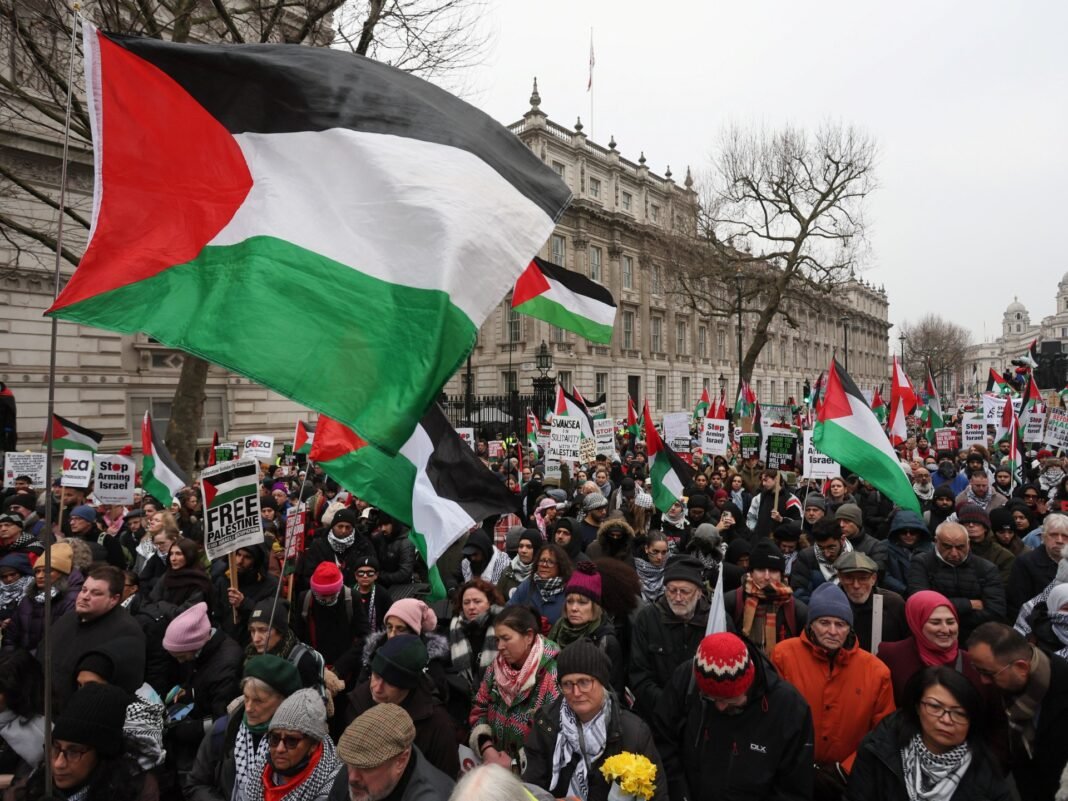
A crucial court ruling scheduled for April 1 in a UK tribunal could redefine the limits placed on public demonstrations across Britain. Ben Jamal, leader of the palestine Solidarity Campaign, together with chris Nineham, vice chair of Stop the War Coalition, face allegations under the Public Order Act 1986. These charges relate to their involvement in organising a pro-Palestine exhibition held in London on January 18, 2025, which was subject to stringent police restrictions.
Despite strong defense arguments presented by barrister Mark Summers emphasizing that protesters neither breached nor intended to violate imposed conditions,Judge Daniel Sternberg refused to dismiss the case. This legal proceeding highlights an increasing trend toward restricting political expression within public spaces throughout the UK.
The Role of Political Influence in Policing Protest Activities
The trial has revealed an unusually close collaboration between Metropolitan Police officials and Zionist lobby groups. Documentation indicates that police officers incorporated feedback from these organisations when determining protest routes for Palestine solidarity events.
Initially, demonstrators were tentatively permitted to assemble outside BBC headquarters-a site near Central Synagogue where previous protests had occurred-to challenge perceived pro-Israel bias within mainstream media coverage. However, this arrangement was later rescinded following external pressures.
During court proceedings it emerged that Police Commander Adam Slonecki received correspondence from the Jewish Leadership Council threatening judicial review if strict protest conditions were not enforced. Later,Slonecki engaged repeatedly with pro-Israeli lobbyists before notifying organisers that protests would be limited due to alleged “cumulative impact” disrupting Jewish community life-without providing evidence or disclosing his meetings with these groups.
Events on January 18: Restrictions and Arrests
The final agreement allowed only a static exhibition at Whitehall on January 18. At this event, Jamal announced plans for a small contingent to approach BBC premises carrying flowers commemorating Gaza victims; if prevented by police they would rather lay flowers at officers’ feet before dispersing peacefully. Authorities accused Jamal’s statements of encouraging breach of protest rules.
In reality, as participants awaited instructions from law enforcement regarding flower placement, tensions escalated resulting in Nineham’s forcible detention amid growing unrest.
Claims of Partiality and Community Exclusion
The defense argued policing decisions were disproportionately influenced by pro-Israel advocacy prior to the demonstration while failing adequately to protect lawful protest rights. Notably absent was any engagement by Commander Slonecki with segments within London’s Jewish community supportive of Palestinian rights-highlighting concerns over biased law enforcement during politically sensitive events.
Evolving Legal Frameworks Restricting Public Assembly
This case unfolds against a backdrop where successive UK governments have steadily tightened controls over freedom of assembly through legislative reforms targeting protests deemed disruptive based largely on subjective criteria rather than tangible harm caused:
- The police, Crime, Sentencing and Courts Act (2022): Expanded police powers allowing restrictions based on factors such as noise levels or location size; widely criticized for prioritizing perceived risk over actual damage during demonstrations;
- The Public Order Act Amendments (2023): granted authorities enhanced ability for pre-emptive curbs against protests labeled disruptive under vague standards; broadened limitations affecting freedoms related not only to assembly but also association among activists;
An attempt later in 2023 sought further tightening via lowering thresholds defining “serious disruption.” However, judicial rulings invalidated these measures , marking rare checks against executive overreach concerning civil liberties protections.
Cumulative Impact Doctrine & The Crime and Policing Bill
The current Labor goverment appears set alongside conservative predecessors toward expanding discretionary policing powers through legislation like the Crime and Policing Bill. Central is managing so-called “cumulative impact,” which targets repeated disruptions nonetheless of individual event severity or intent behind them:
- This policy risks criminalizing frequent protesters irrespective of conduct quality;
- Makes demonstrations increasingly conditional upon subjective assessments;
- Puts notable control into hands vulnerable possibly toward political bias;
- A recent example includes refusal permits for Nakba Day marches while granting extensive access downtown London for far-right figures such as Tommy Robinson’s rallies-exposing stark disparities rooted more in ideology than legality;
Tightening Restrictions Against Activism: The Case Surrounding Palestine Action
A parallel crackdown involves amendments designating Palestine Action, an activist group opposing Israeli military-industrial operations-including drone manufacturing facilities-as proscribed under terrorism laws punishable by up to fourteen years imprisonment:
- This followed high-profile direct actions such as breaching Elbit Systems’ Bristol factory premises;
- A collective known as “The Filton 24” endured prolonged remand exceeding eighteen months despite eventual acquittals on major charges;
- Court rulings recently declared unlawful home Secretary decisions labeling Palestine Action terrorist association;
- Nonetheless authorities have arrested approximately 2700 individuals linked with related activism pending ongoing appeals;
- An activist named Qesser Zuhrah faced rearrest shortly after release solely due to social media posts advocating nonviolent direct action.
“Cumulative Impact”: A Broad-Spectrum Tool Against Diverse Movements?
“If broadly applied,” experts warn “legislation targeting cumulative impact could suppress democratic participation across various sectors-from trade unions demanding fair wages,to anti-war coalitions opposing military interventions.”
This framework threatens social cohesion as it enables selective enforcement frequently enough swayed more heavily by prevailing political winds than objective standards.
An illustrative incident involved repeated denial-of-permit requests submitted for Palestinian solidarity marches contrasted against full authorization granted concurrently for extremist right-wing assemblies occupying central urban spaces without hindrance.**(See note below)...
Sustaining Democratic Freedoms Beyond Individual Causes
No matter how April’s verdict unfolds regarding Jamal and Nineham’s prosecution,the wider battle transcends any single movement.It urgently calls upon citizens nationwide-and all defendersof basic liberties-to unite around safeguarding free speechand peaceful assembly.the erosion witnessed today threatens tomorrow’s democratic fabric itself beyond just one issue or identity group.This moment demands vigilance lest incremental legal encroachments become irreversible barriers silencing dissent across britain’s diverse society.
*Note: recent official records confirm differential treatment favoring far-right march organizers compared with minority-led peaceful protests.*