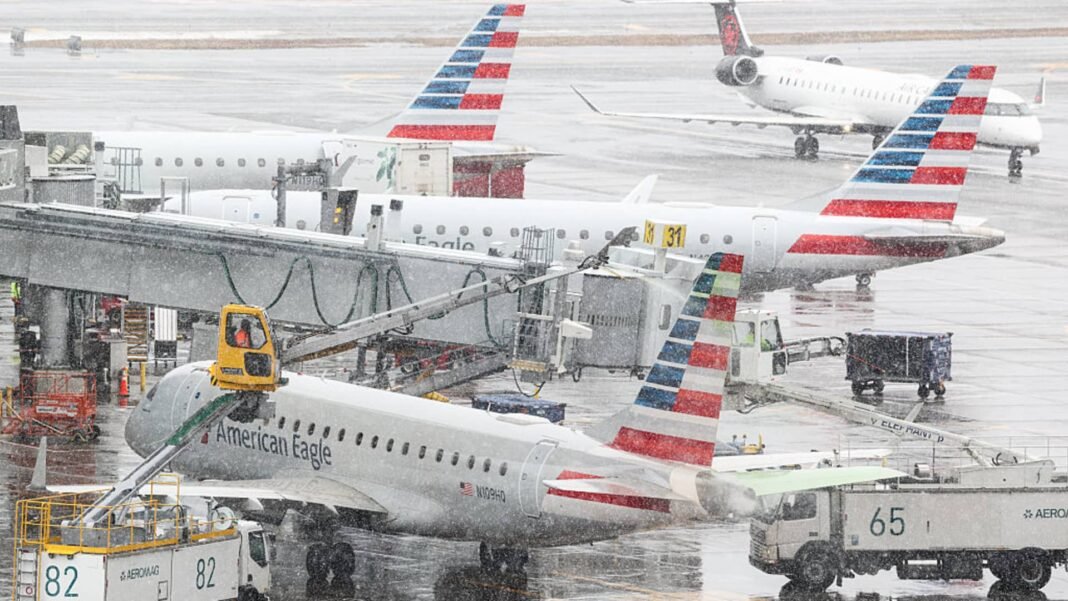
Major Blizzard Brings Eastern U.S. Air Travel to a Standstill
A severe winter storm has paralyzed air traffic across critical airports serving metropolitan hubs such as New York City, Boston, and Philadelphia. Stretching from Maryland through Maine, the blizzard unleashed nearly two feet of snow in parts of New Jersey and Long Island. Accompanying fierce winds created whiteout conditions that made travel extremely dangerous and visibility nearly nonexistent.
Flight Operations Disrupted on an Unprecedented Scale
By late Monday morning,cancellations had surged to almost 20% of all scheduled flights nationwide-over 4,800 departures were called off-far surpassing the usual daily cancellation rate near 1%. International arrivals also suffered major setbacks wiht close to 25% canceled. LaGuardia Airport faced an extraordinary shutdown with roughly 98% of its flights grounded for the day.
- Boston Logan International Airport experienced flight cancellations exceeding 90%.
- Philadelphia International and Newark Liberty airports each reported more than 80% of flights canceled.
The preemptive grounding by airlines aimed to prevent logistical chaos caused by misaligned crews and aircraft during peak storm hours. This approach is intended to streamline recovery efforts onc weather conditions improve.
Extended Delays Anticipated through Tuesday
The disruption is expected to persist into Tuesday with forecasts indicating approximately 40% flight cancellations at both LaGuardia and John F. Kennedy international Airports in New York City.Boston’s airport is projected to face similar reductions according to live aviation tracking data.
Airlines Offer Flexible Rebooking Amid Widespread Cancellations
Leading carriers including American Airlines, Delta Air Lines, JetBlue Airways, Spirit Airlines, United Airlines, and Southwest Airlines have introduced fee waivers allowing affected travelers greater versatility when adjusting their itineraries:
- American airlines, Delta Air Lines, JetBlue Airways, Spirit Airlines, and United Airlines: Passengers may reschedule without penalty if traveling by February 26th.
- Southwest Airlines: Customers can rebook or fly standby within two weeks without incurring fare differences or change fees.
The Recurring Challenge: Winter Weather’s Toll on Airline Systems
This blizzard adds another chapter in a series of harsh winter storms that have repeatedly tested airline operations along the East Coast over recent years. For instance, January’s intense cold wave triggered widespread cancellations across multiple states leading into February’s disruptions-highlighting persistent vulnerabilities despite advances in meteorological forecasting technology.
“The cumulative financial impact on airlines remains important,” industry experts note; recent storms are estimated to have cost carriers hundreds of millions due to grounded fleets and disrupted crew schedules.”
An In-Depth Look: American Airlines’ Winter Struggles Highlight Operational Strain
The January cold snap severely hampered American Airlines’ recovery efforts after thousands were stranded overnight amid freezing temperatures at various airports nationwide. Reports detailed crew members resorting to makeshift sleeping arrangements inside terminals-a situation that heightened tensions between frontline staff and management during this difficult period.
The financial toll was significant; American disclosed losses between $150 million and $200 million directly linked to weather-related interruptions during their latest earnings call-a stark reminder that extreme winter conditions continue posing serious risks for airline profitability as well as passenger satisfaction alike.
A Passenger’s Perspective During Severe Weather Disruptions

A photograph taken inside Terminal C at Boston Logan Airport captures a traveler patiently seated among luggage amidst ongoing delays-illustrating how severe weather not only disrupts schedules but also profoundly affects passenger comfort across major hubs nationwide.
Navigating Future Winters: Strategies Emerging From Recent storm Experiences
- Dynamically adaptive scheduling: Carriers are investing heavily in real-time systems designed for swift adjustments when forecasts predict disruptive weather;
- Crew resource optimization: Improved communication protocols help reduce employee fatigue while ensuring adequate staffing levels;
- User-centric policies: Flexible ticket options foster customer loyalty even amid unavoidable delays;
- Tightened collaboration with meteorological agencies: Enhanced data sharing enables proactive decision-making before storms impact key transportation nodes;
- Sustainability initiatives: Some airlines are adopting environmentally friendly de-icing techniques that balance operational efficiency with ecological obligation.
Together these evolving measures represent a comprehensive effort toward minimizing winter storm impacts on air travel infrastructure while prioritizing safety for millions traversing North America’s busiest corridors throughout unpredictable seasons ahead.