2026: The Dawn of Practical AI Integration
after years marked by rapid innovation and experimentation in artificial intelligence, 2026 is set to usher in a new phase focused on real-world applications. Instead of merely expanding the size of language models, the industry is shifting toward embedding AI into everyday tools and workflows.this evolution involves deploying smaller, task-specific models where they are most effective, integrating intelligence directly into devices, and creating systems that enhance human productivity seamlessly.
Rethinking Growth: Why Bigger AI Models Are No Longer the Ultimate Goal
The period dominated by scaling up AI models-making them larger and more resource-intensive-has reached a turning point. The breakthrough began wiht AlexNet in 2012, which demonstrated that deep learning could recognize images by training on millions of examples using GPUs. this milestone sparked continuous advancements culminating in GPT-3’s release around 2020, revealing how increasing model size unlocked capabilities like coding and reasoning without explicit task-specific training.
However, many experts now argue that this era of relentless scaling has plateaued.Leading researchers suggest that simply enlarging transformer-based architectures yields diminishing returns. Instead, innovative designs focusing on efficiency and adaptability are necessary to drive future progress.
kian Katanforoosh from Workera forecasts that within five years we will witness architectures surpassing transformers significantly; otherwise, development risks stagnation. Similarly, Yann LeCun advocates moving beyond brute-force scaling toward smarter structures optimized for performance rather than sheer size.
Compact Models Powering Business Solutions
While large language models excel at broad generalization across diverse topics, enterprises increasingly rely on smaller language models (SLMs) fine-tuned for specific domains or tasks. These compact yet potent systems offer cost-effective speed without compromising accuracy when properly customized.
Andy Markus from AT&T notes mature companies prefer slms becuase they deliver comparable results to massive LLMs but at a fraction of the cost-a critical factor as businesses scale their AI deployments globally.
This trend mirrors innovations from startups like cohere Labs who demonstrate through benchmarks how well-optimized small-scale models can outperform larger counterparts in targeted applications. Jon Knisley at ABBYY highlights SLMs’ lightweight design as ideal for edge computing environments where local processing reduces latency while enhancing data privacy.
Simulated Realities: Teaching Machines Through Experience
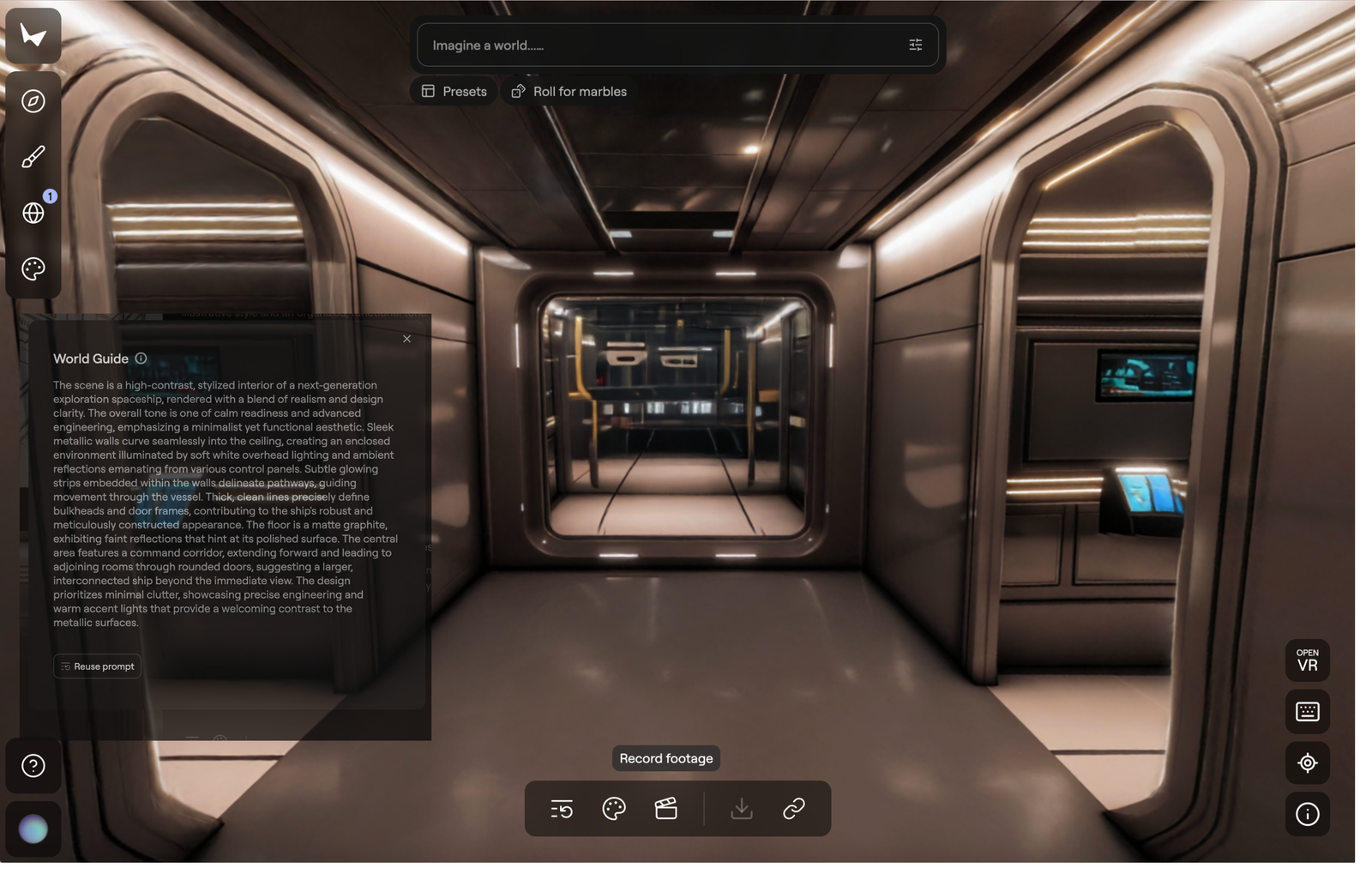
A detailed spaceship environment created using Marble’s world model technology showcasing realistic lighting reflections within the hub walls.
A fundamental limitation with current large language models lies in their lack of genuine understanding-they generate text based on learned patterns rather than comprehending real-world dynamics fully.To bridge this gap, researchers are developing “world models,” which simulate physical interactions within three-dimensional spaces to predict outcomes autonomously and inform decision-making processes.
This approach gained traction when yann LeCun departed Meta to establish his own lab dedicated exclusively to advancing world modeling technologies with ambitions reaching multi-billion-dollar valuations due to their transformative potential. Google DeepMind continues refining Genie-an interactive real-time world model-and startups such as Decart and Odyssey create immersive virtual environments powered by these systems.
The gaming sector stands out as an early adopter expected to benefit enormously; projections estimate market value soaring from $1.5 billion (2025) up to $280 billion by 2030 driven largely by enhanced interactivity enabled through smart simulated worlds.
Pim de Witte from General Intuition envisions virtual spaces evolving into essential testing grounds not only for entertainment but also foundational research fostering next-generation intelligent agents capable of spatial reasoning beyond current human abilities.
The Emergence Of Autonomous Agents In Everyday Operations
The initial excitement surrounding autonomous agents fell short due to difficulties integrating them effectively with existing business tools-agents often remained isolated pilots unable to access necessary data or APIs smoothly.
Anthropic’s Model Context Protocol (MCP), described as a global connector akin to “USB-C for AI,” addresses this challenge by enabling agents direct communication with external resources such as databases or search engines.
With major players like OpenAI Microsoft adopting MCP standards-and google launching managed MCP servers-the infrastructure is maturing sufficiently so agent-driven workflows can become routine across industries including healthcare property management sales support IT services among others.
rajeev Dham predicts voice-enabled agents managing end-to-end customer interactions will evolve into core system components rather than mere assistants over time.
Synthesizing Human-AI Partnerships Rather Than Replacement
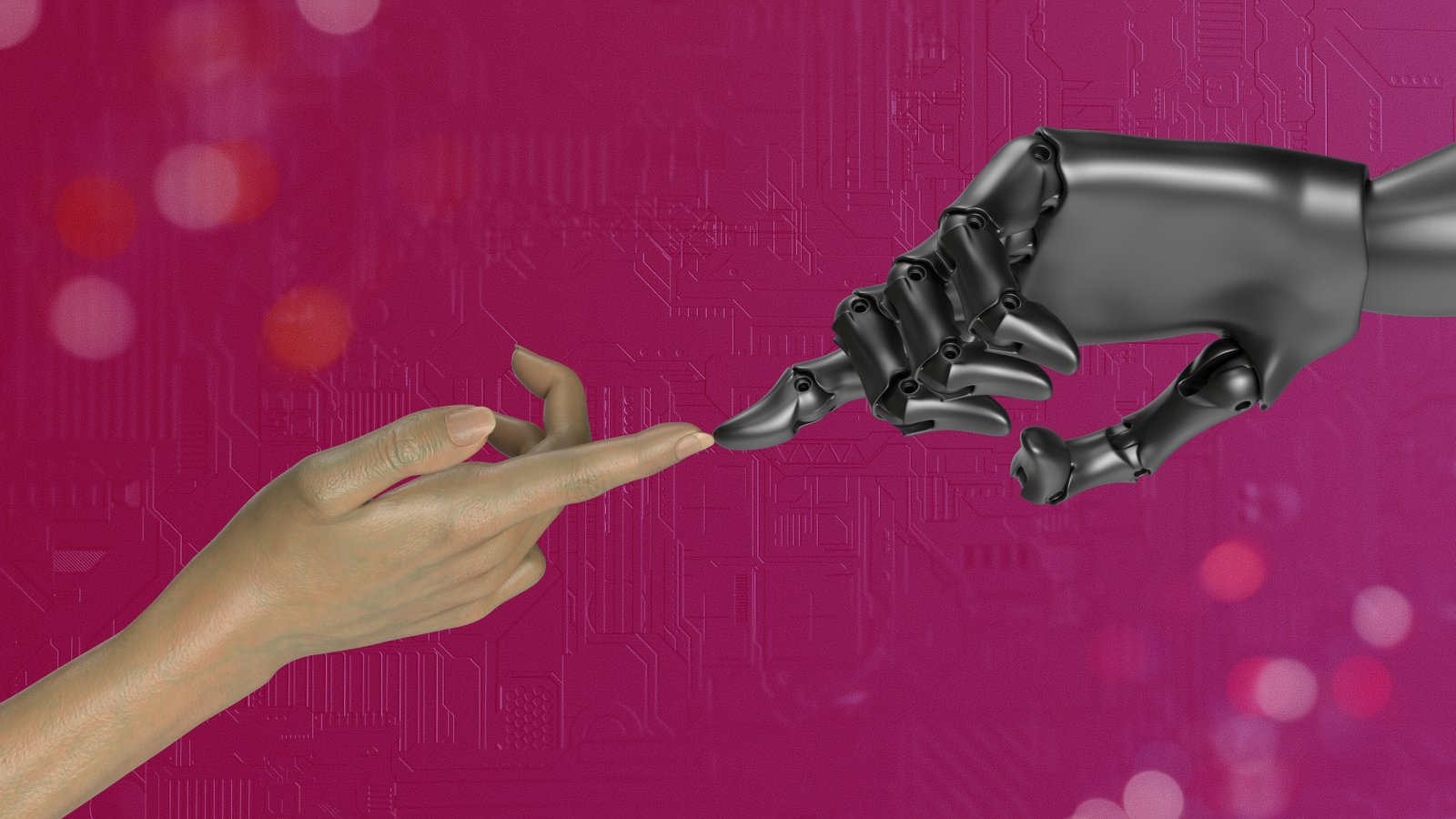
Depiction showing humans collaborating closely with advanced AI assistants enhancing productivity instead of replacing jobs entirely.
The narrative around automation-induced job losses has softened considerably heading into 2026 amid economic uncertainties combined with technological realities showing full autonomy remains elusive.
Katanforoosh emphasizes this year will highlight augmentation-in which artificial intelligence amplifies human skills instead of substituting workers outright.
New roles centered around governance frameworks ensuring openness safety protocols data stewardship are expected growth areas contributing positively towards employment rates projected below 4% unemployment next year according him.
“People want control above automation layers-not beneath,” says Pim de Witte underscoring demand for collaborative interfaces empowering users over fully automated black boxes.”
Tangible Progress: integrating Intelligence Into everyday Devices

Image Credits:david Paul Morris/Bloomberg/Getty Images
A convergence between small-scale modeling techniques world simulations edge computing paves way towards widespread physical applications including robotics autonomous vehicles drones wearables entering mainstream markets throughout 2026 according Vikram Taneja at AT&T Ventures. While complex robotics still face high costs wearables provide accessible entry points consumers eager adopt always-on assistance embedded directly onto bodies.Smart glasses similar those launched recently under major brands now answer contextual queries about surroundings ,while health-focused rings watches continuously analyze biometric signals offering personalized insights . Connectivity providers optimizing networks specifically tailored toward supporting these devices stand positioned advantageously amid growing demand .