Outlook on the Copper Market: Supply Constraints and Rising Demand Drive Price Surge
The copper sector is witnessing an unusual upswing, with prices set to achieve their most significant annual rise in over a decade. This surge is fueled by persistent supply disruptions, a weakening U.S. dollar, optimistic projections for China’s economic growth, and escalating investments in artificial intelligence technologies.
Recent Price Movements and Market Dynamics
On the London Metal Exchange (LME), three-month copper contracts recently surged to $12,405 per metric ton after touching an all-time high of $12,960. This represents an extraordinary 41% increase throughout 2025-the strongest yearly gain since 2009 when prices soared more than 140% amid recovery efforts following the global financial crisis.
Similarly,copper futures traded in New York have climbed over 40% this year,closely tracking LME’s bullish trend and reflecting strong investor confidence in copper’s long-term prospects.
Key Factors Propelling Copper’s Revival
Copper demand remains a reliable indicator of global economic health due to it’s vital role across diverse industries. The metal is essential for advancing clean energy solutions such as electric vehicles (EVs), renewable energy infrastructure, and wind turbine production.
The rapid expansion of electrification projects worldwide necessitates vast amounts of copper for wiring systems, power transmission lines, and cooling equipment-especially within burgeoning data centers that form the backbone of today’s digital economy.
“The recent boom in AI-driven applications has considerably intensified pressure on copper supplies,” notes industry analyst Ian Roper from Astris Advisory Japan KK. “While sectors like steel and iron ore face headwinds from China’s property market slowdown, copper remains robust due to its indispensable role in renewables and data center growth.”
The Impact of Artificial Intelligence and Defense Sectors
Financial experts identify AI-fueled expansion as a critical driver sustaining elevated copper prices into next year. Analysts at JPMorgan predict average LME prices near $12,500 per metric ton during Q2 2026 with an annual average around $12,075-supported by accelerating construction of data centers worldwide.
Gregory Shearer from JPMorgan highlights that “inventory disruptions combined with tight supply conditions create a bullish environment likely pushing prices above $12,000 per metric ton early next year.” These trends also reflect increased consumption linked to strategic sectors such as defense technology progress.
A Closer Look at Copper Manufacturing
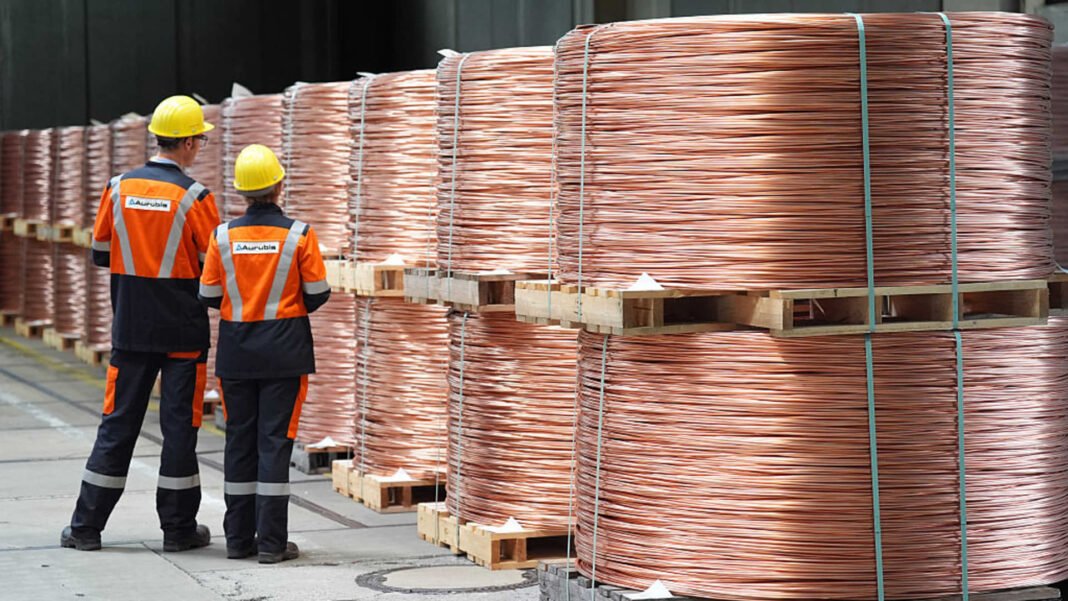
Copper wire production involves complex casting followed by rolling processes before being wound into enormous spools weighing up to five tons each-demonstrating the scale necessary to satisfy industrial demand globally.
Diverse Perspectives: Balancing Optimism with Prudence
Certain market analysts urge caution despite widespread optimism about near-term price gains. Goldman Sachs research forecasts some price corrections but expects ongoing demand growth driven by grid modernization initiatives alongside strategic investments in AI technology and defense will prevent sharp declines below $10,000 per metric ton on the LME during early 2026.
- The firm anticipates first-half average prices around $10,710 per metric ton next year;
- Longer-term outlooks suggest potential increases toward $15,000 by 2035-exceeding many current industry forecasts;
- This viewpoint reflects expected structural shifts favoring global electrification despite short-term volatility risks.
Copper’s Crucial Role in Global Energy Change
Beyond being a key industrial metal,copper serves as foundational material enabling worldwide decarbonization efforts. From powering electric vehicles replacing customary combustion engines to supporting smart grid technologies that enhance energy efficiency,its importance continues growing alongside innovations shaping tomorrow’s lasting economy.