Indus Waters Conflict: A Pivotal Issue Between India and Pakistan
Decades ago, a famous South Asian writer imagined the anxiety surrounding the possibility of India cutting off vital river waters to Pakistan. The story’s character scoffed at the idea, saying, “Who can shut a river? It’s not a mere drain.” Today, this fear has intensified as tensions rise between two nuclear-armed neighbors sharing one of the globe’s most crucial river networks.
In April 2025, after an attack in Indian-administered Kashmir that resulted in 26 civilian deaths-mostly tourists-India accused militant groups supported by Pakistan and subsequently announced it’s withdrawal from the Indus Waters Treaty (IWT). This treaty, established over sixty years ago, regulates water distribution from six rivers within the indus Basin and sustains more than 270 million people in Pakistan.
The Pakistani National Security Committee quickly denounced India’s unilateral decision as an “act of war,” warning of dire consequences if water supplies were disrupted. Following this declaration, military confrontations involving missiles and drones occurred before international diplomacy secured a temporary ceasefire. Despite this pause in conflict, India remains resolute about indefinitely suspending the treaty.
The Vital Role of the Indus River System
The Indus River is ranked as the twelfth longest worldwide. It originates near Mount Kailash in Tibet at an altitude close to 5,500 meters above sea level. The river flows through politically sensitive areas such as Kashmir before traveling roughly 3,000 kilometers across Pakistan to reach the Arabian Sea.
Along its path through Khyber Pakhtunkhwa province lie western tributaries like Swat and Kabul Rivers. Further downstream on punjab’s fertile plains are five eastern tributaries-the Jhelum, Chenab, Ravi, Beas, and Sutlej-that primarily flow through Indian territory before joining with the main Indus within Pakistan’s borders.
This upstream-downstream relationship places India as an upper riparian state controlling headwaters while Pakistan depends heavily on these waters downstream-a source fueling ongoing mistrust between them.
Water Disputes around The World
- Conflicts over shared rivers are widespread globally; as an example:
- The Tigris-Euphrates basin has experienced disputes among Turkey (Türkiye), Syria, and Iraq due to dam projects affecting downstream water availability.
- Ethiopia’s Grand Ethiopian Renaissance Dam on the Nile has sparked tensions with Egypt and Sudan concerning potential impacts on their water security.
- Within South Asia itself lies persistent disagreement among Bangladesh, Nepal, and India regarding management of Ganges-Brahmaputra-Meghna basin resources.
A Ancient Rift Rooted In Partition
The Indo-Pakistani water dispute traces back to British India’s partition in 1947 when Punjab’s integrated irrigation system was divided between two new nations. Jammu & Kashmir became another flashpoint as key tributaries originate or flow through contested territories there.
An early crisis unfolded when India stopped canal waters flowing into Pakistani Punjab for five weeks starting March 1948-depriving nearly eight percent of cultivable land-and inspiring narratives about fears tied to control over natural resources post-partition. This turmoil eventually led to World Bank-mediated talks culminating in signing IWT in September 1960 after nine years aimed at stabilizing relations via “hydraulic partition.”
Kashmir: The Nexus Of Territorial And Water Disputes
Kashmir remains central because territorial control directly affects access to critical waterways feeding both countries’ agrarian economies. Both nations claim sovereignty over parts or all of Kashmir-with China administering some areas-which complicates any resolution focused solely on hydrology without addressing broader political conflicts. Historically three out of four wars fought between them have involved Kashmir issues prior to recent escalations linked with water tensions too.
A Distinctive treaty Dividing Rivers Instead Of Water Volumes
Differing from typical transboundary agreements based on proportional volume sharing across entire basins worldwide,the IWT allocates entire rivers rather than splitting volumes:
- Eastern Rivers (Ravi,Sutlej,and Beas): Allocated fully for India’s use;
- western Rivers (Indus,Jhelum,and Chenab): Reserved exclusively for Pakistan;
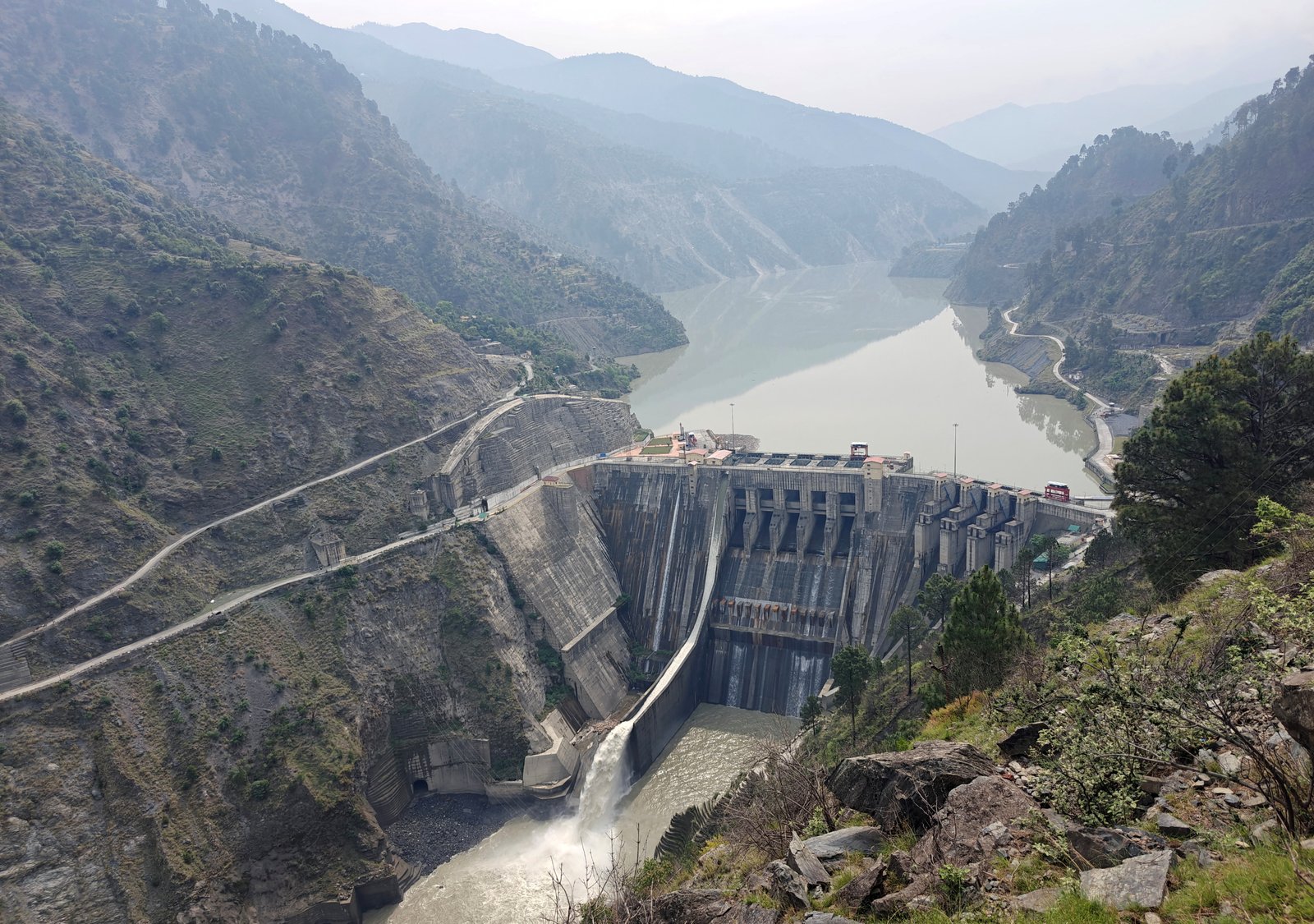
This arrangement permits limited Indian hydroelectric projects (“run-of-the-river”) on western rivers under strict design constraints ensuring uninterrupted flow downstream into Pakistan.
IWT’s Three-Level Dispute Resolution Process
- Bilateral Permanent Indus Commission consisting of commissioners from both countries addresses technical matters;
- If unresolved,it escalates to a neutral expert appointed under World Bank supervision;
- If still unsettled,the case proceeds before The Hague-based Permanent Court Of arbitration (PCA).
This mechanism has been invoked only thrice concerning Indian dams Baglihār (chenab), Kishenganga (Jhelum),and ratle (Chenab). While baglihār was cleared by neutral experts allowing operation since 2008,Kishenganga faced PCA adjudication permitting diversion but maintaining minimum flows towards Pakistani territory.The Ratle project currently fuels fresh controversy amid treaty suspension uncertainties.
Tensions Rise: ‘Blood And Water’ Symbolism Intensifies
“Blood or water cannot flow simultaneously,” declared then Prime Minister Narendra Modi following attacks attributed by New Delhi to groups allegedly backed by Islamabad that intensified calls within India against continuing treaty obligations.
Years later,Pakistani leaders responded defiantly emphasizing ownership:”The Indus is ours; either our waters will continue flowing or their blood will be spilled.”

The Realistic Scope Of India’s Control Over Water Flows
< p >Despite strong political rhetoric,the reality is constrained geographically & infrastructurally:< / p >< ul >< li >India controls three eastern rivers outright;< / li >
< li >On western rivers vital for Pakistani agriculture,the rugged terrain limits large-scale diversions;< / li >
< li >Dams like Baglihār & Kishenganga regulate but do not fully stop flows;< / li >
< li >Seasonal variations mean winter months pose greater risk if storage projects hold back critical volumes impacting crops such as wheat;< / li >
< p>Naseer Memon,a prominent environmental analyst near Islamabad,cautions that while immediate stoppage isn’t feasible,”even partial regulation during dry seasons could severely impact millions dependent upon these waters.” anuttama Banerji,a new Delhi-based expert agrees noting capital-intensive infrastructure would be required even just for regulation rather than full blockage.< / p >
Agriculture And Economy At Stake Amidst Rising Pressures
< p>Agriculture accounts for approximately one-quarter GDP share & employs more than forty percent workforce within Pakistan making reliable irrigation indispensable.Dan Haines,UCL environmental historian highlights how symbolic disruptions already threaten food security.”Water remains politically sensitive leverage,” he explains.< / p >
IWT Designed To Separate Politics From Hydrology – Now Under Threat
< blockquote>“The treaty explicitly aimed at insulating politics from shared resource management,” says Erum Sattar,a lasting management lecturer at Tufts university.”India dragging it back risks destabilizing fragile peace.”< / blockquote >
Pakistan’s Vulnerabilities And Response Strategies
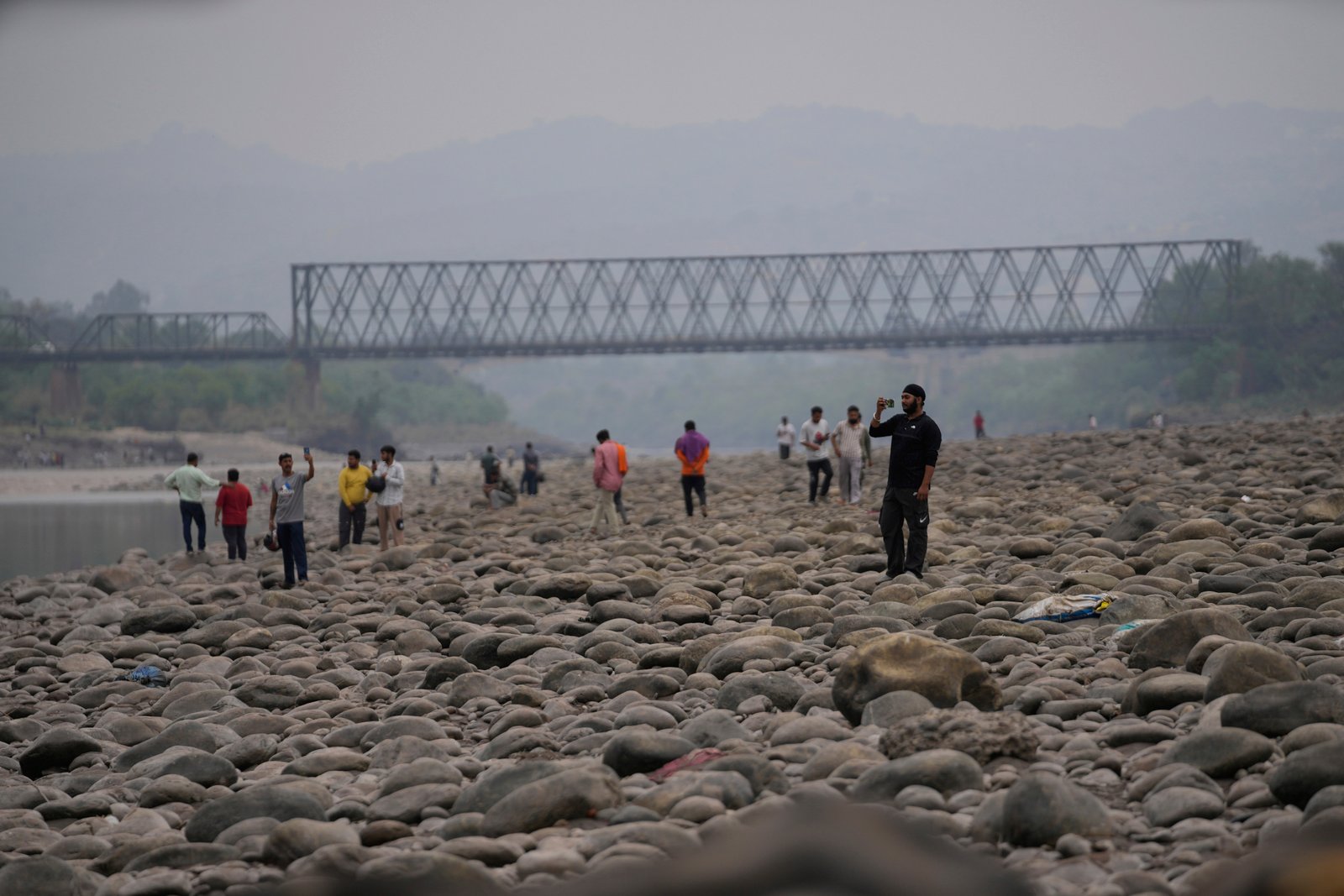
< li >Existing reservoirs Mangla,Tarbela,and Chashma plus barrages store less than four weeks’ worth (~15 million acre-feet) compared internationally recommended minimums (~120 days);< li>P akistan ‘ s dam projects Mohmand & Diamer-Bhasha aim add ~9 million acre-feet capacity expected completion late decade;< li>P rime Minister Shehbaz Sharif acknowledges urgent need expanding storage citing unfriendly designs threatening national survival;
Pakistan faces urgent challenges balancing expansion plans against scenarios were upstream manipulation could cause prolonged shortages beyond current storage capabilities.Khurram Dastgir Khan,a former foreign affairs minister warns,”If medium-to-long-term capabilities emerge enabling diversion/blockage,it risks igniting full-scale conflict given stakes involved.”Ahmed Irfan Aslam,recently active legal representative echoes concerns highlighting breakdowns trust compound dangers.”Good faith appears absent now,on both sides,” he notes.
Towards A Future Beyond Current Agreements?
Bilateral hardline positions dominate today.New Delhi refuses reinstatement while Islamabad brands suspension tantamount to war.Political analysts suggest diplomacy or international arbitration remain last hopes despite bleak prospects given deteriorated relations.Pakistani military officials emphasize readiness respond decisively should harm inflicted upon vital lifeline occur yet caution escalation risks further instability.Anuttama Banerji advocates reassessment seeking mutually beneficial modifications rather than confrontation.Daanish Mustafa proposes leveraging current impasse toward renegotiation including claims over eastern river shares controlled solely by India presently.Aslam stresses direct talks ideal though unlikely soon concluding all options remain open including military measures if deprived essential resources permanently.
This unfolding saga around one river system encapsulates complex intersections among geography,power politics,national survival,and human livelihoods-highlighting why peaceful transboundary water management stands among global community’s most urgent challenges today.