Global Energy Supply at Risk: Consequences of Strait of Hormuz Disruptions
The escalating conflict involving the United States and Israel against Iran has now entered its fourth week, significantly straining global oil and gas markets. This tension arises from severe interruptions to maritime traffic through the Strait of Hormuz, a vital artery for energy shipments, coupled with targeted attacks on critical energy infrastructure across the Gulf region.
Why the Strait of hormuz Is Crucial for energy Trade
Under typical conditions, nearly 20% of the world’s oil and gas exports pass through this narrow channel.This equates to close to 20 million barrels per day (bpd) flowing from Persian Gulf producers toward international consumers. The strait acts as an essential gateway linking gulf energy exporters with global markets via open sea routes.
Recent Shifts in Strait Accessibility
Following coordinated strikes by US and Israeli forces on Iranian targets earlier this year, Iran’s Islamic Revolutionary Guard Corps (IRGC) imposed a blockade over the strait. Initially threatening to set fire to any unauthorized vessel attempting passage, Iranian authorities have sence eased restrictions slightly-allowing limited transit only after receiving explicit approval from Tehran.
This adjustment has caused shipping activity to plummet by over 95% compared with pre-conflict levels. Only select tankers flagged by nations such as India, Pakistan, and China are permitted passage under stringent conditions.Meanwhile, thousands of vessels remain stranded at both entrances to this strategic maritime corridor.
Diversifying Export Routes: Pipelines as Alternatives to Maritime Transit
with seaborne transport through the Strait of Hormuz heavily constrained, regional producers increasingly depend on land-based pipelines or alternative sea routes for export continuity. Three major pipelines stand out as key alternatives:
The East-West Pipeline: Saudi Arabia’s Strategic Artery
This pipeline extends approximately 1,200 kilometers across Saudi Arabia-from Abqaiq near the Persian Gulf coast westward toward Yanbu port on the Red Sea coast. Operated by Aramco-the world’s largest oil company valued above $1.7 trillion-it plays a crucial role in diverting crude away from vulnerable maritime chokepoints.
the pipeline can handle up to 7 million bpd but remains insufficient compared with pre-crisis volumes passing through Hormuz (~20 million bpd). Since hostilities escalated in early 2026,Saudi Arabia has ramped up throughput substantially-from under one million bpd earlier this year toward nearly three million bpd recently-to partially offset losses caused by restricted shipping lanes.
Security Concerns Along Alternative Corridors
A meaningful risk is that these alternate routes remain exposed amid regional instability and militant threats. Such as, Yemen’s Houthi rebels-backed by Iran-have previously launched attacks disrupting navigation along red Sea passages during conflicts between Israel and gaza spanning recent years.
“We are fully prepared militarily with all options available,” declared an anonymous Houthi commander regarding potential future operations targeting strategic chokepoints like Bab al-Mandeb Strait-a narrow waterway connecting Red Sea waters with Indian Ocean trade routes vital for global commodity flows including Russian crude exports.
The Abu Dhabi Crude Oil Pipeline (ADCOP): A Vital Bypass Route
This roughly 380-kilometer pipeline runs within the United Arab Emirates from Habshan oil fields southwestward toward Fujairah port outside Persian Gulf waters along Oman’s coastline. Operational since 2012 with a capacity near 1.5 million bpd, ADCOP provides an important outlet circumventing congested or contested waterways adjacent to Iranian-controlled zones.
Kpler data reveals that despite disruptions elsewhere in March 2026 exports via Fujairah increased notably-from about 1.17 million bpd in February up towards roughly 1.62 million bpd last month-highlighting UAE operators’ efforts to maximize throughput amid geopolitical tensions affecting traditional export channels.
iraq-Turkey Kirkuk-Ceyhan Pipeline: Avoiding Southern Bottlenecks
This transnational conduit connects Iraq’s northern Kirkuk oilfields directly westward into Turkey at ceyhan port along Mediterranean shores-a route bypassing both Persian Gulf bottlenecks and southern Middle Eastern conflict zones entirely.
Iraq ranks among OPEC’s top producers globally with output exceeding four million barrels daily; however current flow through this line remains modest at around 200 thousand barrels per day due primarily to infrastructural limitations rather than supply constraints (pipeline maximum ~1.6 million bpd).
Pipelines Cannot Fully Replace Strait Capacity: Key Limitations
- together these pipelines offer combined maximum capacities close to nine million barrels daily-less than half what normally passes via Strait of Hormuz.
- The fixed terrestrial nature makes them vulnerable targets for missile strikes or drone attacks amid ongoing hostilities; damage could further reduce already limited throughput just as naval shipments face blockades or interdiction risks near Iran-controlled waterships lanes nearby Iran-controlled territories .
AdditionaI Transport Options Face Practical Barriers
An alternative sometimes considered is trucking crude overland; however logistical realities make it impractical at scale given typical truckloads range between hundreds rather than thousands or millions of barrels daily needed globally-and convoys would be highly vulnerable amidst active conflict zones prone also potentially targeted by antagonistic forces seeking disruption effects similar those seen against pipelines or ports alike.
Navigating Complex Energy Dynamics Amid Geopolitical volatility
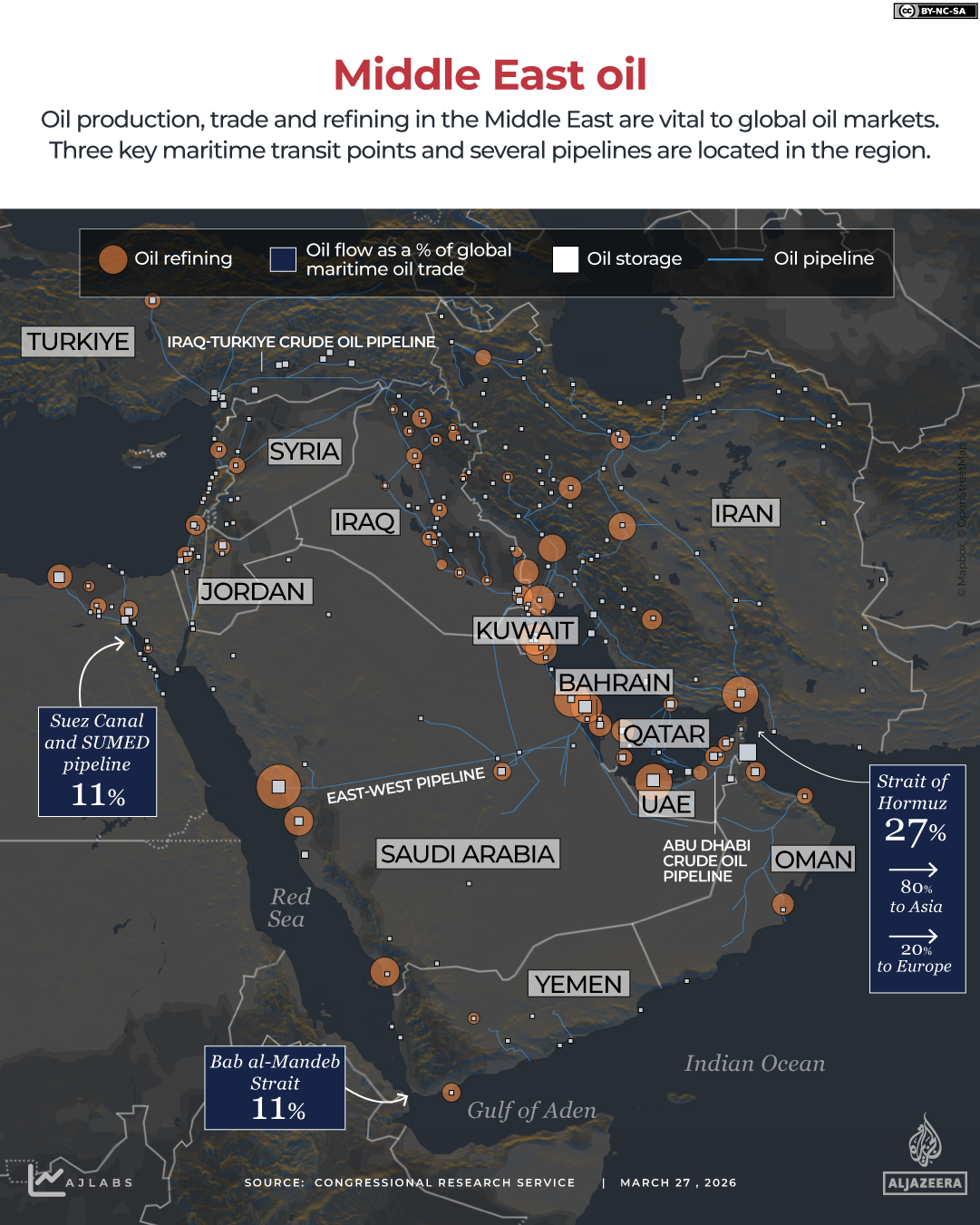
This crisis highlights how fragile global energy supply chains become when critical nodes like Strait of Hormuz, responsible for nearly one-fifth of worldwide petroleum movement annually (~20 mbd), face disruption due either direct military action or proxy conflicts impacting surrounding security environments.
While alternative infrastructure offers partial relief-including Saudi Arabia’s Petroline expansion plus UAE & Iraqi pipeline utilization-their combined capacities cannot fully compensate nor guarantee uninterrupted flow given persistent threats posed by armed groups aligned regionally.
This evolving situation demands vigilant monitoring alongside diplomatic efforts aimed at de-escalation while encouraging diversification strategies within international energy markets seeking resilience beyond single chokepoints vulnerable during geopolitical crises alike.