



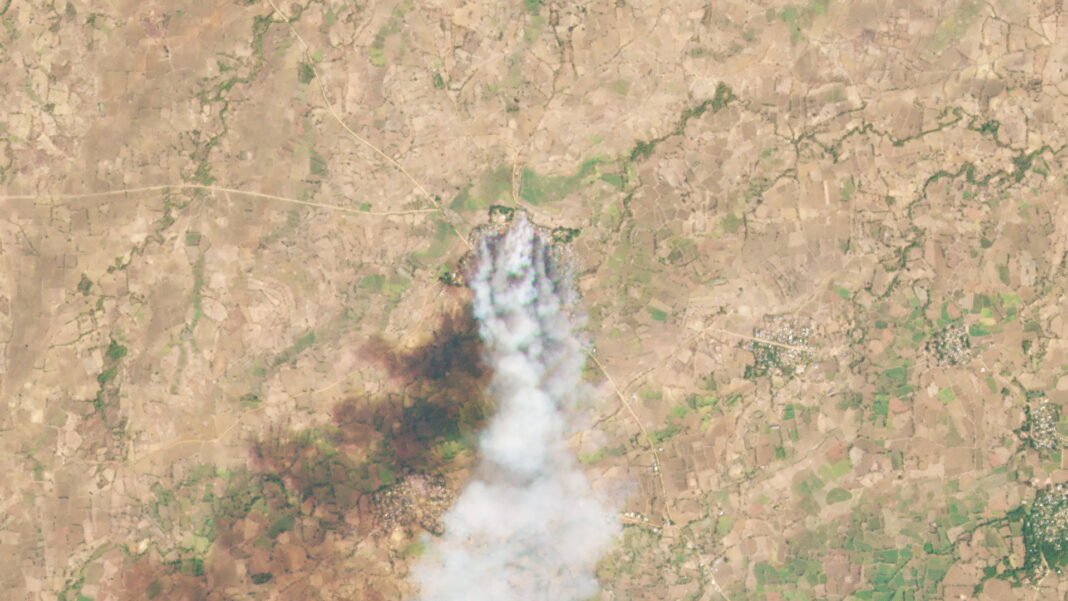
Motorised Paraglider Attacks Devastate civilians in Central Myanmar
A recent surge in violence has claimed the lives of more than 20 civilians in central Myanmar, following a military offensive involving motorised paragliders targeting a nighttime gathering.The assault occurred during an antigovernment candlelight vigil, as reported by independent media and human rights observers.
Chronology and Nature of the Assaults
On Monday evening, a village in the Sagaing region was struck twice by aerial attacks while residents convened to celebrate a Buddhist festival and call for the release of political prisoners. The initial strike happened around 8pm local time, with a second wave at approximately 11pm, causing important casualties and injuries among attendees.
This tactic-deploying motorised paragliders to deliver explosives over civilian zones-has been increasingly documented as part of Myanmar’s military strategy. International human rights bodies have condemned this method for its disproportionate impact on non-combatants.
The Ongoing Conflict: A Complex Battlefield
Since the February 2021 coup that toppled Myanmar’s elected government, the country remains embroiled in civil war involving multiple armed factions including ethnic militias and resistance groups opposing the military junta. Current analyses estimate that while junta forces control roughly 20% of national territory, opposition groups hold about 40%, with contested areas comprising the rest.
The conflict has resulted in over 75,000 fatalities and displaced more than 3 million people, according to recent United Nations assessments. Ethnic minority populations near conflict zones such as Chaung-U Township frequently endure repeated assaults from military operations employing advanced tactics like aerial paraglider strikes.
A Calculated Military Campaign Amid Political Unrest
The timing of these attacks aligns with preparations for elections scheduled later this year by Myanmar’s ruling junta-a process widely criticized internationally for lacking credibility amid ongoing violence and repression. Analysts argue these offensives aim less at fostering dialogue or peace than at suppressing dissent ahead of political events designed to consolidate military dominance.
Growing Demands for Global Accountability
Civil society organizations are intensifying calls on regional entities such as ASEAN alongside global institutions like the United Nations Security Council to implement stronger sanctions against Myanmar’s leadership. There is mounting pressure to refer cases involving civilian abuses to international judicial bodies including the International Criminal Court (ICC) due to persistent violations documented across conflict zones.
“ASEAN’s current stance has failed millions enduring brutal crackdowns since early 2021,” stated an expert monitoring developments on site. “A decisive shift is essential if there is any hope left for restoring democratic governance.”
The Human Impact: Stories from a Village Under Fire
this latest attack shattered families who had gathered peacefully-not only lighting candles as part of religious observance but also symbolizing resilience amid oppression. Survivors describe scenes reminiscent of drone bombardments witnessed elsewhere globally where unconventional aerial platforms have been weaponized against civilians-for example, drone strikes devastating rural communities during conflicts across parts of Africa or South Asia have similarly inflicted deep trauma on non-combatant populations.
- Civilian assemblies: Peaceful protests or cultural ceremonies frequently enough become targets under authoritarian regimes worldwide;
- Tactical evolution: Motorised paragliders represent low-cost yet effective aerial delivery systems adapted by militaries seeking remote strike capabilities;
- Civil war fragmentation: Divided territorial control complicates ceasefire negotiations and prolongs humanitarian emergencies;
- Elections amid turmoil: Conducting polls during active hostilities risks legitimizing regimes through coercion rather than genuine consent;
- Diplomatic dilemmas: Regional actors face challenges balancing respect for sovereignty with advocacy for human rights protections;
- civic perseverance: Despite threats many communities continue demanding justice and democratic freedoms under severe repression.
Paving a Way Forward: Peace Before Politics
Mediators emphasize that lasting resolution hinges upon halting hostilities prior to holding meaningful elections-an approach supported by several governments concerned about Southeast Asia’s stability.
Without addressing root causes such as ethnic grievances alongside ensuring protection mechanisms for vulnerable groups, electoral processes risk becoming hollow exercises devoid of true representation or reconciliation efforts.
Sagaing Region: Reflecting Broader national Struggles
Sagaing exemplifies how certain regions remain epicenters where state-sponsored violence intersects with ethnic identity politics amidst fragmented governance.
Communities here face heightened vulnerability due both to proximity with armed factions and relentless activism despite harsh reprisals from security forces deploying increasingly sophisticated methods like motorised paraglider bombings-a tactic rarely seen outside major conflicts involving drones or helicopter-delivered munitions worldwide.
“The deployment of motorised paragliders signals an alarming tactical shift aimed explicitly at terrorizing civilian populations,” experts warn based on field investigations conducted recently across multiple townships within central Myanmar’s volatile zones.”
.


