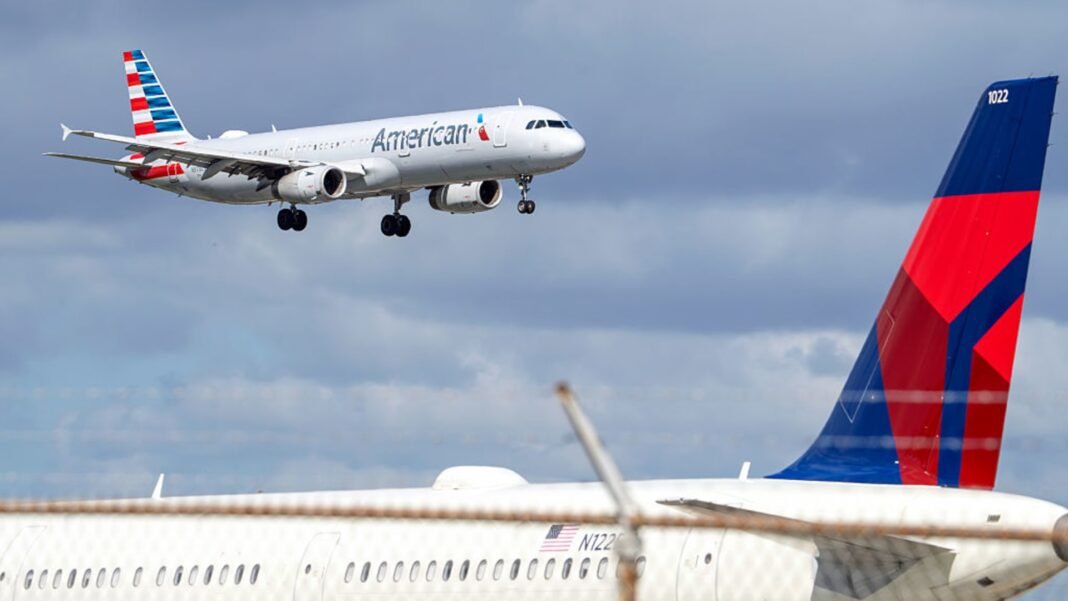
Airlines Confront Rising Jet Fuel Expenses Amid Surging Travel Demand
Strong Revenue Growth Counters Increasing Operational Costs
Major carriers such as Delta Air Lines and American Airlines have both raised their revenue expectations for the first quarter, despite grappling with sharply higher jet fuel prices driven by geopolitical instability in the Middle East. Fuel expenses now represent one of the most significant cost burdens for airlines, often exceeding 20% of their total operating expenditures.
Delta’s CEO ed Bastian disclosed that the airline faced a $400 million hit last quarter due to escalating fuel costs. Still, he emphasized that robust travel demand has propelled revenues beyond earlier forecasts. “Our revenue gains are offsetting not only elevated fuel expenses but also operational disruptions caused by severe winter storms,” Bastian stated. The company projects earnings per share (EPS) will stay within it’s previously announced range of 50 to 90 cents.
American Airlines Projects Accelerated Revenue Growth
American Airlines similarly updated its revenue growth outlook upward, now anticipating an increase surpassing 10%, compared to prior estimates between 7% and 10%. CEO Robert Isom highlighted this positive trend at a recent industry event, noting that “the strong momentum in first-quarter revenues is expected to persist throughout the year.” Despite facing comparable challenges-including a $400 million impact from rising jet fuel prices-American remains optimistic about sustaining profitability.
Investor Confidence Boosted by Positive Earnings Forecasts
the encouraging financial outlooks from both airlines sparked favorable reactions on Wall Street; shares of Delta and American climbed roughly 5% during early trading sessions following these announcements.
The Critical Role of jet Fuel in Airline Cost Structures
Jet fuel consistently ranks as airlines’ second-largest expense after labor costs. For instance,United Airlines CEO Scott Kirby recently noted that ongoing increases in fuel prices are likely to lead to higher ticket fares as carriers attempt to balance rising operational costs.
This sensitivity highlights how airline profitability is closely tied to volatile energy markets-a vulnerability intensified by unpredictable global events such as conflicts or supply chain interruptions.
Diverse Revenue Sources Enhance Financial Stability
Bastian pointed out that much of Delta’s current financial resilience stems from premium travelers and corporate clients who continue prioritizing air travel despite economic uncertainties. The airline recorded eight record-breaking sales days this quarter alone-with five occurring just in March-demonstrating sustained consumer willingness to invest in travel experiences even amid geopolitical unrest.
“Our bookings have surged by 25% year-over-year,” Bastian remarked, underscoring strong demand despite external pressures affecting global markets.
Sustained Expansion Across Domestic and Global Routes
An official report revealed that Delta’s unit revenues-measuring income per available seat mile-are growing at mid-single-digit rates across both domestic flights and international routes compared with last year. This balanced performance reflects broad recovery trends spanning various customer segments including economy passengers and loyalty program members alike.
A Robust Financial Base Supports Long-Term Stability
The company also highlighted maintaining its strongest balance sheet ever recorded, providing adaptability amid ongoing volatility within the aviation sector.This solid financial footing enables continued investments into service enhancements while effectively managing cost pressures.
Tackling Industry Challenges through Strategic Adaptation
Despite confronting obstacles such as rising input costs alongside staffing shortages at security checkpoints causing delays nationwide, airlines remain committed to delivering dependable service levels nonetheless of external difficulties. As Isom commented: “We are preparing thoroughly so our operations can endure whatever uncertainties lie ahead.”
- Diversification: Expanding premium product offerings attracts high-value customers less sensitive to fare increases.
- Pricing Strategy: Implementing targeted fare adjustments helps offset increased expenses without considerably dampening demand.
- operational Efficiency: Investing in advanced technology reduces delays caused by weather or staffing issues while enhancing overall passenger experience.
The Future Outlook: Managing Cost Pressures While meeting Traveler Expectations
The airline sector continues demonstrating remarkable adaptability amid complex headwinds-from geopolitical tensions pushing jet fuel prices upward (with crude oil recently fluctuating near $85 per barrel) to shifting traveler priorities post-pandemic where convenience and safety remain top concerns worldwide.
This evolving landscape requires nimble management approaches combining disciplined fiscal oversight with innovative marketing strategies targeting diverse passenger groups-from leisure travelers exploring emerging destinations like Portugal or Costa Rica following pandemic reopenings-to business travelers demanding seamless connectivity through major hubs such as Dallas-Fort Worth or Denver International airports.