September 2025: An Unforgettable Celestial Event
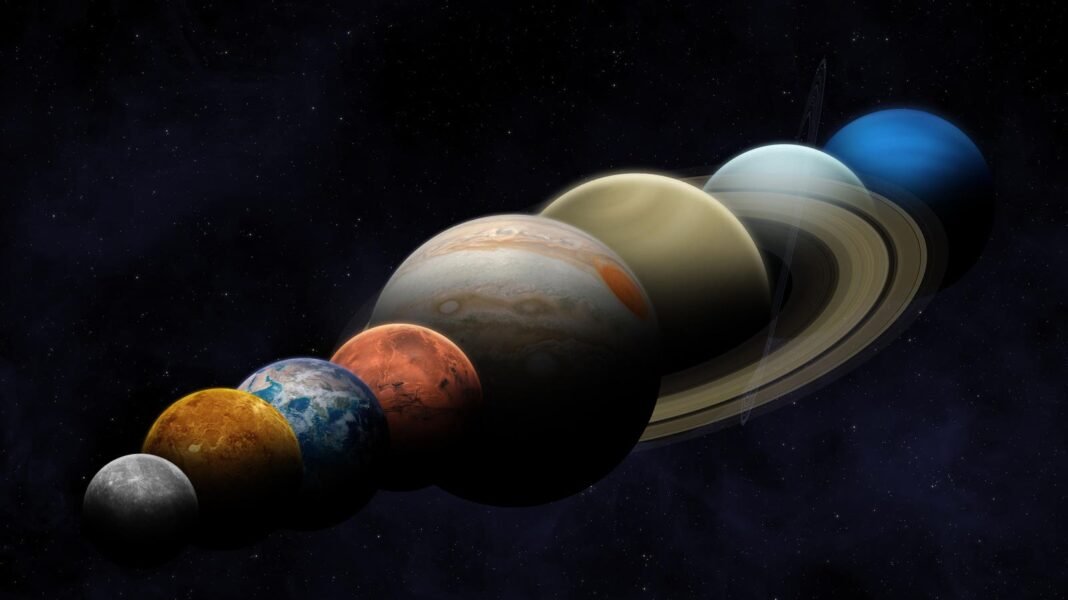
This September ushers in a spectacular astronomical phenomenon featuring a rare alignment of five planets: Venus, Jupiter, Saturn, Uranus, and Neptune. While Venus, Jupiter, and Saturn can be seen with the naked eye under clear skies, the more distant Uranus and Neptune require binoculars or telescopes for observation.Adding to this cosmic display is the autumnal equinox on September 22nd in the Northern Hemisphere-when day and night are nearly equal worldwide-and a striking partial solar eclipse visible from select regions in the Southern Hemisphere.
When to Catch the Planetary Parade
The best window to witness this planetary lineup is about an hour before sunrise.Facing eastward at dawn reveals Venus shining brilliantly just above the horizon. Higher up toward the east-southeast lies Jupiter’s steady glow. Meanwhile, Saturn appears low in the western sky after midnight hours. Although Saturn reached opposition on September 21st-making it appear largest and brightest this year-its rings are almost edge-on from Earth’s viewpoint in 2025, slightly diminishing their usual spectacle. Despite this subtlety, Venus remains by far the most luminous planet during these early morning hours.
Neptune’s Opposition: A rare Viewing Prospect
On September 23rd, Neptune reaches its annual opposition-the moment when Earth lies directly between Neptune and the Sun-rising at sunset and setting at sunrise. this event offers astronomers their prime chance all year to observe our solar system’s most distant giant planet. Though still faint due to its immense distance of over four billion kilometers (about 30 astronomical units), Neptune shines brighter than usual during opposition and can be found near Saturn’s position in nighttime skies.
The Equinox: Nature’s Balance Between light and Dark
The autumnal equinox occurs when sunlight crosses directly over Earth’s equator around midday UTC on September 22nd (northern Hemisphere). This celestial milestone results in nearly equal lengths of day and night across much of Earth-a balance that has inspired cultural celebrations for millennia as a symbol of harmony between light and darkness heading into fall or spring seasons depending on yoru hemisphere.
A Dramatic Partial Solar Eclipse Graces Southern Skies
Coinciding closely with this seasonal transition is a deep partial solar eclipse visible primarily from New Zealand, Antarctica, and parts of South Pacific islands during local sunrise on Monday morning (September 22nd). Observers within these regions will witness up to approximately 86% coverage of sunlight obscured by our Moon’s shadow-a breathtaking spectacle that dramatically illustrates celestial mechanics against dawn horizons.
- This eclipse stands as one of only two partial solar eclipses occurring globally throughout all of 2025.
- The timing near international date lines causes some variation regarding exact dates depending on location but remains an unmissable event for southern hemisphere skywatchers equipped with proper eye protection.
- A global live broadcast was arranged around evening UTC hours corresponding with local viewing times for enthusiasts unable to travel into eclipse zones.
Prime Locations for Eclipse Observation:
- New Zealand: Early morning just after sunrise provides excellent visibility along coastlines across both main islands where maximum obscuration occurs close to dawn;
- Antarctica: Research stations situated within certain sectors experience extended phases under heavy moon shadow coverage due to polar daylight conditions prolonging exposure;
- Tropical south Pacific Islands: Select island groups such as Samoa enjoy stunning partial eclipses shortly after first light framed against ocean horizons free from urban light pollution common elsewhere worldwide today;
Astronomical Highlights From September 22-28
- Venus:The brightest planet dominates eastern pre-dawn skies shining dozens times more intensely than any other object except our sun or Moon during twilight;
- Jupiter:Sitting high above Venus toward east-southeast directions offering easy naked-eye identification thanks largely due to its steady white glow;
- Mars & Mercury:No longer partaking prominently within this lineup but remain observable later into fall months;
- Saturn:A low westward glow post-midnight following opposition peak provides opportunities through amateur telescopes despite ring tilt challenges;
- Uranus:This distant world requires optical aid but completes rare multi-planet sighting events increasingly cherished among stargazers worldwide;
- Neptune: At peak brightness yet faint star-like appearance demands patience plus clear dark skies away from city lights.
“Observing multiple planets aligned together feels like experiencing a cosmic orchestra performing live overhead – moments like these reveal how vibrant our neighborhood beyond Earth truly is.”