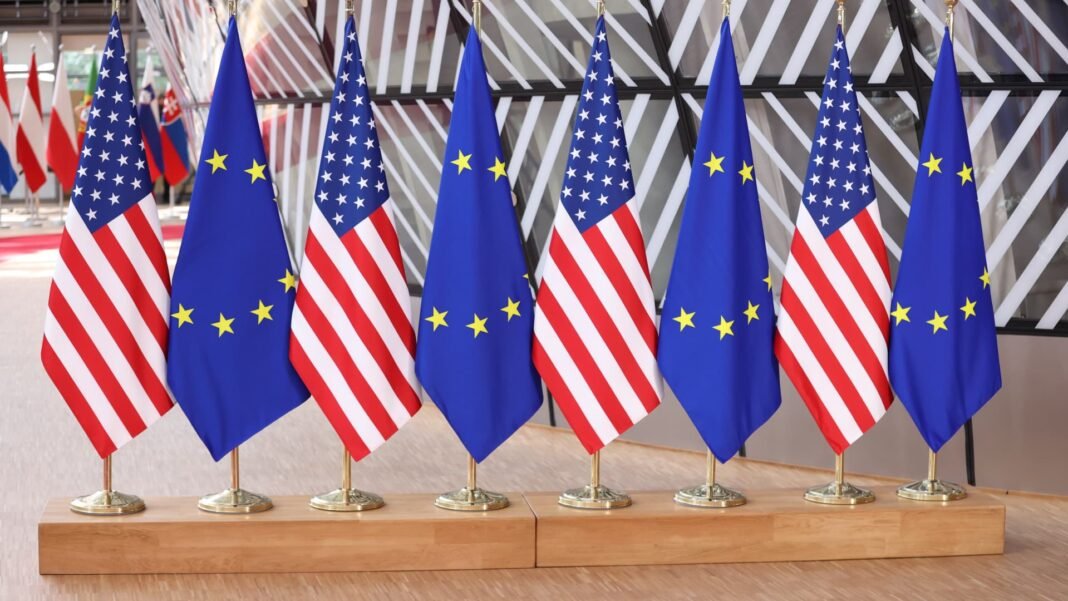
EU and U.S. Strengthen Sanctions Amid rising Ukraine Conflict
As the conflict in Ukraine intensifies,the European Union is joining forces with the United States to introduce a new wave of sanctions targeting Russia. Despite numerous diplomatic efforts over recent years,Moscow’s military operations show no signs of slowing down. Actually, recent weeks have witnessed an escalation in hostile activities, including a major airstrike that damaged a critical Ukrainian government facility.
Joint Efforts to Formulate Sanctions
the EU is on the verge of unveiling its 19th sanctions package against Russia, expected to be finalized either by the end of this week or early next week after securing consensus from all 27 member states. Over the weekend, European Commission officials engaged in preliminary talks with national representatives to align their strategies.
Simultaneously, an EU delegation visited Washington D.C. for high-level discussions aimed at harmonizing energy-related restrictions with U.S. policymakers. This cooperation underscores a mutual objective: aggressively reducing Europe’s dependence on Russian energy sources amid growing geopolitical tensions.
Addressing Energy Vulnerabilities: Focus on Key Infrastructure
A central element under review involves targeting vital infrastructure such as the Druzhba pipeline-a crucial artery supplying Russian oil to Hungary and Slovakia, two EU countries historically maintaining close economic ties with Moscow. Officials stress that diminishing reliance on such channels will be pivotal in upcoming sanction measures.
Considering Secondary Sanctions for Third-Party Buyers
An crucial debate within EU circles revolves around whether nations importing Russian energy-most notably China-should face secondary sanctions as part of this new enforcement phase.
- The bloc has already restricted certain chinese financial institutions accused of facilitating evasion tactics related to existing Russia sanctions.
- Ongoing discussions consider expanding these penalties due to concerns about China’s significant imports of Russian oil and gas products.
- The United States recently imposed tariffs on India linked to its continued purchases from Moscow’s energy sector as part of similar efforts.
No final decision has been reached yet regarding secondary sanctions against buyers like China; however, officials recognize this remains a complex but essential issue moving forward given global trade dynamics.
Pushing for Faster Reduction Timelines
The U.S. is concurrently urging Europe to accelerate its timeline for phasing out reliance on Russian fossil fuels ahead of current targets-the EU aims for full cessation by 2028 but faces mounting pressure amid shifting geopolitical realities and rising global inflation driven by soaring energy prices.
Trade Agreements Bolstering Energy Diversification Goals
A landmark trade deal between the European Union and United States includes commitments amounting to $750 billion worth of American energy exports over coming years-a strategic initiative designed both to diversify supply chains away from Russia and strengthen transatlantic economic relations during uncertain times worldwide.
Tightening controls Over covert Operations and diplomatic Privileges
The upcoming sanction package is also expected to broaden listings within what experts term Russia’s “shadow fleet”-a covert network comprising vessels used indirectly or secretly circumventing international trade restrictions-and impose stricter limitations curbing travel privileges for Russian diplomats and tourists throughout Europe.