Transforming Earth Observation with Google’s Innovative AI Technology
Advancing Global Environmental Monitoring
Google has unveiled a state-of-the-art artificial intelligence platform engineered to scrutinize Earth’s surface in remarkable detail, offering vital insights for environmental conservation. This breakthrough technology provides an unparalleled viewpoint on human influence over natural ecosystems while recommending effective strategies to promote ecological sustainability.
Leveraging Extensive Satellite Data through Machine Learning
Built upon the foundation of Google’s DeepMind advancements, the AlphaEarth Foundations system integrates sophisticated machine learning algorithms with decades of satellite imagery amassed by Google. This approach enables continuous monitoring of environmental transformations across diverse geographic areas, delivering a dynamic and evolving picture of our planet’s landscapes.
The Role of Embeddings in Detailed Environmental Mapping
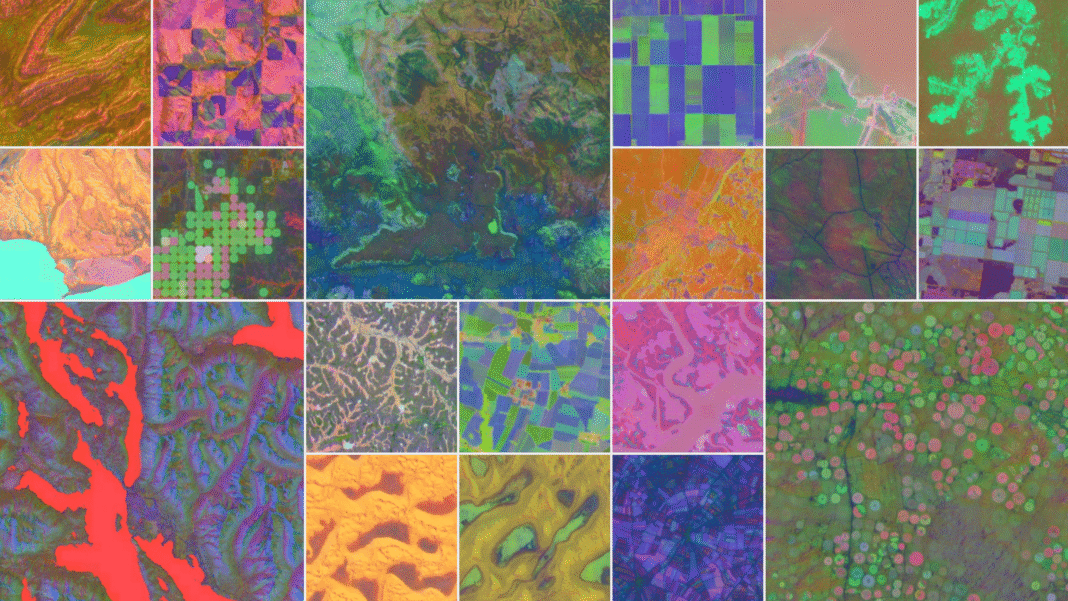
The heart of AlphaEarth lies in its use of “embeddings,” which condense vast quantities of satellite images into compact yet information-rich data formats without sacrificing essential details. These embeddings facilitate the generation of intricate multi-dimensional maps that differentiate between various vegetation types, soil compositions, water bodies, and anthropogenic features such as urban zones and agricultural fields. Functioning like a “digital satellite,” this tool grants instant access to complete environmental data for any location worldwide.
Applications Across Agriculture and Renewable Energy Sectors
This AI-powered platform equips policymakers and businesses with precise ecosystem analytics-such as variations in solar radiation or groundwater levels-that inform decisions on crop selection or infrastructure growth. for instance,pinpointing optimal locations for wind farms or climate-adaptive housing projects becomes more streamlined through these advanced spatial evaluations.
Demonstrated Impact: High-Resolution Mapping in challenging Terrains
The model has proven its effectiveness by generating detailed topographic maps over Greenland’s ice sheets-a region notoriously arduous due to frequent cloud cover-and uncovering subtle land-use trends within Australian outback farmlands that traditional observation methods failed to detect.
AlphaEarth Foundations reveals stages of reforestation beneath persistent haze in Southeast Asia using colour-coded embedding layers.
Navigating Challenges: Managing Massive Data Volumes with Precision
A longstanding hurdle for environmental scientists has been handling enormous datasets from varied sources while ensuring accuracy remains intact. Experts involved highlight that the primary difficulty now is not just collecting data but harmonizing disparate observational techniques into a unified global framework capable of real-time analysis.
A Legacy Rooted in Continuous Technological Progression
This initiative extends Google’s enduring dedication to Earth sciences beyond consumer-facing tools like Google Earth Timelapse-which visualizes decades-long shifts driven largely by climate change-and includes specialized satellites designed to monitor wildfire activity globally with increasing granularity year after year.
Precision Metrics and Competitive Edge
The alphaearth model achieves spatial resolutions reaching 10 meters per pixel while outperforming similar AI systems by approximately 24% in accuracy-though direct competitors remain confidential publicly. Such precision supports detailed ecosystem evaluations critical for sustainable land management practices worldwide amid accelerating climate challenges.
Summary: By indexing irregularly timed video frames across temporal sequences, AlphaEarth constructs seamless time-lapse views paired with quantitative measurements at any point on Earth.
(video credit: Alpha Earth Foundation)
collaborative Efforts Enhancing Biodiversity Mapping Initiatives
The project partners closely with organizations focused on cataloguing underrepresented habitats such as mangroves and peatlands-such as, Indonesia’s Nusantara Biodiversity Network-which benefits from streamlined workflows enabled by this technology following extensive testing spanning nearly two years.
“Previously labor-intensive land assessments can now be conducted efficiently over vast rainforest expanses without overwhelming storage demands,” explains Rini Putri from Nusantara Biodiversity Network.
Smooth Integration into Established geospatial Platforms for Greater Reach
An adapted version is being embedded within Google Earth Engine-a cloud-based geospatial processing environment utilized globally by agencies including NASA-to bolster long-term monitoring capabilities beyond standard consumer applications like basic Google Earth interfaces. This integration facilitates interactive deforestation tracking alongside comprehensive analyses monitoring changes across rivers, lakes, oceans, and wetlands over extended periods.
- An annual dataset derived from alphaearth embeddings will soon be available for advanced custom mapping projects requiring minimal coding skills;
- This resource enhances early detection capabilities vital for adaptive responses against climate variability;
- User privacy remains protected since image resolution does not allow identification of individuals or personal belongings;
Sustaining Privacy While Expanding Environmental Understanding
Despite its powerful aerial surveillance potential,
Google ensures that this system excludes capturing identifiable elements such as faces or personal objects,
addressing widespread privacy concerns.
This careful balance guarantees ethical deployment aligned with responsible data use standards.