Fatal Train Collision Near Barcelona Highlights Spain’s Rail Safety Crisis
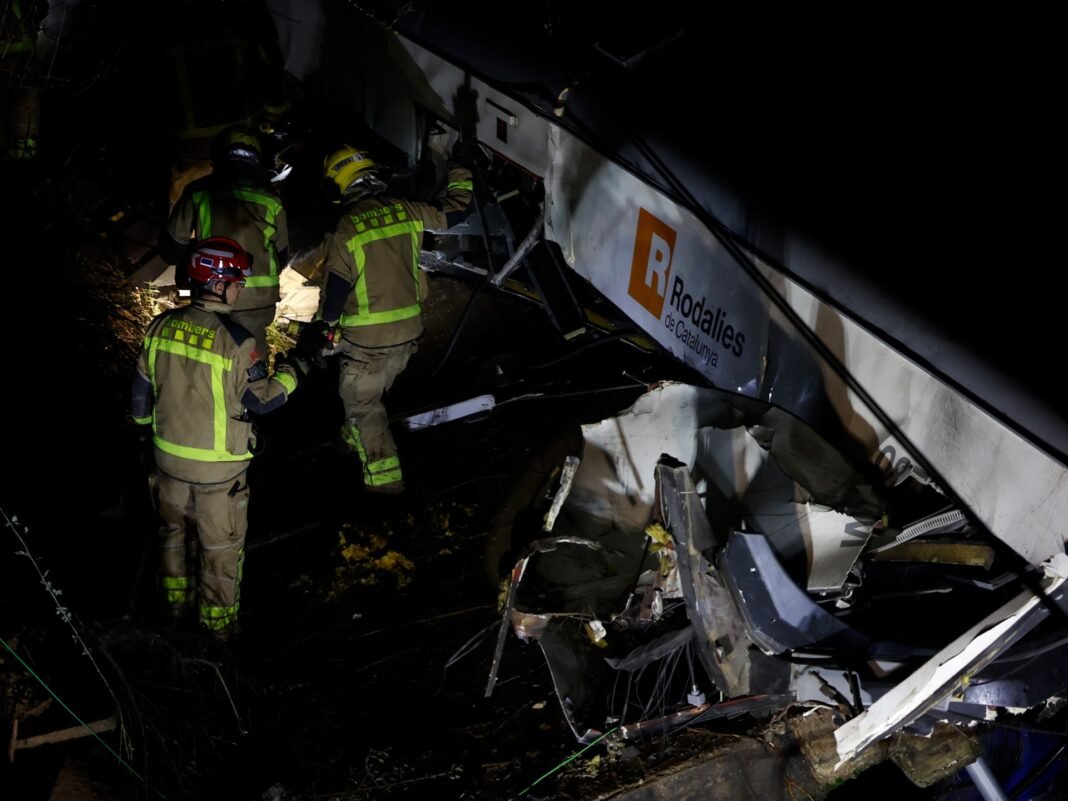
A commuter train accident near Barcelona resulted in one fatality and numerous injuries after the train struck debris from a collapsed retaining wall, emergency officials confirmed.
Overview of the gelida Train Crash
The collision occurred in Gelida, a small town about 40 kilometers west of Barcelona in Catalonia. Following days of heavy rainfall, a retaining wall alongside the railway tracks gave way, blocking the path of an approaching passenger train.
Claudi Gallardo, an inspector with Catalonia’s fire service, reported that 37 people were injured during the incident, including four with critical injuries. Sadly, the train driver died at the scene. All passengers were evacuated safely after emergency teams arrived.
impact of Weather and Infrastructure Vulnerabilities
The Spanish rail infrastructure authority ADIF attributed the collapse to severe weather conditions affecting northeastern Spain recently. This event has intensified concerns about how climate change-induced extreme weather is compromising railway safety across vulnerable regions.
Spain Grapples With Consecutive Rail Disasters
This tragedy follows closely on another devastating rail accident just two days earlier in Andalusia’s Córdoba province-nearly 800 kilometers south of Catalonia-where two trains collided head-on near Adamuz late Sunday night.
The Andalusian crash involved a Malaga-to-Madrid service carrying approximately 290 passengers that derailed at its rear end and collided with an oncoming Madrid-to-Huelva train transporting around 184 people.
Details and Aftermath of Sunday’s Catastrophe
- The front carriages of one train were thrown off track down a steep embankment nearly four meters high;
- Rescue workers found victims scattered hundreds of meters from the crash site, illustrating the immense force involved;
- This disaster claimed at least 42 lives and left dozens more injured-ranking among Spain’s deadliest rail accidents in recent memory.
Ongoing Investigations Amid Unclear Causes
Spanish Transport Minister Oscar Puente described this collision as “highly unusual,” emphasizing that both trains operated within regulated speed limits on what should have been a straightforward stretch. Preliminary findings revealed damage to part of the track which may be linked to but not definitively responsible for causing the crash.
“All scenarios remain under consideration,” stated Minister Puente regarding inquiries into whether mechanical failure or human error played roles in this tragedy.”
The growing Demand for Enhanced Rail Safety Measures
This series of accidents has placed intense pressure on Spanish authorities to improve safety protocols across their rail network.Experts argue that rebuilding public trust hinges on clear investigations combined with accelerated modernization efforts designed to withstand increasingly frequent extreme weather events driven by climate change throughout Europe.
A Pan-European Perspective: Challenges Facing Railway Systems Today
Recent data from Eurostat (2024) highlights rising difficulties European nations face maintaining aging railway infrastructure while adapting it for modern needs:
- An almost 12% increase in rail-related incidents over five years across EU countries;
- Meteorological hazards such as floods and landslides significantly contributing to infrastructure failures;
- Nations investing heavily in smart sensor technologies report better early warning systems preventing some accidents before they occur;
- This underscores how adopting advanced monitoring solutions could be crucial for Spain amid escalating climate risks threatening transport corridors nationwide.
A german example: Leveraging Technology Against Climate Risks
Deutsche Bahn recently deployed AI-driven predictive maintenance along routes vulnerable to landslides caused by heavy rains-a strategy credited with reducing delays by over 20% last year while substantially improving passenger safety without major disruptions during inspections or upgrades.
Toward Safer Rail Travel Amid increasing Environmental Threats
The recent spate of deadly incidents across different Spanish regions highlights urgent needs for extensive reviews addressing natural hazard preparedness alongside technical reliability within national railway systems. ensuring safer journeys demands not only repairing physical damages but also embracing innovative technologies aligned with evolving environmental challenges-all while maintaining clarity throughout investigative processes so public confidence can be restored effectively over time.