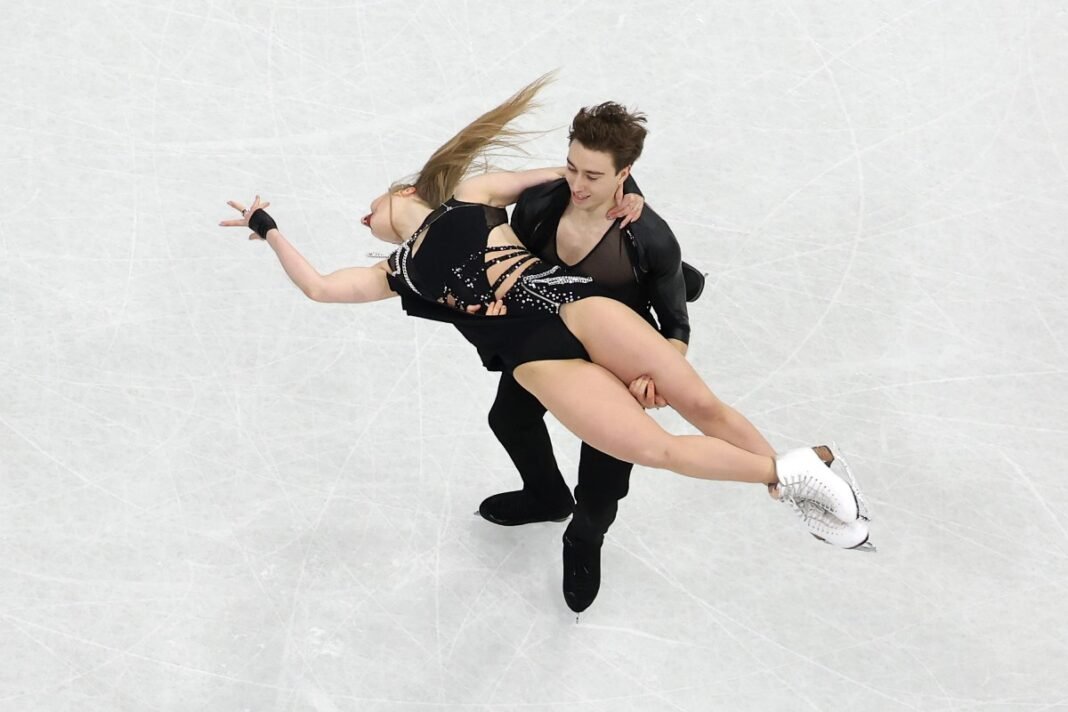
AI-Driven Music Ignites Controversy at Olympic Ice Dance Debut
Revolutionizing the Rink: Czech Duo’s bold Musical Experiment
during their inaugural Olympic performance, czech ice dancers Kateřina Mrázková adn Daniel Mrázek captivated spectators not only with their technical skill but also by selecting a rhythm dance soundtrack partially crafted through artificial intelligence. Even though this approach complies with competition regulations, it underscores the increasing fusion of technology and artistic expression in sports, sparking debates about authenticity in creative endeavors.
The Format of Olympic Ice Dance and This Season’s 1990s Inspiration
Olympic ice dance competitions consist of two parts: the rhythm dance, which challenges skaters to interpret a prescribed theme through choreography and music, followed by the free dance where athletes enjoy greater freedom to express personal artistry. For the 2024-2026 cycle, participants have embraced “The Music, Dance Styles, and Feeling of the 1990s.” For example, Canadian pair Piper Gilles and Paul Poirier channeled ’90s hip-hop vibes while Italian duo Charlène Guignard and Marco Fabbri delivered routines inspired by ’90s Eurodance hits.
navigating Licensing Barriers with Innovative Soundtracks
Mrázková and Mrázek’s choice diverged from conventional licensed tracks; they merged AC/DC’s legendary “Thunderstruck” with an AI-generated composition echoing ’90s rock icons such as Bon Jovi. This hybrid soundtrack likely emerged due to licensing restrictions but resulted in a groundbreaking blend of human creativity enhanced by machine-generated music-marking a first for Olympic-level ice dancing.
A History of AI Music Use in Their Performances
This pair has previously experimented with AI-composed music during their competitive season. Earlier routines featured an AI-created song heavily influenced by New Radicals’ “You Get What You Give,” even incorporating lyrics reminiscent of its memorable lines like “Wake up kids / We got the dreamer’s disease.” The striking similarity ignited discussions about originality since these phrases are closely tied to that iconic ’90s anthem known for its suburban imagery.
Refining Lyrics Inspired by Classic Rock Anthems
Before arriving at the Olympics stage, Mrázková and Mrázek updated their routine’s soundtrack by substituting New Radicals-inspired lyrics with fresh verses generated via AI that evoked Bon Jovi classics such as “Raise Your Hands.” Interestingly though, some referenced songs fall outside this season’s strict ’90s timeframe. Despite these nuances-and an AI vocal timbre mimicking Jon Bon Jovi-the program transitioned smoothly into AC/DC’s authentic 1990 hit during competition.
The Technology Behind Artificial Intelligence-Composed Sports Music
The specific software employed remains confidential; though,large language models (LLMs) trained on extensive musical datasets generate these compositions. These models predict probable sequences based on input prompts-meaning songs created “inspired by” famous artists frequently enough unintentionally include recognizable lyrics or stylistic traits due to overlapping training data. This phenomenon highlights ongoing legal debates regarding copyright infringement within generative AI technologies.
Synthetic Sounds Shaping Emerging Artistic Careers
The music industry is witnessing rapid growth in virtual performers powered wholly or partly by artificial intelligence. As an example, Atlanta-based songwriter Maya ellis adopted an alter ego named Nova Lyric using advanced generative tools to convert her poetry into chart-topping tracks-securing major label interest despite lacking customary studio experience. Such examples demonstrate how digital innovation is transforming creative professions beyond established norms.
Cultural Perspectives: Balancing Innovation With Authenticity on Ice
“Isn’t sport meant to be a festivity of creativity?” The integration of artificially generated soundtracks challenges long-held beliefs about genuine artistry within competitive arenas like figure skating.
While some critics argue that reliance on synthetic music diminishes emotional resonance or originality-as seen in performances like those delivered by Mrázková and Mrázek at Beijing olympics 2026-others view it as evolution: merging human athleticism with cutting-edge technology that expands storytelling possibilities on ice.
- Pioneering use: Czech siblings represent first known case integrating partial AI-composed tracks during Olympic-level ice dancing;
- Diverse approaches: Other teams favor fully licensed period-specific hits reflecting cultural nostalgia;
- Evolving legal issues: Copyright concerns intensify over datasets fueling generative AIs producing derivative works;
- Synthetic musicianship: Virtual artists gain commercial success without traditional artist pathways;
- Cultural dialog: Ongoing debate balancing innovation against preserving artistic integrity within sports entertainment contexts.
A Preview Into Future Artistic competitions?
This landmark moment may foreshadow wider acceptance-or resistance-to incorporating artificial intelligence across various performance arts disciplines worldwide as technology advances rapidly alongside shifting audience expectations seeking novelty balanced against tradition.