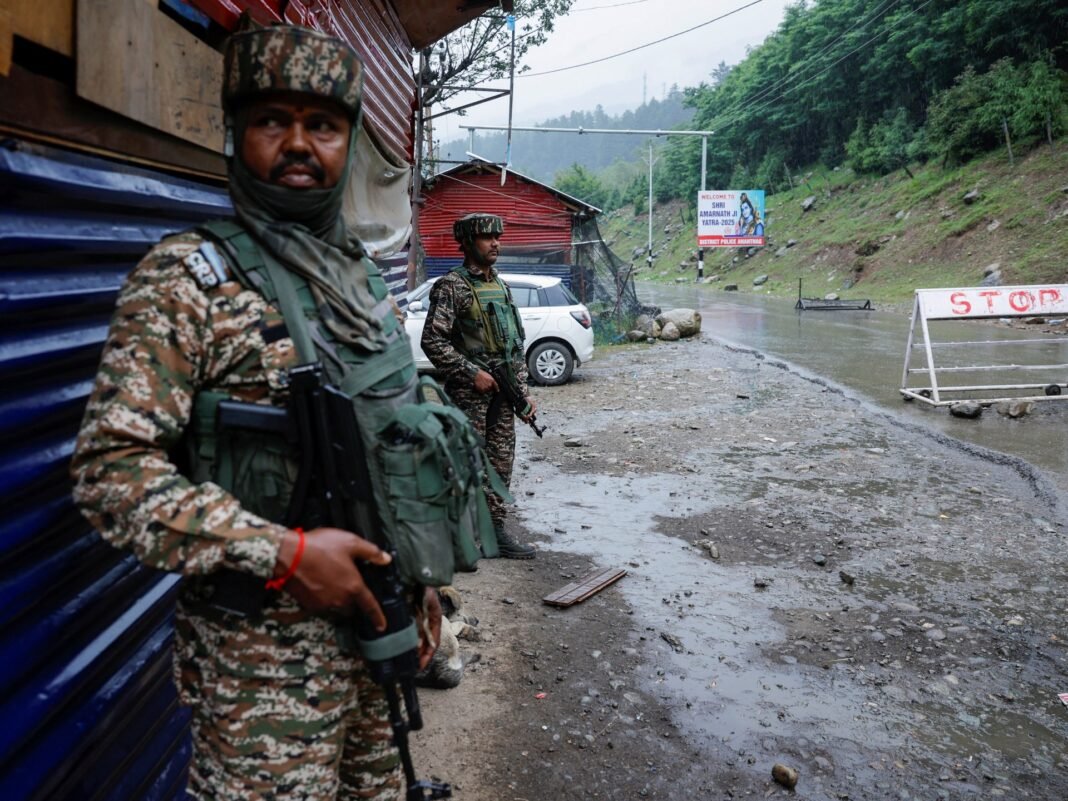
Elimination of Three Militants Responsible for Pahalgam Tourist Attack in Kashmir
India’s Home Minister Amit Shah confirmed that a recent security operation in Indian-administered Kashmir successfully neutralized three armed militants linked to the deadly assault on tourists in Pahalgam earlier this year. The April attack tragically claimed the lives of 26 people, most of whom were Hindu visitors.
Coordinated Security Operation Near Srinagar
The counterterrorism mission was conducted near the Dachigam mountain range, roughly 30 kilometers from Srinagar. This joint effort involved military forces, paramilitary units, and local police.Officials reported that all three suspects were heavily armed and engaged security personnel before being killed during the encounter.
Addressing parliament, Shah stated, “The terrorists responsible for the baisaran attack have been eliminated.” Baisaran is a region close to Pahalgam where the fatal shooting took place.
Forensic Evidence Confirming Militant Involvement
Authorities relied on forensic examinations and eyewitness accounts to establish that weapons recovered from these militants matched those used in the tourist massacre. Shah emphasized, “We possess irrefutable evidence linking these firearms directly to the murder of innocent civilians.”
Identities and affiliations of Perpetrators
the Home Minister disclosed that all three assailants were Pakistani nationals. Two belonged to Lashkar-e-Taiba (LeT), a Pakistan-based militant group notorious for orchestrating attacks against India. This aligns wiht India’s longstanding allegations accusing Pakistan of supporting insurgent activities within Kashmir-a claim Islamabad consistently denies.
The Broader Consequences: Rising Tensions Between Nuclear Neighbors
The Pahalgam incident considerably escalated hostilities between India and Pakistan, triggering a four-day military confrontation along their disputed border areas in May. The clashes resulted in over 70 casualties combined on both sides-demonstrating how localized violence can rapidly spiral into wider conflict between two nuclear-armed nations.
Kashmir Conflict Overview: A Deep-Rooted Territorial dispute
Kashmir remains one of South Asia’s most volatile regions since its partition following British colonial withdrawal in 1947. Both India and Pakistan claim full sovereignty over this Muslim-majority territory but administer separate portions under contested arrangements.
- Since 1989, various insurgent groups operating within Indian-administered Kashmir have waged an armed struggle seeking either independence or merger with Pakistan.
- India accuses Pakistan of providing material support to these militants; however, Islamabad maintains it offers only diplomatic backing for Kashmiri self-determination without direct involvement.
The Resistance Front (TRF) and Its International status
An organization called The Resistance Front initially claimed responsibility for the Pahalgam attack but later retracted its statement amid widespread condemnation. Recently, TRF has been designated as a foreign terrorist organization by international authorities due to its role in destabilizing activities across Kashmir.
A Human Cost Amid Political unrest
The victims primarily consisted of Indian nationals alongside one individual from Nepal. Survivors described harrowing moments when attackers separated men from women and children-forcing some men under duress to recite Islamic declarations before executing them-highlighting both religious targeting and brutal tactics employed by militants amid ongoing regional turmoil.
This tragic event underscores how terrorism perpetuates instability along contested borders while complicating peace efforts between two nuclear powers burdened by deep ancient grievances over Kashmir’s future status.