U.S. Offers 15-Year Security Assurances to Ukraine Amid Peace Negotiations
In a pivotal move aimed at easing tensions in Eastern Europe, the United States has proposed a 15-year security guarantee for Ukraine as part of ongoing peace discussions. Ukrainian President Volodymyr Zelenskyy disclosed this offer but expressed a desire for a longer-term commitment, suggesting that guarantees extending up to 50 years would more effectively deter future Russian incursions.
Negotiating long-Term Security Guarantees
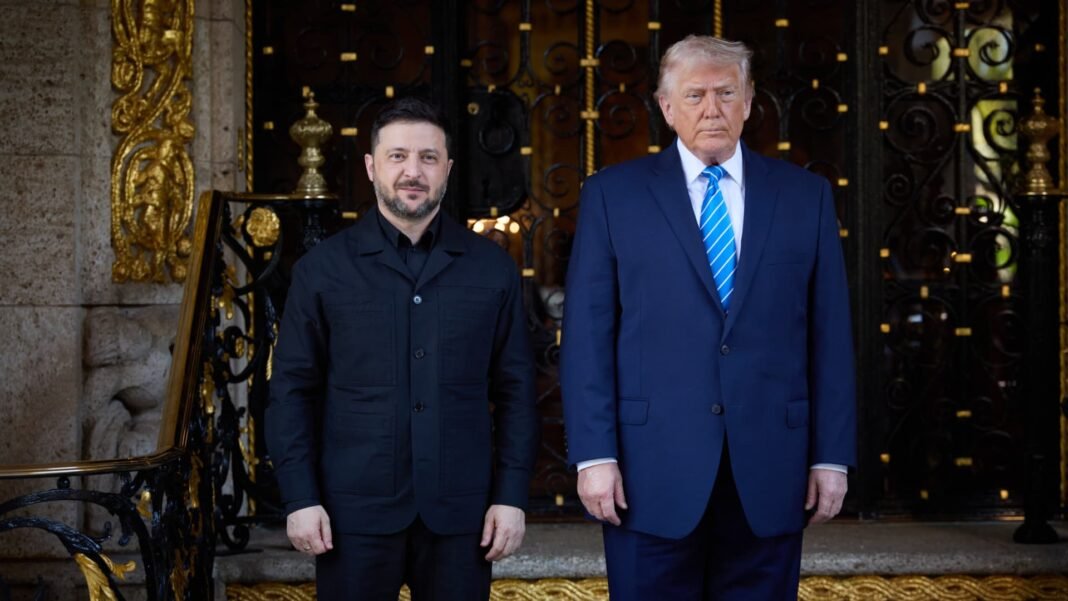
At a recent meeting held at his Florida residence, U.S. President donald Trump highlighted that talks between Ukraine and Russia are approaching a breakthrough.Zelenskyy noted that Trump is willing to explore security guarantees beyond the initial 15-year framework, subject to approval by the U.S. Congress and legislative bodies from allied nations tasked with overseeing any peace agreement.
Ongoing Obstacles in Peace Talks
Despite positive rhetoric, significant hurdles remain unresolved. Disputes over military withdrawals and control of critical infrastructure-such as the Zaporizhzhia nuclear power plant, one of Europe’s largest energy producers currently under Russian control-continue to impede progress. The precarious status of this facility raises serious international safety concerns amid persistent hostilities.
The Importance of International Oversight and Partnerships
Zelenskyy emphasized that any security arrangement would include robust monitoring mechanisms involving international partners on Ukrainian territory to ensure compliance with peace terms. However, Russia’s outright rejection of NATO troop deployments within Ukraine complicates potential frameworks for foreign peacekeeping or supervisory forces.
A Democratic Mandate Through Referendum
The Ukrainian leader advocates putting his complete 20-point peace proposal before the public via national referendum to secure broad legitimacy prior to finalizing agreements. This democratic step depends on establishing at least a two-month ceasefire-a condition Moscow has yet declined without full resolution on key issues.
Background: Origins and Stakes of the Conflict
The conflict began over ten years ago when Russia annexed Crimea illegally in 2014 and backed separatist factions in eastern Ukraine’s Donbas region-a strategically crucial industrial hub. Since then, intermittent clashes have persisted despite numerous global diplomatic efforts aimed at de-escalation.
International Diplomatic Efforts Ahead
- Kremlin spokesperson Dmitry Peskov confirmed expected discussions between Presidents Putin and Trump but stated there are no current plans for direct talks between Putin and Zelenskyy.
- French officials announced intentions for Kyiv’s allies to meet early next year in Paris with the goal of defining each country’s role in delivering strong security guarantees supporting ukraine’s sovereignty.
“Without credible security assurances,” Zelenskyy stated through encrypted dialogue during media briefings, “this conflict risks dragging on indefinitely.”
A Crossroads Between Hopeful Progress and Lingering Uncertainty
This evolving scenario reflects both cautious optimism and persistent challenges as global actors seek lasting solutions amid one of Europe’s longest-running conflicts as World War II ended nearly eighty years ago. With millions displaced internally or abroad due to fighting-and economic losses estimated above $200 billion-the urgency among diplomatic circles remains intense worldwide.