Iran’s Political Transformation: Beyond Leadership Transitions
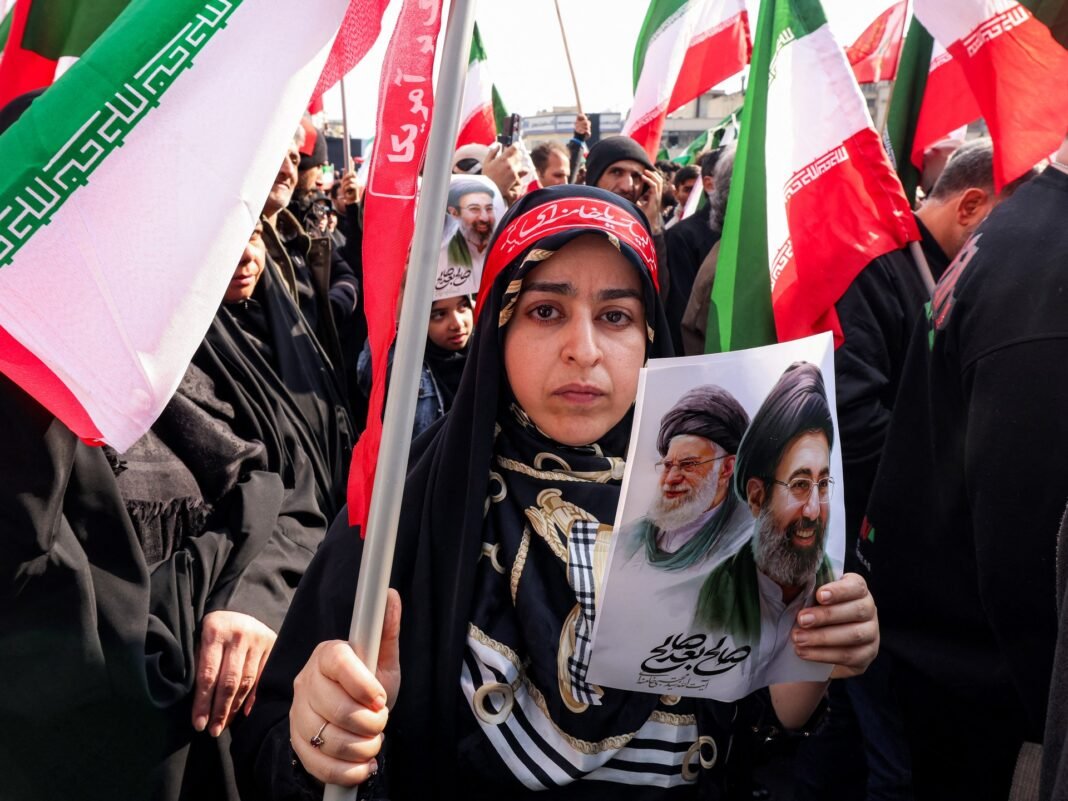
The appointment of Mojtaba Khamenei as Iran’s supreme leader initially triggered widespread assumptions about a shift toward more stringent hardline rule in tehran. Yet, speculation surrounding his health and potential absence from the public eye has only intensified debates regarding the future direction of Iran’s political system.
systemic Power Consolidation Over Individual Influence
It is essential to recognize that Iran’s evolving power structure stems from deep-rooted institutional changes rather then mere leadership swaps. The current political environment reflects a regime increasingly defined by securitization mechanisms that extend beyond any single leader’s influence. this trend will likely continue irrespective of whether Mojtaba Khamenei remains in charge.
Economic Reorganization: The Rise of parastatal Networks
A comprehensive understanding of Iran’s transformation requires shifting focus from leadership narratives to its political economy. After the end of the Iraq-Iran war in 1989,Tehran entered a prolonged phase often described as “market-oriented restructuring.” Contrary to expectations that this would reduce state control, it instead resulted in a reconfiguration where state influence was redirected rather than diminished.
The government transferred notable public assets into quasi-governmental conglomerates and politically connected foundations known as bonyads. These entities operate with minimal clarity and serve as conduits funneling resources upward within the regime’s hierarchy.
This era witnessed the emergence of what can be called a military-bonyad complex. Following constitutional amendments allowing “public and non-governmental entities” to own up to 80% stakes in major industries, there was an extensive transfer of economic control from ministries to organizations linked with the Islamic Revolutionary Guard Corps (IRGC) and religious foundations such as Setad and Astan Quds Razavi Foundation.
This network became one of the main beneficiaries during economic shifts after 2006, creating an intertwined bloc where coercive forces merged with parastatal capital interests-dominating key sectors while consolidating authority over unelected state institutions.
The Role Sanctions Play in reinforcing Regime Control
A series of United Nations Security Council sanctions imposed between 2006 and 2010 were followed by aggressive unilateral U.S. restrictions targeting iranian oil exports, financial institutions, and international banking access-especially after Washington withdrew from the nuclear deal in 2018 under President Trump’s administration.
Rather than weakening Tehran internally or externally, these sanctions paradoxically reinforced existing governance patterns. While they severely contracted broad economic activity-contributing at times to inflation rates surpassing 50% annually-they simultaneously empowered actors skilled at navigating opaque networks through coercion and sanction evasion strategies.
This environment bolstered shadow economies dominated by security-linked conglomerates thriving amid restricted formal trade channels. Consequently, instead of eroding state control, sanctions accelerated securitization processes where ordinary citizens faced disproportionate social hardships including unemployment rates near 13%, subsidy reductions impacting millions daily, widening inequality measured by Gini coefficients above 0.40 nationally, alongside growing political disenfranchisement.
Triggers Behind persistent Social Unrest
- The widespread protests erupting between late-2017 through mid-2019;
- The Women Life Freedom movement advocating for gender rights;
- The January uprisings preceding recent escalations;
These waves were not isolated incidents but emerged due to compounded crises involving deteriorating living conditions coupled with declining legitimacy within governance structures.They expressed grievances against both repression itself and systemic exclusion-a blend combining neoliberal economic pressures with authoritarian tightening-a dynamic mirrored globally among states facing similar external constraints alongside internal fractures.
A Wartime Framework reshaping Internal Governance
Iranian authorities have explicitly framed all domestic challenges through wartime imperatives since recent hostilities intensified; national police chief Ahmad-Reza Radan declared protesters would be treated not merely as dissenters but enemies subject to armed response-a clear indication reflecting zero tolerance for opposition amid conflict conditions.
This militarized stance is not unprecedented; decades earlier saw harsh crackdowns on diverse social groups demanding systemic reforms-with repression intensifying over time-but war has altered how such force is publicly justified.
“the merging perception between foreign adversaries abroad and internal opponents at home now forms official policy.”
This shift represents more than just increased force; it transforms political discourse into one dominated by martial logic wherein society becomes primarily surveilled territory managed via emergency discipline mechanisms designed for threat containment rather than normal civic engagement frameworks.
Diminishing Civic Space Amid Conflict Conditions
- An expanding role for security agencies wielding emergency powers;
- A shrinking arena for peaceful protest or alternative voices;
- An institutional preference toward forceful suppression justified under national defense rhetoric;
Mojtaba Khamenei: Figurehead or Institutional Pillar?
Mojtaba Khamenei’s ascent symbolizes continuity more than disruption within an evolving order extensively shaped during Ali Khamenei’s tenure-the office transformed from modest clerical origins into a vast command center overseeing security forces finance streams communications seminaries plus broader unelected bureaucracies-all reinforcing centralized authority beyond personal charisma alone which Ali lacked compared with founder Ruhollah Khomeini .
< p > If Mojtaba were removed unexpectedly , successors would likely emerge from similar clerical-security circles aligned closely with military-bonyad interests dominating both coercive apparatuses & economic spheres .the office itself functions structurally – designed over decades -to accumulate power irrespective individual occupant qualities .
< p > Religion remains symbolically significant legitimizing rule but real control increasingly rests upon security institutions clustered around supreme leader ‘s office , cementing an opaque system prioritizing militarized governance & emergency management .
< h2 > Future Outlook: Toward an Intensified Militarized Islamic Republic
< p > Post-conflict scenarios suggest no basic departure away from supreme leadership dominance ; instead ,expect further securitization producing harder narrower regimes relying heavily upon coercion while closing off democratic space even more tightly . Rather than opening reform pathways ,ongoing war dynamics deepen existing trajectories marked by shrinking pluralism & escalating authoritarianism .