
Neon Mobile: The Controversial App Turning Your Phone Calls into Profit
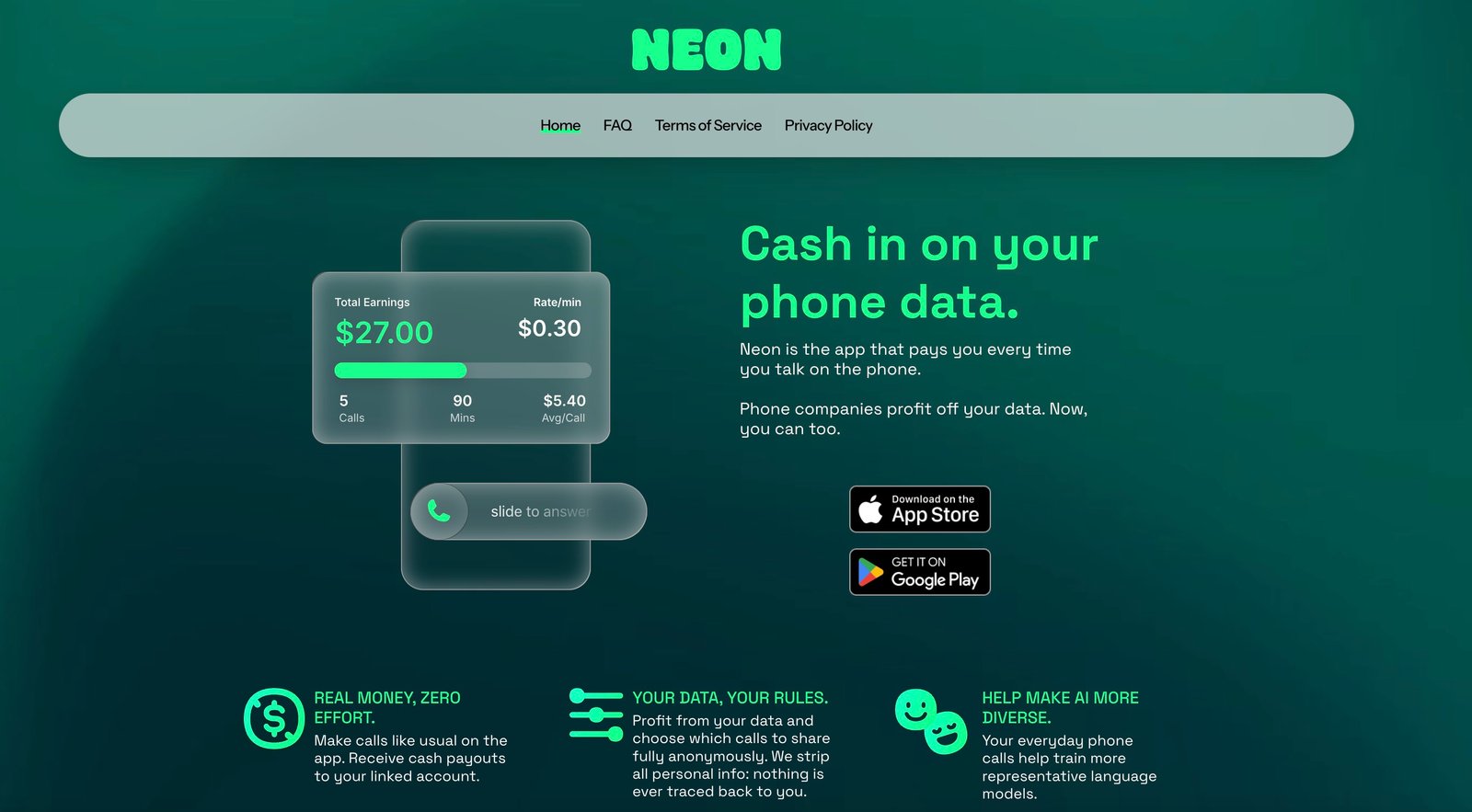
Neon Mobile, an app that records phone conversations and compensates users by selling the audio data to artificial intelligence companies, has swiftly climbed the ranks to become the second most popular social networking app in Apple’s U.S. App Store.
The Mechanics Behind Neon Mobile’s Popularity
This platform entices users with promises of earning “hundreds or even thousands of dollars annually” by allowing access to their recorded calls. Users reportedly receive 30 cents per minute for calls made between Neon members and can earn up to $30 daily from calls outside the network. Referral incentives further boost potential earnings.
The app’s ascent has been remarkable: it jumped from position 476 in social Networking on September 18th to breaking into the top 10 within days, eventually securing the No. 2 spot among free iPhone social apps shortly thereafter.
How Call Recording and Data Monetization Operate
According to Neon’s terms, both incoming and outgoing calls may be recorded; however, promotional materials claim only your side is captured unless you’re speaking with another Neon user.This audio content is then sold to AI firms for purposes such as developing, training, testing, and refining machine learning algorithms.
The Privacy Compromise: What Users Are Sacrificing
The emergence of this application underscores how deeply AI technologies have encroached upon personal privacy once deemed sacrosanct. Its high ranking on Apple’s store indicates a segment of consumers willing to trade intimate details for modest financial gain despite inherent risks.
“You grant Neon a worldwide,exclusive license-royalty-free and transferable-that allows them not only to sell but also modify,publicly display or distribute your recordings across any media now known or developed later,” states their terms.
This sweeping license grants Neon extensive control over user data far beyond simple call recording or playback functionalities advertised.
Bugs and Beta Features: Hidden Dangers Within Terms
The company cautions that beta features come without guarantees-potentially exposing users to technical glitches or security vulnerabilities during use.

Navigating Legal Boundaries in Call Recording Practices
While raising ethical questions about consent and privacy, Neon’s approach attempts legal compliance by recording only one side of conversations-a tactic designed to circumvent wiretap laws requiring all-party consent in many U.S. states.
A cybersecurity attorney noted this method might obscure full recordings by excluding other participants’ voices from transcripts while still capturing entire calls behind the scenes.
Anonymization Claims Versus Real-World Threats
The company asserts it removes personally identifiable information such as names and phone numbers before selling voice data; however experts warn anonymized voice samples can still be exploited-for example through deepfake audio impersonations capable of deceiving banks or contacts into revealing sensitive information.
“Once your voice is digitally stored alongside your number-even if anonymized-it opens doors for identity theft via synthetic speech,” cautioned a privacy expert familiar with emerging threats.”
Lack Of Transparency And Security Concerns Surrounding User Data

no clear information exists about who ultimately receives this sensitive voice data nor what measures are implemented against breaches-a significant concern given recent global hacks targeting biometric databases.
Autonomous tests revealed no notification at call start or end indicating active recording; recipients were also unaware as caller ID appeared normal-making detection difficult without specialized tools. The startup operates out of a small New York apartment under founder Alex Kiam.Despite recent venture capital funding rounds, investor details remain largely undisclosed.
User Perspectives on Privacy Amidst Growing AI Integration
Historically covert surveillance efforts sparked public backlash-for instance when Facebook paid teens for monitoring apps in 2019-and multiple VPN providers have faced criticism over hidden data collection practices. Government agencies frequently purchase commercially available personal datasets as well.
Today’s environment features ubiquitous AI assistants joining meetings automatically taking notes alongside always-on smart devices listening continuously-but these typically require explicit user consent.
Given widespread acceptance that personal information circulates freely online anyway some individuals rationalize profiting directly rather than passively losing control over their digital footprint.
However unknowingly sharing detailed vocal patterns risks compromising not just oneself but others involved in conversations too.
A cybersecurity specialist summarized :
“People seek productivity tools simplifying work life-but often at significant cost not just privately but socially because those interacting with you daily become collateral damage.”