Ramadan Under Siege: The Enduring Conflict in Yemen’s Capital
In the heart of sanaa’s al-Jiraf neighborhood, 28-year-old Ahmed Abdu parked his motorbike beside a construction zone to deliver a food parcel. Suddenly,an airstrike hit the nearby building,unleashing a thunderous explosion that shattered the calm of the night.
The blast sparked intense flames and thick plumes of smoke that rose into the dark sky. Nearby pedestrians screamed and fled in panic as chaos erupted on the streets during Ramadan last year.
Though Ahmed escaped unharmed, his motorbike was entirely destroyed by fire. The attack injured nine civilians and left lasting trauma within the community.
the Aftermath of operation Rough Rider
This devastating incident occurred amid Operation Rough Rider, a two-month US-led aerial offensive targeting Houthi military positions across Yemen. Official figures report at least 224 civilian casualties during this campaign, many coinciding with Ramadan celebrations.
As regional tensions intensify in 2026, residents like Ahmed fear another cycle of violence disrupting what should be a sacred period for peace and reflection.
“The uncertainty is terrifying-will this Ramadan bring calm or another wave of conflict?”
Houthis Rally Amid Rising Regional Hostilities
A few days before Ramadan began this year, thousands gathered in Sanaa for a large demonstration under the slogan “Steadfast and ready for what comes next.” This event expressed support for Houthi allies Iran and Lebanon’s Hezbollah amid escalating hostility from US and Israeli forces.
Mohammed al-Bukhaiti, member of the Houthi political bureau, issued stern warnings against any American military moves toward Iran. He declared such actions would spark widespread regional warfare. “We are men of action,” he stated firmly on Iranian television.
This defiant posture fuels fears among ordinary Yemenis that their country could once again become collateral damage if tensions between Washington and Tehran worsen further.
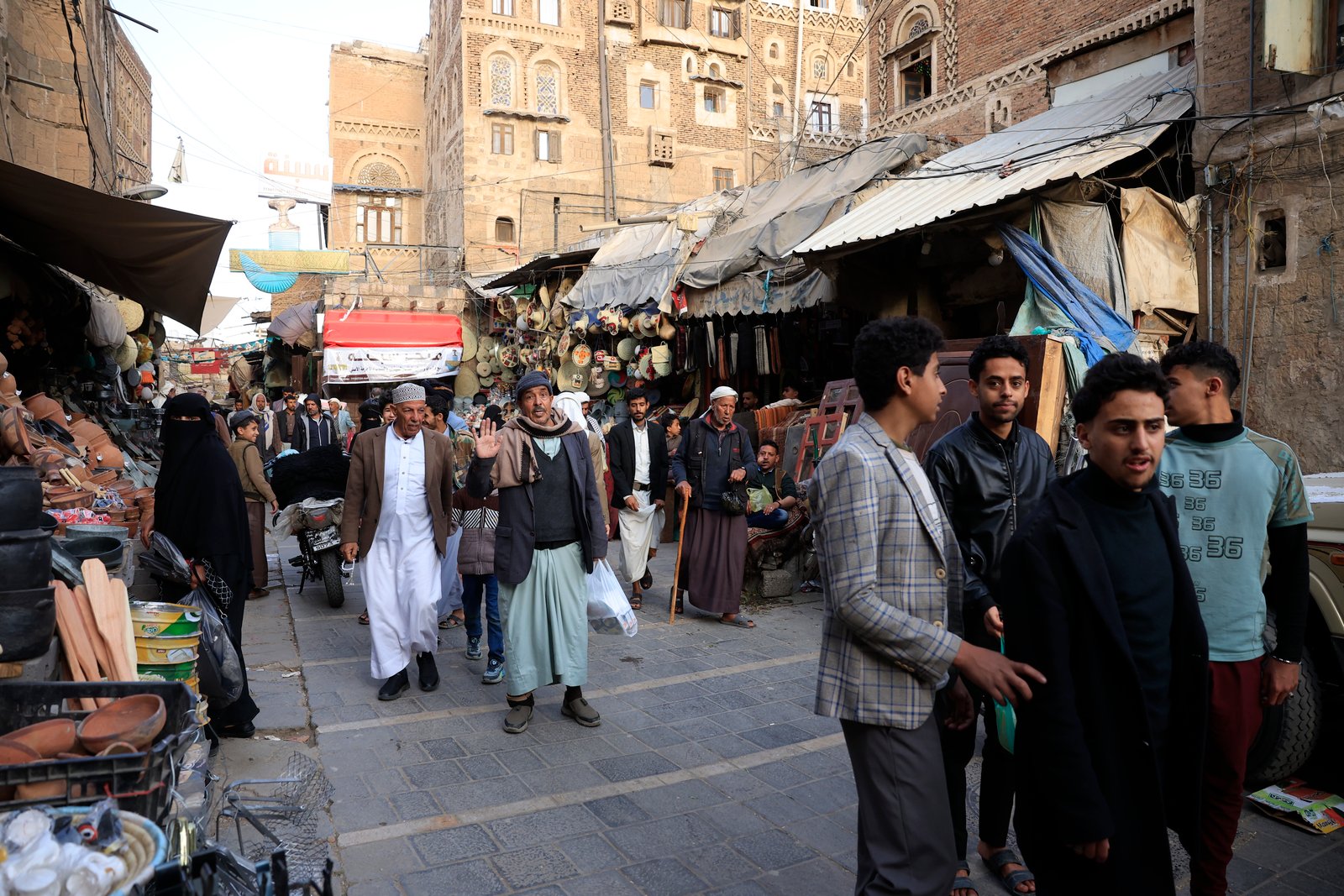
A Market Poised Between Hope And Fear
The Night Terror: A Missile Strikes Close to Home
The reverberations from last year’s US-Houthi confrontations remain vivid throughout war-ravaged neighborhoods. The American strikes were reportedly retaliatory responses to Houthi attacks on vessels linked to Israel navigating the Red Sea amid Gaza-related tensions.
Faisal Abdulkareem, a 35-year-old construction worker living near downtown Sanaa recalls one harrowing night:
“I was awake when I heard an aircraft overhead but assumed nothing would happen since our area had no military targets.”
A sudden explosion shattered windows; glass shards pierced Faisal’s room causing minor injuries. Upon investigating outside he found that a missile had struck his neighbor’s kitchen just meters away-turning what should have been a peaceful evening into chaos.
Although no lives were lost, property damage was significant-and costly repairs fell solely upon Faisal’s neighbor.
Rumors circulated whether it was an errant American missile or an intercepted projectile gone awry by local defense forces over Sanaa.
“Last Ramadan we fasted from food but not from fear,” Faisal reflected somberly.
Tensions Between Calls For Peace And Political Allegiance
Houthi leader Abdel-Malik al-Houthi has publicly denounced US-Israeli ambitions aimed at dominating Middle Eastern geopolitics by undermining Iran-whom he describes as “the foremost obstacle” to their plans. He frames resistance as both moral duty and necessity against oppression:
“No person with humanity can accept such injustice.”
However, not all Yemeni citizens share this militant viewpoint. Ammar Ahmed-a law student closely following regional developments-warns that aligning militarily with Iran risks dragging northern Yemen back into devastating conflict:
“The Houthis’ missiles won’t stop America; they’ll only bring suffering upon us.”
Civilian Perspectives Favor Stability Over Proxy Conflicts
An Uncertain Road Ahead Amid Regional Power Struggles
- If anti-Houthi factions launch renewed offensives supported by Saudi Arabia-as recent campaigns against southern separatists indicate-the north could face intensified ground battles combined with aerial bombardments targeting rebel strongholds;
- This scenario threatens increased displacement alongside humanitarian crises already affecting millions;
- Diplomatic efforts emphasize thorough political solutions rather than fragmented ceasefires to secure lasting peace;
“Without broad negotiations addressing root causes,” says UN envoy Hans Grundberg,
“any progress remains fragile.”
Nurturing Hope Despite Adversity
< p >For Ahmed Abdu , survival means more than just escaping bombs . Losing his motorbike last year cut off his livelihood , yet he clings firmly to one wish : < strong >a peaceful , uninterrupted ramadan free from war ’ s shadow . < / strong >< / p >
< blockquote >< em >” War can destroy possessions , but peace rebuilds lives . That is all I ask this holy month .” < / em >< / blockquote >