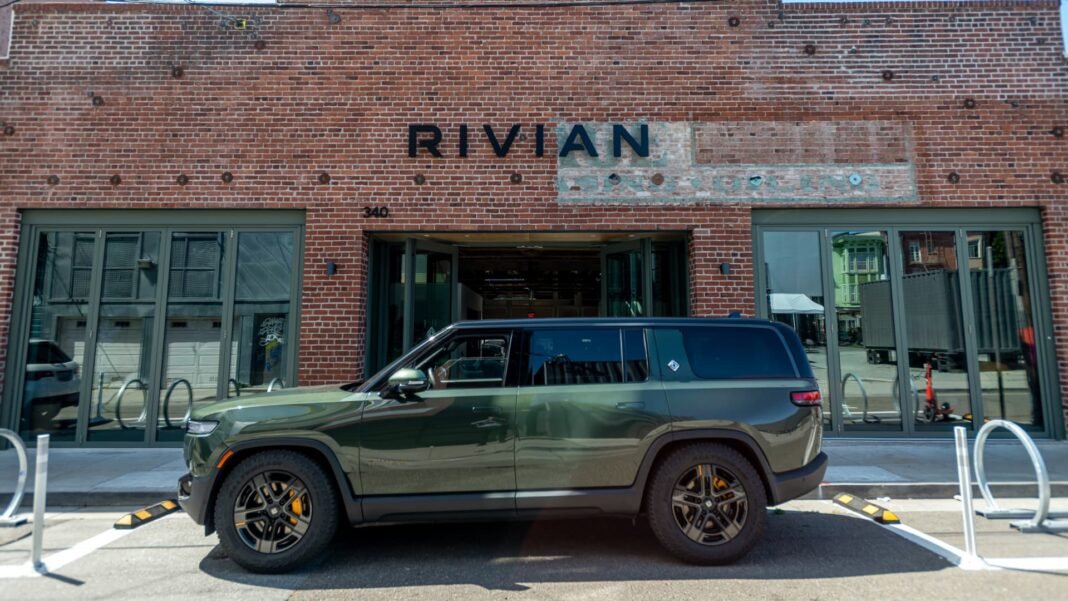
Rivian Implements Workforce Cuts Amidst Challenging EV Market Conditions
Electric Vehicle Industry Faces Increasing Obstacles
Rivian Automotive is set to reduce its employee count by more than 600 workers, equating to roughly 4% of its workforce, which was just under 15,000 at the close of last year. This move reflects the company’s response to mounting pressures within the electric vehicle (EV) sector.
Regulatory Changes and Market Forces Shaping Rivian’s Strategy
The EV industry has recently confronted important hurdles, including shifts in government policies that have altered consumer incentives. The elimination of a $7,500 federal tax credit for electric vehicle buyers has notably weakened demand across the market. These regulatory changes have contributed to a deceleration in sales growth for many automakers.
Sluggish Demand and Delays in New Model Releases
Apart from policy impacts, Rivian is facing slower-than-expected customer interest alongside postponed product launches until next year. Financially, these challenges are evident as the company reported losses exceeding $1 billion during Q2 alone.
Delivery Trends and Adjusted sales Projections
Despite these difficulties, Rivian saw a 32% rise in vehicle deliveries during Q3 compared to the previous year, surpassing 13,200 units. This increase was partially driven by consumers accelerating purchases before incentive expirations at September’s end. Nevertheless, ongoing uncertainties have led Rivian to revise its full-year delivery forecast downward-from an initial target of up to 46,000 vehicles-to an estimated range between approximately 41,500 and 43,500 units.
Financial Outlook Highlights Persistent Operational Challenges
The company also raised its anticipated core operating losses for this fiscal year to between $2 billion and $2.25 billion-up from earlier estimates of $1.7 billion to $1.9 billion-underscoring continued cost pressures amid efforts toward efficient production scaling.
Investor Sentiment Reflects Cautious optimism Amid Uncertainty
The workforce reduction announcement had minimal immediate impact on Rivian’s stock price during morning trading; however shares remain down about 3% year-to-date as investors assess risks tied to fierce competition within the EV landscape.
Key Industry Trends Influencing Electric Vehicle Manufacturers Today
- Tightening Credit Markets: Globally rising interest rates are increasing financing costs for new car buyers.
- Sustainability Commitments: Despite short-term setbacks such as layoffs or reduced incentives in regions like California or Europe tightening emissions standards continue fueling long-term global EV adoption.
- Diversification Efforts: Many automakers are broadening their portfolios with hybrid models or investing heavily in battery technology advancements as they adapt strategies amid fluctuating demand patterns.
“The rapidly changing regulatory surroundings combined with evolving consumer preferences demands agile responses from all players within electric mobility,” noted analysts monitoring key markets including China where EV sales surged nearly 80% last year despite worldwide slowdowns.”